Trump Shrinks Korea Drills While Keeping Kim Close
Trump's post-drill decision to reduce US-ROK exercises reveals a strategy that bets on personal diplomacy with Kim Jong Un while quietly pressuring Seoul. The real question is whether this strengthens or undermines the alliance.
The Drills Already Ended. That’s the Point.
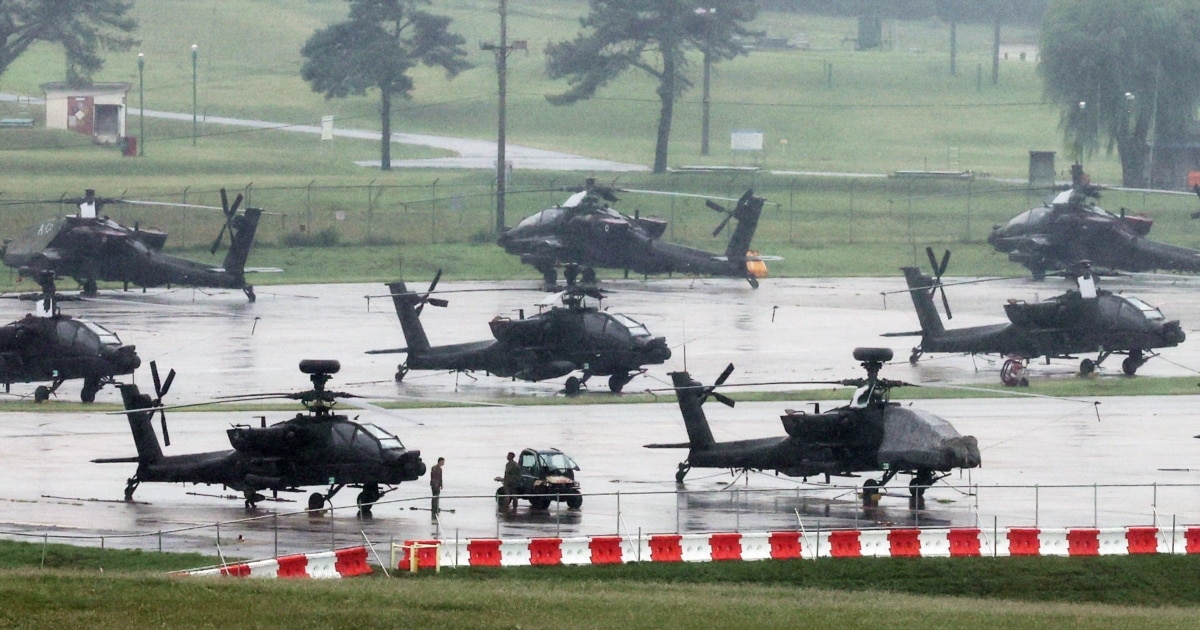
Donald Trump posted on Truth Social on August 25 that he had instructed Defense Secretary Pete Hegseth to significantly scale back US-Republic of Korea joint military exercises, citing his close relationship with Kim Jong Un and the unnecessary cost and provocation of large-scale drills. The problem: the exercises were already over.
The annual Ulsan Freedom Shield (UFS) training had been compressed from its traditional multi-week schedule into roughly five days, with some field training exercises replaced by simulations, and had formally concluded around August 21. Trump’s post, which mirrored the language of his first announcement on August 16 but was reframed in past tense, arrived after the fact. He acknowledged the cancellation window had closed. “Considering it is too late to cancel the drills,” he wrote, “I have directed Pete Hegseth to drastically reduce the combined military exercises.”
The theatrical timing matters. Trump did not prevent a drill. He retrofitted a decision and claimed credit for it. More importantly, he used the moment to signal to two audiences simultaneously: Kim Jong Un, that the door remains open; and Seoul, that the alliance’s operational baseline can be altered unilaterally.
A Personal Diplomacy Gamble
Trump’s post included three photographs from his summits with Kim—taken in Singapore in June 2018 and at Panmunjom in June 2019. He has recently repeated that he intends to meet Kim again before the end of the year. The visual reinforcement is deliberate: this is a strategy built on personal rapport, not institutional alliance management.
The logic Trump is advancing is straightforward enough, even if the assumptions behind it are brittle. He argues that because he and Kim share a good relationship, continued large-scale military exercises toward North Korea are inappropriate and overly expensive. The United States bears most of the cost. Why maintain a posture Trump characterizes as hostile toward a state he deems non-threatening?
North Korea’s behavior over the past decade suggests that characterization is optimistic at best. Pyongyang has accelerated its nuclear and missile programs throughout the period of Trump’s personal engagement with Kim. The 2018 Singapore summit produced a vague joint statement. The 2019 Hanoi summit collapsed without agreement. Since then, North Korea has conducted hundreds of ballistic missile tests, expanded its nuclear warhead stockpile, and formally amended its constitution to define South Korea as its principal enemy. None of that behavior has changed in response to Trump’s outreach.
Trump appears to believe the relationship itself is sufficient leverage. The drill reductions may be intended as a goodwill gesture to coax Pyongyang back to the table. If that is the aim, history offers little reason for confidence.
The Real Target May Be Seoul
While the post was framed as conciliatory toward North Korea, the underlying message may have been aimed at South Korea. Trump’s assertion that Seoul declined a US proposal regarding Iranian nonproliferation cooperation—“No thanks!"—is notable. Whether accurate or not, the claim serves a function: it positions Trump as willing to rearrange security commitments independently, and it reminds Seoul that Washington’s goodwill is conditional.
This is a familiar Trump negotiation tactic applied to alliance politics. Concede on one front to create leverage on another. Reduce the drills as a gesture to Kim while signaling to Seoul that the alliance’s operational terms are subject to revision at the president’s discretion.
The strategic consequence is a quiet erosion of predictability. For decades, the credibility of the US-ROK alliance rested partly on the expectation that joint training would follow a known schedule and scope. Unpredictability benefits the party that is trying to change the status quo. In this case, that is not Seoul.
What This Means for the Alliance
South Korea’s defense establishment now faces a dilemma. The drills were already shortened. Rejecting the reduction would create a diplomatic incident with the United States. Accepting it sets a precedent that future exercises can be scaled back on political grounds rather than military necessity.
The practical impact on South Korea’s combat readiness is difficult to quantify from the outside, but the symbolic impact is unambiguous. The United States has demonstrated that it will alter the alliance’s operational tempo based on its own assessments, not necessarily on joint military planning. That distinction matters for any ally that depends on American security guarantees.
Japan and other regional partners are watching. A precedent that treats alliance commitments as reversible based on personal relationships rather than strategic calculation complicates the security architecture of East Asia. It also raises the question of what happens when Trump is no longer in a position to make those calls unilaterally.
The Unanswered Question
Trump’s post referenced Iran, North Korea, and the cost of drills, but it did not address the most consequential issue: what comes next? If the United States is genuinely pursuing a diplomatic track with Pyongyang, the drill reductions could be interpreted as part of a broader strategy. If they are simply leverage aimed at Seoul, they represent a recalibration that favors short-term political gain over long-term alliance stability.
The three photos from the Trump-Kim summits will circulate on social media as evidence of ongoing engagement. But engagement without a clear strategy is not the same as diplomacy. And diplomacy that relies on personal rapport alone is fragile by design.
For now, the drills are smaller. The message is louder. What follows will determine whether this was a step toward de-escalation or a recalibration of the alliance that favors whoever can withstand the uncertainty longest.