The Tupac Conviction Proves Cold Cases Don't Stay Cold
Duane Davis's conviction in Tupac's 1996 murder didn't come from DNA or digital forensics. It came from a man who kept talking for thirty years, and a prosecution team that finally made jurors believe him.
The Verdict That Took Thirty Years
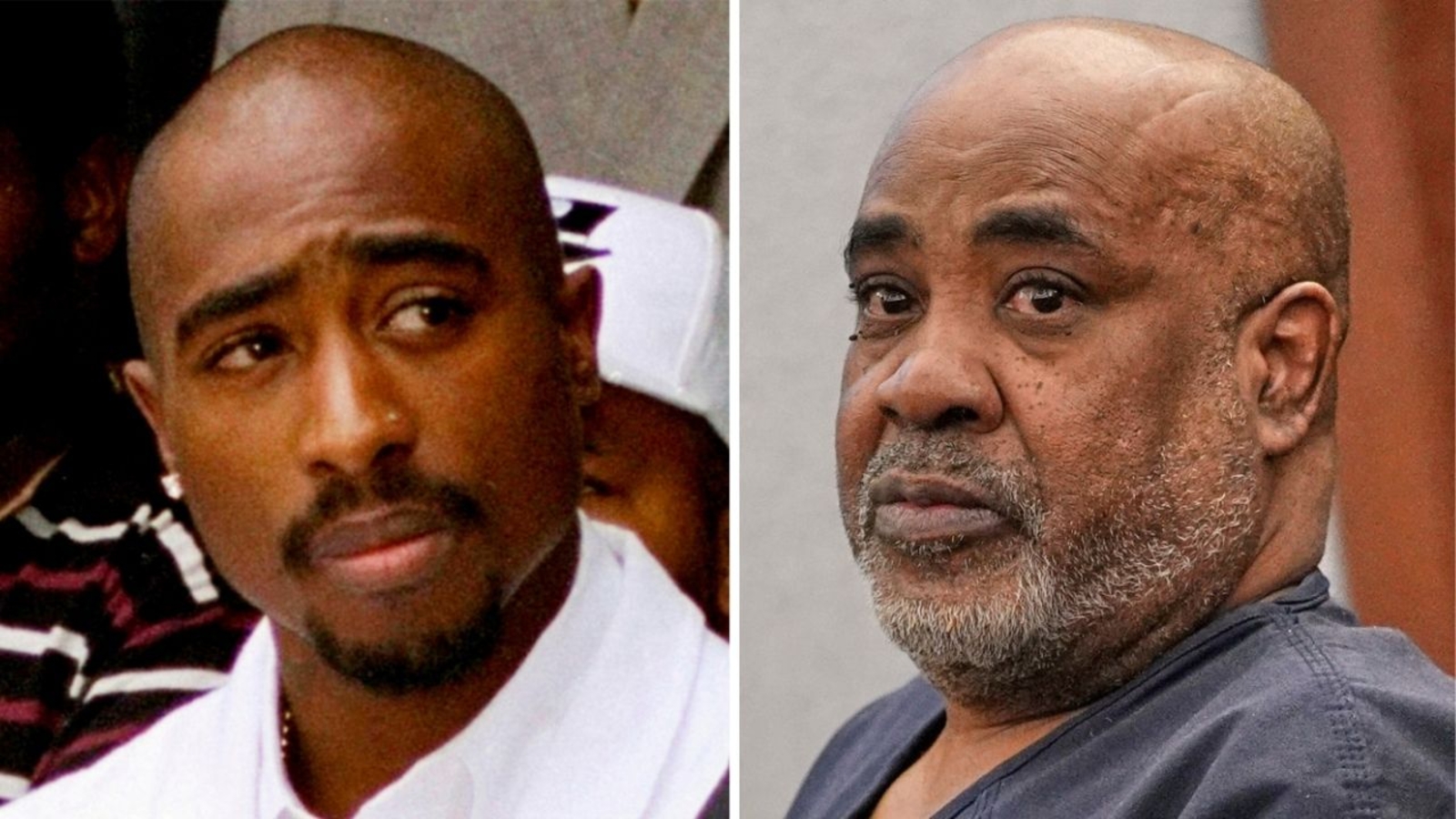
A Las Vegas jury deliberated for less than three hours Monday. Duane Davis, 63, was found guilty of first-degree murder with a deadly weapon in the September 1996 shooting of Tupac Shakur. Davis could now face life in prison.
The speed of the verdict was almost the most remarkable thing about it. After nine days of testimony, 24 prosecution witnesses, and a case built on confessions rather than physical evidence, jurors didn’t hang. They didn’t need to. The question wasn’t whether Davis had spoken about his involvement – he had, repeatedly and publicly for years – but whether those words were enough to convict a man who never directly pulled a trigger.
What made this verdict extraordinary wasn’t just its outcome. It was what it signaled about the viability of cold cases decades after the fact, in an era when the legal system has trained both juries and the public to expect forensic certainty. This case arrived at a conviction without a single piece of physical evidence linking Davis to the gun, the car, or the fatal shots. It arrived the way most cold cases never do: through the relentless, self-incriminating voice of the defendant himself.
A Murder Built on Words, Not Science
The prosecution’s lead attorney, Binu Palal, made his case on a narrow but deliberate premise. He didn’t argue that Davis fired the gun. He argued that Davis provided it, placed himself in the white Cadillac that followed Shakur and Marion “Suge” Knight through Las Vegas, and acted on a plan – not an impulse.
“It’s a plan, not an impulse,” Palal told jurors.
That distinction mattered because Nevada law holds someone criminally responsible for a murder they help facilitate, even if they never pull the trigger. Davis is the only surviving person among the four men prosecutors say were in that Cadillac. The man who allegedly originally gave the gun to Davis is dead.
The case rests almost entirely on Davis’s own account of events, repeated across interviews, police statements, and his 2019 memoir, Compton Street Legend. Prosecutors acknowledged that Davis’s stories shifted over the decades but argued the core fact remained constant: he was inside the car when shots were fired at Shakur’s Mercedes.
Palal told jurors that Davis’s statements didn’t require independent corroboration. That’s a significant legal position – essentially arguing that a defendant’s own confessions, however inconsistent, can sustain a conviction on their own weight. Defense attorneys immediately flagged this as a dangerous precedent, warning that it opens the door to convictions built on nothing more than a defendant’s own unreliable narration.
The inconsistency problem was real. Davis told the Las Vegas police in 1996 that he had no knowledge of the shooting. By 2015, his account had changed fundamentally. In his memoir, he described being in the Cadillac, passing a handgun to another occupant, and hearing the shots. Each version contains different details about the number of guns, the sequence of events, and his role. The prosecution’s strategy was to treat the inconsistencies not as exculpatory evidence but as the natural drift of a man whose story evolved alongside his awareness of legal exposure.
The Nephew Connection
The motive, as prosecutors painted it, was gang retaliation. Hours before the shooting, Shakur and Knight’s entourage allegedly beat up Orlando “Baby Lane” Anderson, a member of the South Side Compton Crips. Davis, whose nephew was also involved in the altercation, later told investigators he went hunting for Shakur and Knight after hearing what happened.
The rivalry between the South Side Compton Crips and the Mob Piru – each tied to competing record labels Bad Boy and Death Row – had already saturated hip-hop culture. The trial brought that cultural fault line into a courtroom where it suddenly felt very close to home. Several witnesses on the stand drew direct lines between the rap industry’s corporate battles and the street violence that produced the shooting, describing an ecosystem where feuds were both economic warfare and personal vendetta played out simultaneously.
Orlando Anderson’s role, though peripheral to the charges against Davis, haunted the proceedings. He died in 2021, but his alleged beating of Shakur and Knight was the inciting incident prosecutors said drove the retaliation. That detail alone connects a street-level altercation to one of the most consequential murders in American popular culture history.
What Didn’t Survive
Thirty years takes a toll on evidence. Investigators found a Las Vegas hotel bill at Davis’s residence during a search, but its date was unclear and its current whereabouts were uncertain. Surveillance video from the night of the shooting – the kind of evidence that would have been routine to preserve decades ago – simply doesn’t exist in a usable form. The prosecution warned jurors that law enforcement practices in the 1990s were fundamentally different from today’s standards, a reminder that the case survived despite systemic gaps that would have been fatal under current protocols.
These gaps could have killed the case. Instead, the prosecution leaned into what remained: Davis himself.
The absence of surveillance footage is a particularly sharp loss. In 1996, Las Vegas was already one of the most surveilled cities in America, with cameras at casinos, intersections, and parking structures. The failure to locate or preserve any usable video from that night speaks to a breakdown in evidence handling that has since become a recurring problem in cold case prosecutions across the country. Many jurisdictions simply did not have the infrastructure or the institutional memory to safeguard digital and analog recordings from three decades ago.
The hotel bill, whose provenance remains murky, underscores the fragility of a case built on documentary evidence that time has degraded. Prosecutors entered it to establish Davis’s presence in Las Vegas around the time of the shooting, but the defense spent considerable time undermining its reliability, noting that hotel records from that era were paper-based, frequently lost, and routinely misfiled.
The Scrapbook
During rebuttal arguments, prosecutor Marc DiGiacomo made a moment that will be quoted in trial coverage for years. He referenced a scrapbook Davis kept, filled with newspaper clippings about Shakur.
“This guy’s scrapbooking his murder, for God’s sake,” DiGiacomo told jurors.
Whether that description makes Davis seem remorseful or obsessive – or both – depends on who’s listening. But it gave the prosecution a concrete image to attach to a case otherwise built on decades-old testimony and written confessions. A scrapbook is intimate evidence. It suggests sustained attention, repeated revisiting, an ongoing relationship with the crime that extends far beyond the moment it was committed.
The image of Davis cutting out clippings about his own alleged murder – the way a person might curate memories of a life event – transforms abstract confession into something visceral for jurors. It’s the kind of detail that lingers in post-trial analysis and media coverage precisely because it resists simple categorization. Is it guilt? Is it fixation? Is it the behavior of a man who cannot stop reliving the event he claims to regret?
Second-Order Effects
The conviction’s implications extend well beyond Davis’s cell. Legal scholars noted that the case represents a growing willingness among prosecutors to pursue cold cases on confessional evidence alone – a strategy that could reshape how decades-old crimes are litigated nationwide. If a jury can convict on a defendant’s own inconsistent statements without corroboration, the barrier for reopening cold cases drops dramatically.
For the hip-hop community, the verdict carries symbolic weight. The Tupac murder has long functioned as an open wound in the culture, a reminder that the industry’s most violent rivalries produced consequences that outlasted album cycles and tabloid headlines. A conviction doesn’t resolve the broader culture of retaliation that the trial illuminated, but it does place a concrete endpoint on a narrative that has persisted for thirty years.
There are also practical concerns. Death Row Records, once the epicenter of the West Coast versus East Coast rivalry, filed a bankruptcy proceeding in the early 2000s and has since operated as a shadow brand. The trial’s revelations about label-related motives may prompt further legal scrutiny of the business arrangements that underwrote the feud, though no civil proceedings have been announced in connection with the verdict.
Who Wins, Who Loses
Shakur’s sister, Sekyiwa “Set” Shakur, hugged prosecutors after the verdict. For a family that watched their brother die without a single arrest for three decades, this conviction is closure, even if it comes in fragments. She has spoken publicly about the toll the unresolved case took on the family, describing years of moving through public events with the knowledge that the person responsible was living freely.
Davis loses everything. A life sentence awaits him at sentencing.
But the broader question is what this case signals about how America handles its oldest cold cases. The Davis conviction didn’t arrive because of a breakthrough in DNA analysis or a newly discovered digital record. It arrived because a man refused to stop talking about what he did, and because a prosecutor decided that a string of inconsistent confessions, taken together, was sufficient proof.
The Real Story Isn’t the Verdict
The Tupac murder conviction will be remembered as a cultural milestone. But the legal story it tells is perhaps more important: in an era when high-profile cases demand physical evidence, digital forensics, and forensic certainty, this case proves that some of the oldest crimes in America are being resolved by the oldest form of evidence – a confession.
Davis spent thirty years making his version of events public. The prosecution spent the last nine days making jurors believe that version, flaws and all. The three-hour deliberation suggests they succeeded.
Sentencing is expected later this year, and with it comes the final act in a legal drama that began on a Las Vegas boulevard on September 7, 1996. The question that will follow this case isn’t whether justice was served – the verdict answers that – but whether this approach, built on words rather than science, sets a template that could either deliver justice to dozens of unsolved cases or erode the evidentiary standards that have defined American criminal law for generations.