UK Jets Enter Red Sea Sky as America Pulls Back
Britain's decision to deploy Typhoon fighters for Saudi air defense marks its most direct military commitment to Red Sea security in years. The move arrives as the US retreats from the region and the Yemen truce collapses.
The Sky Over Riyadh Just Got British
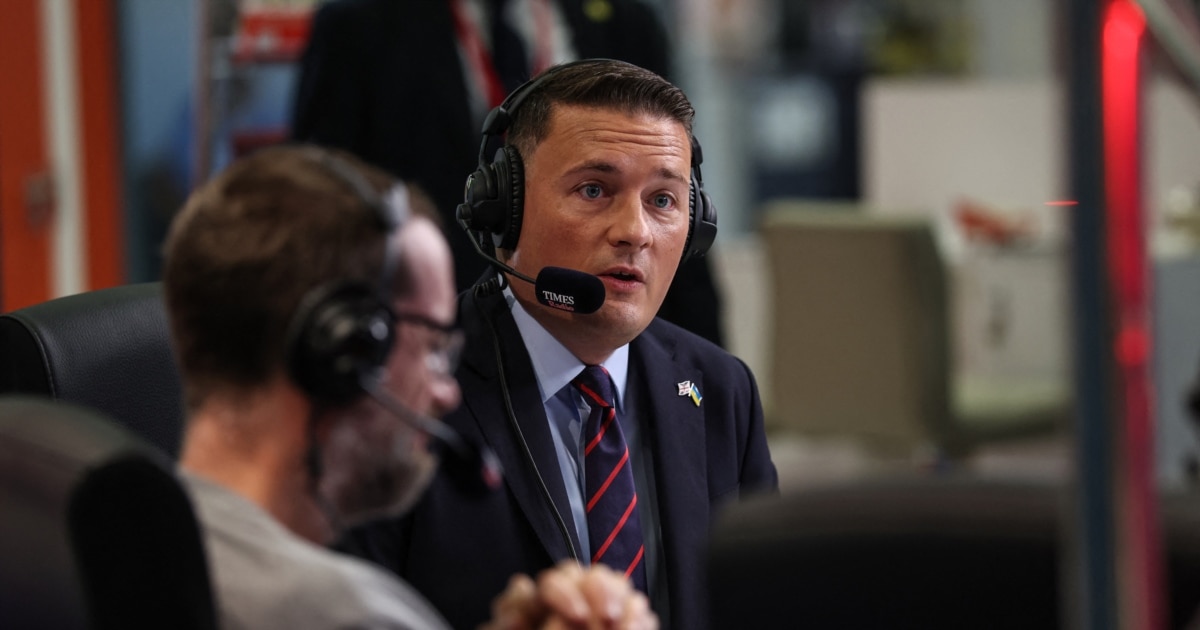
Wes Streeting did not mince words when he addressed MPs on the 20th. Recent Houthi attacks against Saudi Arabia, including strikes on international airports that killed people, were an unacceptable escalation. The response would not be words alone. The Royal Air Force is sending Typhoon fighters to participate in Saudi Arabia’s air defence — strictly defensive in role, strictly limited in scope, but unmistakably British boots — or rather, British wings — on the line.
The statement was carefully calibrated. Streeting made clear the Typhoons would not strike Houthi ground targets. This is a shield, not a sword. But the political signal cuts both ways: Britain is no longer merely enabling coalition operations through logistics or intelligence. It is putting aircraft in the air over the Gulf, directly alongside the Saudis it has armed for nearly a decade.
Why This Matters Now
The timing is not accidental. The UN-brokered truce that held — imperfectly — since 2022 has effectively collapsed. Fighting between the Houthis and Yemen government forces, backed by Saudi Arabia, has intensified. On the same day Streeting announced the deployment, Yemeni authorities confirmed that 73 newly recruited soldiers had been killed in a Houthi ballistic missile strike on a military base in Shabwah province. The Houthis acknowledged the attack.
This is the worst single incident in what is becoming a sustained campaign of violence against Yemeni government positions. The truce that once contained the conflict is gone. And with it goes the fragile architecture that kept the Red Sea — one of the world’s busiest shipping corridors — relatively calm.
Filling the American Void
The unspoken context for Streeting’s announcement is the United States. Washington has spent the past several years recalibrating its Middle East posture — pulling back from nation-building commitments, redirecting attention toward the Indo-Pacific, and treating the Red Sea primarily as a secondary theatre. American forces remain present in the region, but the political will that once underwrote a robust US security architecture in the Gulf has clearly diminished.
Britain is filling part of that gap. Post-Brexit Britain has spent years searching for a coherent global role, and Middle Eastern security is emerging as one of its self-defined niches. The Typhoon deployment is the most concrete example yet. It is also consistent with a broader pattern: London has been deepening defence ties with Saudi Arabia and the UAE while simultaneously projecting naval presence in the Indian Ocean and Red Sea.
The calculation is straightforward. A more secure Saudi Arabia means a more stable Gulf. A stable Gulf keeps global energy flows moving. And Britain, lacking the weight of the US, can still punch above its weight by being the ally Washington can no longer reliably be.
The Limits of a Defensive Posture
Streeting’s caveat — no strikes on Houthi ground targets — deserves scrutiny. Defensive air operations in this context are inherently ambiguous. Typhoons scrambling to intercept incoming missiles or drones are participating in an active combat zone, even if they do not fire on the ground. The line between defence and offence blurs quickly when your adversary is launching projectiles from civilian-populated areas.
There is also a risk of escalation that London may be underweighting. The Houthis have demonstrated repeatedly that they can project power far beyond Yemen’s borders. Their missiles and drones have struck deep into Saudi territory and disrupted global shipping. Deploying British combat aircraft into the defensive perimeter around Saudi airspace raises the question: what happens if a Typhoon is shot down, or if a Houthi strike hits a British aircraft?
The UK government has not answered that question. It has also not clarified whether the deployment includes support assets — refuelling tankers, early-warning aircraft, air defence systems — or whether this is purely a fighter squadron. None of those details appeared in Streeting’s parliamentary statement. Transparency about the full scope of the operation would help allies and adversaries alike understand what is actually on the table.
The Human Cost Gets Buried
While capitals debate fighter deployments, the people inside Yemen are living through a worsening crisis. The UN’s human rights chief, Volker Türk, warned on the same day about the siege of Taiz, where the Houthis have cut the only supply route connecting the city to Aden. Civilian aid is blocked. Essential supplies have dried up.
The UN Refugee Agency reports that 32 civilians — including 14 children and nine women — have been killed in Taiz province alone since August 1, with 115 more wounded. These are not abstract statistics. They are the background noise against which great-power military calculations are being made.
No British fighter deployment will open a supply route into Taiz. No Typhoon sortie will deliver food or medicine to a besieged population. The UK government’s focus remains squarely on state-level security — protecting Saudi infrastructure, securing the skies, deterring further Houthi strikes. That is a legitimate mandate. But it is also a reminder that military interventions, even defensive ones, rarely address the root causes of the conflicts they enter.
What Comes Next
The immediate question is whether other European nations will follow Britain’s lead. France and Germany have so far kept their distance from Red Sea security operations, preferring to focus on counter-piracy and migration. But if the situation deteriorates further — if Houthi attacks on Saudi or UAE territory escalate, or if shipping disruption returns to the levels seen in early 2024 — European capitals may feel pressure to contribute beyond humanitarian aid.
The longer-term question is whether this deployment marks a lasting shift in British defence policy or a one-off response to an urgent crisis. Streeting’s phrasing — that Britain is a country that responds when allies ask for help — suggests the former. If London treats Middle Eastern air defence as a standing commitment rather than an emergency measure, the entire strategic calculus of the Gulf changes.
America’s retrenchment is not reversible in the short term. Europe cannot replace the US security umbrella entirely. But Britain, with its power-projection capabilities and its network of Middle Eastern partnerships, is positioning itself as the bridge between a fading American order and an uncertain European one. The Typhoons over Saudi Arabia are the first visible sign of that transition.