Ukraine's Deep Strike on Russian Petrochemicals Shifts the Energy War
Ukraine's drone attack on one of Russia's largest petrochemical complexes marks a decisive escalation in targeting domestic energy infrastructure. The strike sends a sharp signal about how far Kyiv can push — and what it means for European fuel markets heading into winter.
The Strike That Changed the Calculus
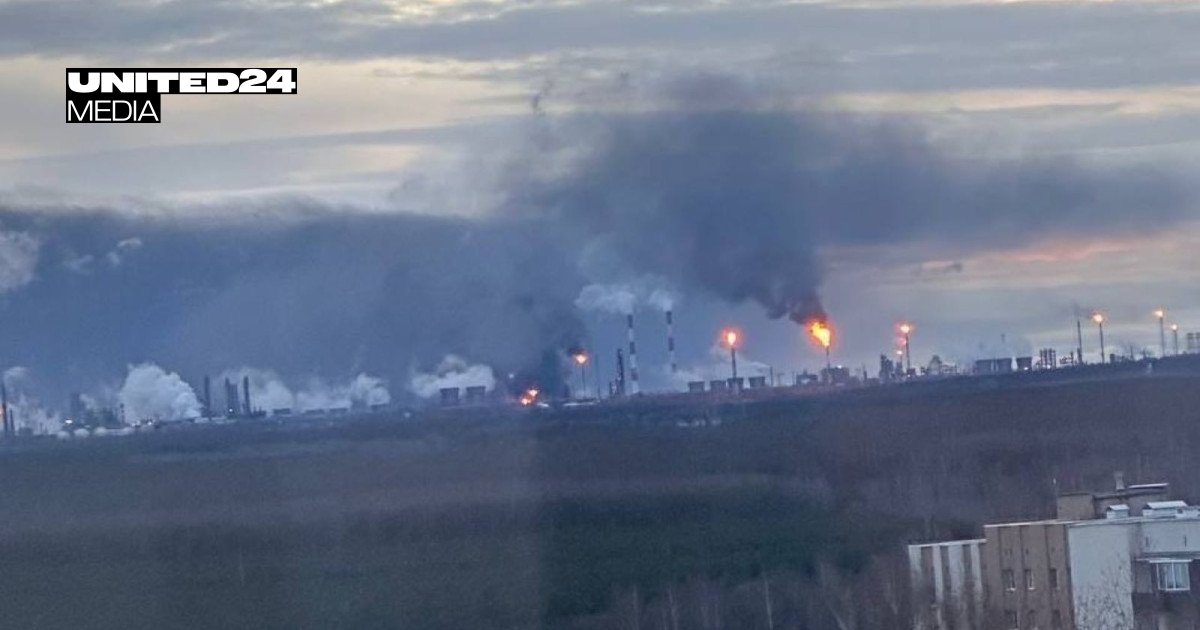
On the night of November 15, flames rose from one of Russia’s most important petrochemical complexes in Nizhnekamsk, Tatarstan — approximately 1,200 kilometers from the Ukrainian border. The target was Nizhnekamskneftekhim, a major production facility owned by Sibur, theRussian energy and chemicals giant. Local residents reported explosions and sustained drone activity after the initial impact. OSINT analysts monitoring the footage identified likely damage to the plant’s ethylene production line.
The timing and depth of this strike matter more than any single blast. Coming just four days after Ukrainian long-range drones hit the massive Omsk oil refinery roughly 3,000 kilometers from the front, the pattern is no longer accidental. Kyiv has systematically mapped a route deeper into Russia’s industrial heartland, and it is now striking assets that produce materials critical to both civilian economies and military logistics.
Nizhnekamskneftekhim is not a marginal player. In 2025 it produced around 3 million metric tons of petrochemical output. Its EP-600 ethylene unit alone carries an annual capacity of 600,000 tonnes. The complex is especially significant for its production of isoprene rubber, butyl rubber, halobutyl rubber, and butadiene rubber — all essential inputs for tire manufacturing, automotive parts, and specialized industrial applications. It also produces propylene, benzene, synthetic lubricants, and propylene glycol.
Damage to any of these lines represents a bottleneck Russian refiners and chemical producers cannot easily replace. And for Europe, the implications run in the opposite direction from what some analysts initially assumed: disruptions to Russian chemical output may tighten global feedstock supplies just as demand surges ahead of winter.
Why This Distance Changes Everything
Eight hundred miles from the Ukrainian border is a threshold. Previous Ukrainian strikes had focused on airbases, fuel depots, and military logistics hubs near the front or in regions directly contiguous with combat zones. Striking Nizhnekamsk — a city whose economy is almost entirely defined by its petrochemical industry — required either significantly upgraded drone range, mid-air refueling coordination, or launch platforms positioned closer than previously acknowledged.
The exact method remains unclear, and Russian authorities have not released any official assessment of the strike’s extent. But the operational leap is unmistakable. Ukraine demonstrated it can project persistent aerial pressure across the entire width of European Russia, from the Black Sea coast to the Volga basin.
This changes the risk calculus for every Russian energy company operating beyond the immediate border regions. Sibur, which already faced Western sanctions over its role in supplying materials linked to Russia’s defense industrial base, now faces direct physical threat to its flagship assets. Competitors may reassess whether their facilities in Tatarstan, Bashkortostan, or further east carry acceptable risk levels.
The Winter Supply Question
The conventional narrative assumes Russian energy disruptions primarily hurt Russia. That assumption is outdated. Russia has built considerable spare capacity in its refining sector, and much of its petrochemical output goes to export markets — China, Turkey, India, and increasingly to alternative European buyers filling gaps left by redirected Iranian and Middle Eastern supplies.
But the timing matters. We are entering peak heating season in Europe, and global diesel and jet-fuel markets are already sensitive. The Omsk refinery strike on November 11 targeted a facility processing over 21 million metric tons of crude annually — Russia’s largest. If both strikes cause sustained reductions in output, the effect compounds:
Refining capacity drops at Omsk, reducing diesel and jet-fuel yields.
Petrochemical feedstocks tightens at Nizhnekamsk, raising costs for plastic and rubber producers who compete for the same cracked naphtha streams.
Russian export revenues decline further, reducing Moscow’s capacity to fund additional military procurement.
Each of these channels feeds back into European market prices. Diesel spreads in Northwest Europe could widen if refined product flows from Russian terminals slow. Jet-fuel futures, already volatile from Red Sea shipping disruptions, face another supply-side shock if Russian aviation fuel exports contract.
Who Wins, Who Loses
Kyiv wins strategically. Every kilometer penetrated into Russian territory validates Ukraine’s long-range drone program and demonstrates that Russia’s interior is no longer secure. The psychological effect on Russian industrial managers — many of whom operate under implicit assumptions of distance-based protection — is difficult to quantify but impossible to ignore.
Moscow loses on multiple fronts. It must divert air defense resources away from frontline positions to protect rear-area industrial zones, weakening local defenses where they matter most. It also faces escalating repair costs for damaged infrastructure that was never designed for combat conditions. The cost of rebuilding or hardening these facilities will fall on companies already struggling with reduced access to Western technology and financing.
European consumers face a mixed picture in the short term. Higher fuel prices are unwelcome but unlikely to spike dramatically unless multiple large facilities suffer simultaneous prolonged shutdowns. The real question is whether Ukraine’s strikes accelerate structural shifts in global petrochemical trade patterns — particularly whether Asian buyers begin sourcing polyolefins and synthetic rubbers from alternatives like Saudi Arabia, South Korea, or the United States, permanently eroding Russia’s market share.
What Happens Next
Several scenarios deserve consideration. The most likely near-term outcome is intermittent disruption rather than permanent capacity loss. Russian operators have shown resilience in repairing damage quickly, often within weeks, using domestic and allied supply chains. But repeated strikes increase the probability of extended outages, especially during winter maintenance windows when fallback routes are thinnest.
A second scenario involves escalation on both sides. Russia may respond with intensified missile and drone attacks against Ukrainian energy infrastructure, particularly liquefied natural gas terminals and grid substation networks. The two power substations reportedly struck alongside the Nizhnekamsk attack suggest Ukraine may already be coordinating broader infrastructure pressure campaigns.
A third possibility — less probable but increasingly plausible — is that Western allies expand restrictions on drone components and dual-use technology exports to Ukraine. If current embargo enforcement gaps narrow, Kyiv gains additional capability. If they do not, the pace of technological adaptation slows.
For Pulse readers tracking the intersection of conflict and commodity markets, the key metric to watch is Sibur’s quarterly production guidance. Any downward revision from the company would confirm sustained operational impact beyond the immediate aftermath of the strike. Equally telling will be whether Russia accelerates efforts to relocate sensitive petrochemical capacity eastward toward Kazakhstan or Central Asia — a move that would further isolate European supply chains from Russian feedstocks.
The fire at Nizhnekamskneftekhim is one data point. The trajectory it sits on is the story.