How Ukraine's FP-7 Missile Could Upend Russia's Deep Strike Strategy
Ukraine has fielded the FP-7, a domestically produced ballistic missile matching the destructive power of ATACMS and Storm Shadow. Why this changes the calculus for Russian logistics and air defense deployment.
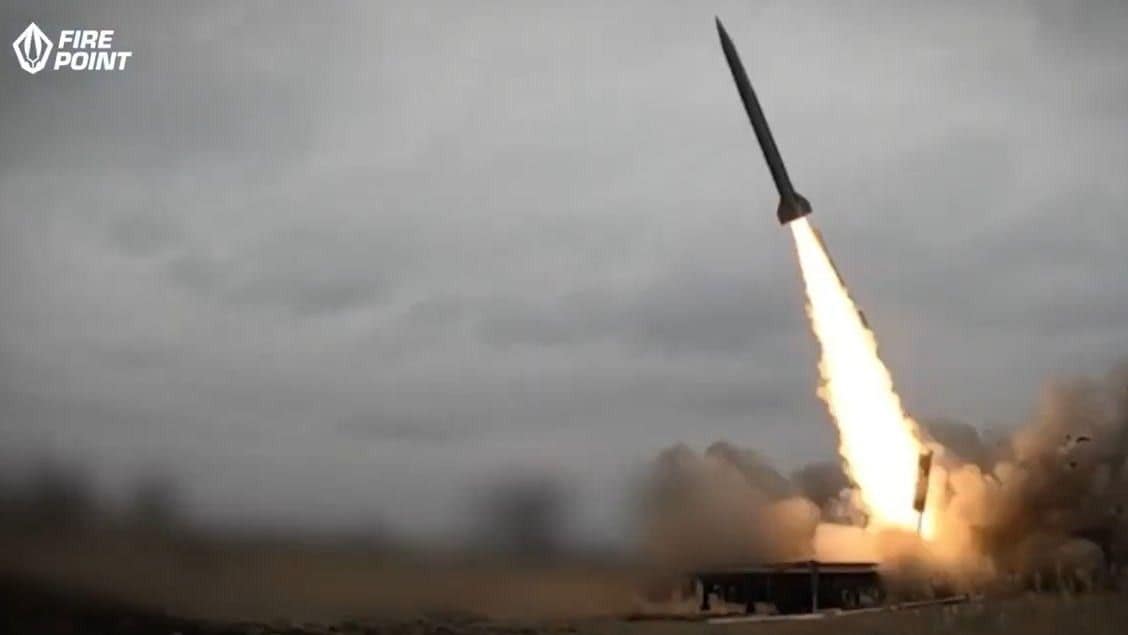
A Weapon Designed in the Gap
Ukraine’s new FP-7 ballistic missile did not appear because Kyiv suddenly had spare billions. It appeared because the supply stopped. When the United States halted deliveries of ATACMS under the Trump administration, Ukraine needed a replacement that could hit the same depth and deliver the same punch. The FP-7 is that replacement—and it is already in combat use.
What makes the system noteworthy is not just that it fills a hole in Ukraine’s inventory. It is that it brings Ukraine’s deep-strike capability up to parity with the heaviest Western cruise missiles currently in the conflict: Germany’s Taurus, Britain and France’s Storm Shadow, and the American Tomahawk.
That parity did not come for free. It came from a clear engineering requirement, one that any military planner can calculate from first principles.
The 1000-Megajoule Threshold
Destroying a bridge is not the same as destroying a warehouse. The energy required to damage reinforced concrete structures, pre-stressed girders, and fortified logistics hubs follows a well-established calculation in military engineering: you sum the explosive yield of the warhead and the kinetic energy of the entire munition as it impacts, convert everything to joules, and check whether the target’s structural tolerance is exceeded.
Open-source defense analysis consistently places that threshold for major bridges and hardened structures at just over 1,000 megajoules. Go below it and you may crack concrete, disable a lane, force a detour. Go above it and you collapse spans, bury command nodes, and create gaps that take months—not days—to repair.
The FP-7 lands firmly on the right side of that line. By all available estimates, it delivers slightly more than 1,000 megajoules of total destructive energy, placing it in the same performance bracket as ATACMS and the Storm Shadow family. That is not an accident. It is the result of designing a weapon specifically to breach a category of target that previous Ukrainian systems struggled to neutralize in a single strike.
Who Loses When Logistics Take Hits
The strategic implication matters more than the energy figures. Russia’s ability to sustain offensive operations across Donetsk and Zaporizhzhia depends on long supply lines running through relatively soft logistics nodes: rail heads, fuel depots, ammunition stores, and bridging points north and east of the front.
Before the FP-7, Ukraine could pound these targets with artillery and short-range missiles, but the damage was often shallow. A truck convoy could reroute. A damaged runway could be patched overnight with mobile paving units. A struck fuel tanker was a tragedy, not a systemic problem.
The FP-7 changes the math. A single missile with sufficient energy to sever a bridge span forces Russia to either rebuild under continued fire or reroute through longer, more vulnerable corridors. Repeated hits on the same node multiply the problem. Rail hubs are especially exposed: they concentrate rolling stock, crew, and fuel in dense clusters that a high-energy ballistic impact can devastate.
This is the real threat to Russian operations—not the destruction of any single depot, but the cumulative effect of forcing Russian logisticians to plan around holes that keep reopening.
Air Defenses on the Back Foot
There is a second-order consequence that receives less attention. When a defender faces deep strikes it cannot intercept, it moves air defense systems forward to protect the hits that matter most. S-300 and S-400 batteries, once dispersed to cover a wide sector, get pulled closer to critical logistics hubs and command posts.
That movement has a cost. Every battery pushed inland to protect a rail junction is one fewer layer of coverage over the front. Ukrainian artillery and drone operators who previously had to contend with layered Russian air defense now face thinner screens. The FP-7, in other words, does not just damage targets. It manipulates where Russia chooses to place its defenses.
This is a classic force-multiplication dynamic. A single missile system, by threatening high-value rear areas, forces the enemy to redeploy assets that would otherwise constrain your own operations. The Russian military has spent years building layered air defense belts along its frontline. The FP-7 gives Ukraine a way to peel at the edges of those belts without committing aircraft or large drone swarms to the risk.
The Context Behind the Numbers
It is worth noting what the FP-7 is not. It is not a strategic weapon aimed at Moscow. Its range and payload are designed for operational-level targets: supply lines, airfields, and command centers within the 200-to-300-kilometer depth that currently separates Ukrainian shooters from Russia’s deepest rear areas. That is enough to matter. It is not enough to threaten Russian population centers.
The comparison to the Pivnichnyi Bridge strike in Kyiv is instructive. Drones attacking that structure—likely jet-propelled Shahed variants—deliver roughly 112 megajoules. That is one-tenth the energy of the FP-7. A Shahed strike on a bridge causes damage that is painful but repairable. An FP-7 strike on the same target is a different category of outcome entirely. The difference between 112 megajoules and 1,000 megajoules is the difference between a detour and a断崖.
What Comes Next
Several questions remain open. Ukraine has not released detailed performance data on the FP-7 beyond what foreign observers can infer from its combat employment. Hit rates, production volumes, and the full range envelope are still unclear. The system reportedly also carries an anti-ballistic-missile role, which would be unusual for a weapon of this class and deserves independent verification before drawing conclusions.
Russia is already adjusting. Reports indicate increased dispersal of logistics assets and accelerated construction of alternative crossing points. Whether those adaptations can keep pace with sustained FP-7 strikes is the question that will define the next phase of the conflict’s deep-war dimension.
The FP-7 will not win Ukraine’s war on its own. But it closes a gap that existed since Western allies grew cautious about long-range munitions. By matching the destructive energy of the world’s most capable cruise missiles and forcing Russia to fight a deeper, more diffuse battle for its logistics, Ukraine has introduced a variable that Moscow cannot simply absorb. That is how weapons change wars—not by destroying armies, but by changing where the enemy has to put its shields.