Ukraine Plotted Drone Swarm to Cripple Moscow Airports
Ukraine developed a plan to flood Moscow's airports with up to 1,000 AI drones in a single day, a operation代号 'M&Ms' that was ultimately shelved over civilian-risk concerns. The revealed plan signals a new dimension in the war—and a dangerous precedent for European airports.
A Plan That Never Flew—But Still Changes Everything
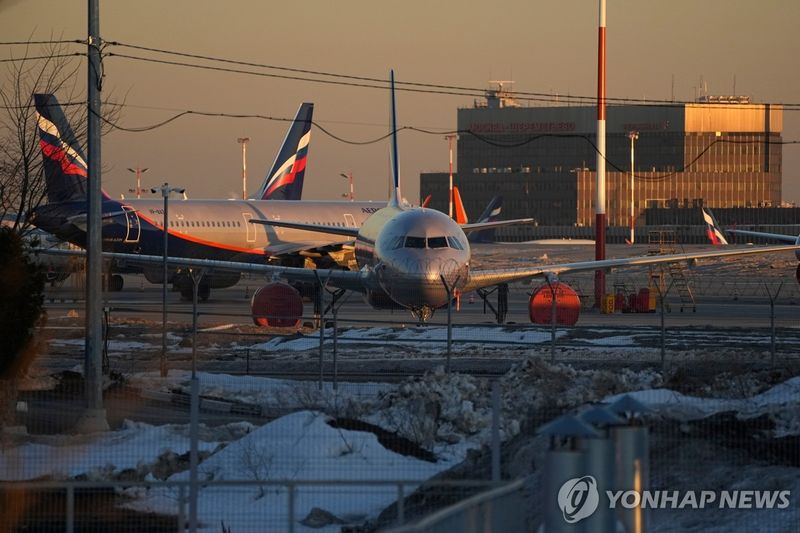
In early 2026, Ukrainian officials presented President Volodymyr Zelensky with a plan whose code name read almost innocuously: ‘M&Ms.’ The proposal was anything but sweet. It called for launching up to 1,000 AI-guided drones per day against the Moscow airport complex—primarily Sheremetyevo, the city’s busiest international hub—in an effort to paralyze civil aviation during the summer travel peak and strangle the mobility of Russia’s political and economic elite.
The operation was never executed. According to reporting by Britain’s Telegraph and America’s The Atlantic, Zelensky reportedly balked at the risk of unintended civilian casualties. AI swarms, by their nature, are difficult to steer precisely enough to exclude commercial aircraft sharing the same airspace. Ukraine has long drawn a line against striking civilian targets on Russian territory, and this plan, in theory, would have crossed it.
What makes the revelation significant is not just that the plan existed—but what it reveals about where Kyiv’s capabilities were heading, and what that means for the rest of Europe.
The Logic Behind the Target
Moscow’s international airports—Sheremetyevo, Domodedovo, Vnukovo—saw a dramatic drop in long-haul flights after Western sanctions cut off most direct routes to Europe and North America. But flights to Istanbul, Dubai, and other neutral hubs continued running throughout the summer of 2025 and into 2026. These were the arteries through which Russia’s oligarchs, government officials, and connected business class moved freely while most of the country’s regular aviation economy lay wounded.
The M&Ms plan targeted precisely that leak. By saturating the approaches to Moscow’s airports with AI drones—machines capable of coordinating attacks in swarms, adapting to air-defense responses in real time, and overwhelming traditional interception systems—Ukraine aimed to make the capital’s skies ungovernable for civilian traffic. The goal was pressure on Putin through his own circle, not through indiscriminate violence.
That distinction mattered to Kyiv’s strategic calculus. It also, perhaps, mattered to the plan’s ultimate fate.
Who Killed the Plan—and Why
The plan appears to have died with Defense Minister Mykhailo Fedorov, who was dismissed in July 2026. Ed Arnold, senior advisor at the UK think tank the D Group, suggested the cancellation may also have been influenced by European hesitation. Several EU capitals have signaled deep discomfort with any escalation that could draw retaliatory strikes against their own territories—a concern that took on sharp new meaning when a string of mysterious drone incidents hit airports across Spain, Germany, Norway, and Denmark in recent months.
Those incidents, currently unattributed, have disrupted operations but caused no fatalities. Their origin remains officially unclear. But the D Group’s warning is blunt: if Ukraine is seen to have deliberately targeted civilian infrastructure in Russia, Moscow could feel justified in redirecting similar tactics toward European airports in retaliation. The threshold between ‘military-adjacent target’ and ‘civilian infrastructure’ is exactly where the next escalation will be fought.
What This Reveals About Ukraine’s Drone Doctrine
Ukraine’s drone campaign against Russia has evolved rapidly since 2022. Early operations relied on modified commercial quadcopters and small loitering munitions. By 2024, Kyiv had developed longer-range drone wings capable of striking deep into Russian territory, and by 2025, AI-enabled coordination—multiple drones communicating and adapting mid-flight—had moved from concept to prototype. The M&Ms plan represents the logical endpoint of that trajectory: not one or two hundred drones, but a thousand, operating as a coordinated system designed to exhaust and confuse Russian air-defense networks.
Russia’s air-defense posture around Moscow is among the densest in the world. But it was built to track and intercept individual aircraft and cruise missiles, not hundreds of low-altitude, maneuvering targets arriving from multiple axes simultaneously. An AI swarm does not need every drone to reach its target; it needs enough to get through. That is a fundamentally different calculus than what the Russian system was designed for.
The European Spillover Risk
The most consequential implication of the M&Ms reveal may have nothing to do with Russia at all. It has everything to do with Europe.
European airports have already proven vulnerable. The recent wave of unidentified drone incidents in Spain, Germany, Norway, and Denmark demonstrates that even sophisticated airport-security systems cannot fully contain a low-cost, distributed drone threat. No one has claimed responsibility. No one has been prosecuted. The attacks have been disruptive but so far limited in physical damage.
If Ukraine had proceeded with M&Ms and Russia responded by directing similar tactics at European airports—as the D Group warned is a plausible retaliation—the scale and coordination could escalate quickly. A single disrupted airport is an inconvenience. A sustained campaign against multiple hubs across the continent is an economic shock.
What Happens Next
The cancellation of M&Ms does not mean the technology behind it disappeared. Ukraine’s AI-drone programs continue to develop. The question is not whether Kyiv will attempt swarm operations against Russian infrastructure again—it is what form they will take and what guardrails, if any, will be in place.
For European governments, the takeaway should be sobering. The war over Ukraine’s skies is no longer confined to Ukrainian and Russian territory. The drone technology being tested and refined there is already showing up, in unexplained form, at European airports. The M&Ms plan, however unrealized, proves that the next escalation does not require a declared campaign—it only requires the capability, and a calculation that the risk is worth the pressure.
The next time a drone causes chaos at Frankfurt, Schiphol, or Heathrow, the question will not be whether it came from Ukraine or Russia. It will be whether anyone foresaw that it was coming at all.