Why Ukraine's Prosecutor General Resignation Matters for the War
Ukraine's top prosecutor has quit amid a call-center money-laundering scandal, deepening a crisis that stretches from Kyiv's anti-corruption institutions to the battlefield. The timing — as Russia resumes strikes and signals openness to talks — is no coincidence.
The Scandal That Won’t Stay Domestic
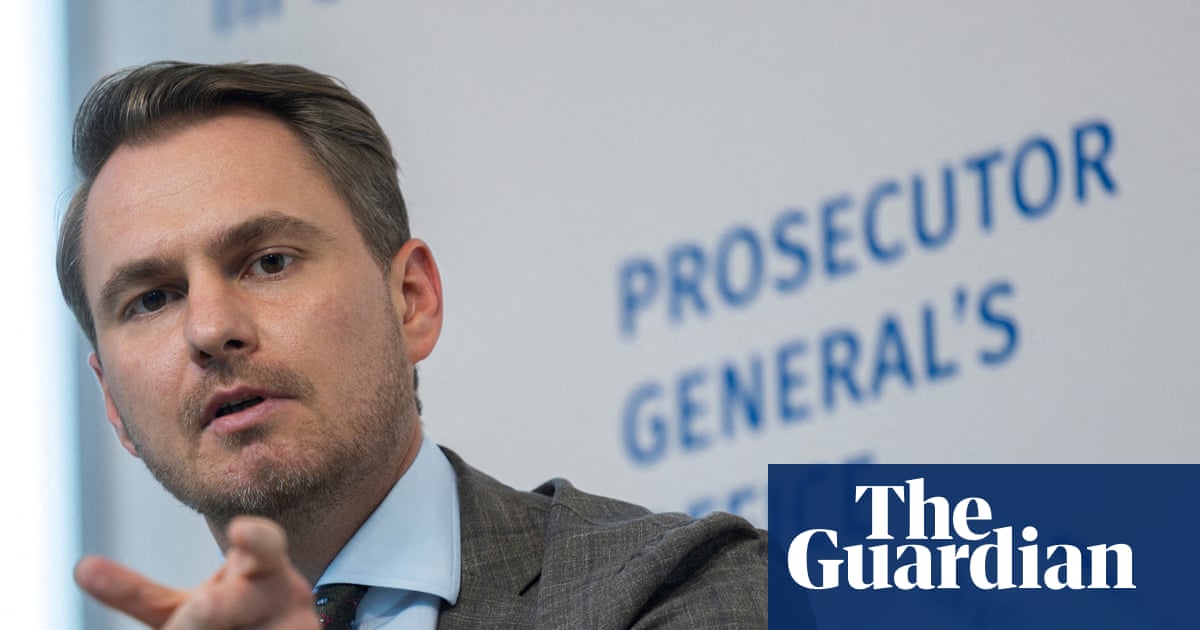
Ruslan Kravchenko, Ukraine’s prosecutor general, resigned on Monday after anti-graft officers raided his offices over the weekend. The allegations involve a money-laundering scheme tied to illegal call centers — the kind of outfit that phones strangers across Europe and North America, pretending to be bank officials or government agents, and extracts cash until the victims are empty. Kravchenko called the charges completely unsubstantiated. He will not be the last word on this.
What makes this story travel beyond Kyiv’s political circuit is what the call centers represent: a shadow layer of Ukraine’s wartime economy, one that operates in the gap between state capacity and survival. The Global Initiative Against Transnational Crime estimates roughly 60,000 people work in these operations across Ukraine. That is not a niche industry. It is a parallel structure, and it is lucrative enough to attract the attention of people inside the prosecutor general’s office.
Investigators say the network received payments to protect these call centers and laundered fortunes amounting to millions. NABU published photos of a safe stuffed with bundles of dollar bills. A deputy of Kravchenko has been remanded in custody. Five people are believed to be behind the scheme. None have been formally named.
The institutional history here is vital context that English-language readers often miss. In 2025, Volodymyr Zelenskyy faced protests after attempting to bring the National Anti-Corruption Bureau and the Specialised Anti-Corruption Prosecutor’s Office under the prosecutor general’s control. He was forced to reverse course. The power struggle between Kyiv’s anti-corruption bodies and the traditional prosecutorial apparatus was never resolved — it was merely paused. Kravchenko’s resignation now reopens that fault line at a moment when Ukraine cannot afford another internal reckoning.
The Broader Turmoil
The prosecutor’s departure arrives inside a broader crisis of authority in Kyiv. Over recent weeks, Ukraine’s two main intelligence services — the SBU and the GUR — were involved in a shootout. Zelenskyy sacked the defence minister. Then protests forced him to sack the military commander-in-chief as well, after the two men feuded publicly. The country is now bedding in new military leadership while Russia bombs it.
Russia resumed strikes on Kyiv late Monday, killing at least two people and wounding seven, after a self-imposed three-day halt that coincided with a visit by US envoys. The strikes hit apartment blocks and commercial districts. Moscow has also been moving ballistic missiles and heavy bombers to airfields closer to Ukraine, according to monitoring channels.
And yet, simultaneously, the Kremlin is talking about negotiation. Dmitry Peskov said Russia does not rule out resuming a trilateral format involving Ukraine and the United States. An aide to Emmanuel Macron reported that American negotiators told European representatives during talks in Kyiv that Russia was showing a new willingness to negotiate following the Duma elections.
This is the contradiction that defines the current phase of the war. Russia is shelling residential buildings in Kyiv while telling European capitals it is ready to talk. The US administration of Donald Trump has repeatedly interpreted Putin’s reiteration of maximalist demands as a sign of openness to deal-making. Both Kyiv and its Western backers are trying to read the signal.
Who Wins, Who Loses
Kravchenko loses. His successor will inherit a prosecutorial office with its credibility fractured and a political environment where every investigation is suspected of being politically motivated. The anti-corruption institutions technically win — NABU and Sapo have demonstrated they can investigate the highest levels of the prosecutorial hierarchy. But that victory is hollow if the public perceives the resignation as political theater rather than accountability.
Zelenskyy loses on timing. He already presided over a tumultuous year of institutional clashes, public sacks, and street protests. Another crisis of this magnitude while Russian missiles are flying and Western support is fraying is a burden no leader needs. The president’s authority is built partly on the claim that he can clean house without destabilising the state. This case tests that claim.
Russia benefits most from the broader picture, though it would be flattering to credit Moscow with orchestrating the scandal. The Kremlin has spent three years exploiting every crack it finds in Ukraine’s governance. It will certainly use the prosecutor’s resignation in its information campaign, framing it as proof that Kyiv’s institutions are corrupt and unreliable. That narrative is familiar territory for Russian state media. What is sharper this time is the backdrop: renewed missile strikes, a trilateral negotiation framework being floated, and a US administration that has shown repeated willingness to push Kyiv toward concessions.
The call-center network itself is the quiet winner here. Sixty thousand people are employed in an industry that exists in the grey zone between legal and illegal. Money laundering of millions passes through institutions that were supposed to be the state’s immune system. That this could happen at the highest levels of prosecution suggests the problem is structural, not incidental.
What Comes Next
The immediate question is whether Kravchenko’s deputy and the five alleged ringleaders will face trial — and whether that trial will be allowed to proceed without political interference. Ukraine’s anti-corruption infrastructure was built with Western money and Western oversight. The European Union and the United States have made judicial reform a condition of support. This case will be judged not only in Kyiv courts but in Brussels and Washington.
There is also the question of Zelenskyy’s next moves. The president is bedding in new military leadership while trying to project stability. If the protests that forced his hand last time return — and they likely will, given Ukraine’s history of civic mobilisation — he will need to demonstrate that the anti-corruption bodies are operating independently and effectively. A perfunctory resignation acceptance would look like damage control. A thorough, transparent investigation would look like governance.
On the battlefield, the picture is less contained. Russia has resumed strikes on Kyiv and neighbouring regions. Ukraine has responded by striking oil refineries in Russia’s Ryazan, Perm, and Tatarstan regions — a pattern of cross-border economic targeting that signals Kyiv’s strategy is shifting from purely defensive to increasingly offensive in its economic dimensions. The attack on a British American Tobacco plant in Chernihiv caused no injuries but represents another dimension of the war’s economic toll on both sides.
The nuclear dimension remains precarious. The Zaporizhzhia plant, under Russian control, lost off-site power on 20 August and ran on emergency diesel generators for weeks. The International Atomic Energy Agency confirmed repairs were completed during a ceasefire it brokered. Power has been restored via the Ferosplavna line. But the fact that a nuclear facility could operate without external power for over ten days — and that Russia controls the site — is a reminder of how much of Ukraine’s critical infrastructure exists in a state of fragility.
Then there is the weapon that may change everything: fully autonomous drones. The UN human rights chief, Volker Türk, expressed horror at reports that a Russian drone guided entirely by artificial intelligence killed three civilians in Zaporizhzhia in July. The New York Times reported the incident. Türk called for an urgent ban on such weapons. Whether the ban comes or not, the technology will not disappear. Russia’s use of AI-guided drones in a war that has already normalised the targeting of civilian infrastructure sets a precedent that other states will study closely.
The Geopolitical Spillover
Ukraine’s domestic turmoil does not stay domestic. Latvia’s government plans to impose a 300 percent tariff on grain arriving from Russia and Belarus, responding to Moscow’s increased transits through Baltic ports in retaliation for Ukrainian strikes on Russian Baltic infrastructure. The EU’s eastern flank is reacting to a war it did not start, adjusting trade policy to match the escalation cycle.
The call-center scandal intersects with this wider picture in ways that are easy to overlook. Transnational crime does not respect borders. The money laundering schemes uncovered in Ukraine move through the same financial channels that connect Kyiv to European capitals. The sixteenthousand people employed in call centers represent a workforce that could be recruited, redirected, or destabilised by external actors with an interest in weakening Ukraine from within.
What English-language readers usually miss about stories like this is the institutional memory. Ukraine spent years after 2014 building anti-corruption institutions — NABU, Sapo, the High Anti-Corruption Court — with significant Western support. Those institutions exist in tension with a prosecutorial system that predates the Maidan revolution and has deep roots in the Soviet legal tradition. Kravchenko’s resignation is not the end of that story. It is a chapter in a conflict that predates the 2022 invasion and will outlast it.
The war in Ukraine is being fought on multiple fronts simultaneously — territorial, informational, institutional, economic. The prosecutor general’s resignation belongs to the institutional front. That front is often ignored in coverage focused on missile strikes and negotiation frameworks. But institutional decay is one of the most effective weapons in modern warfare, and it does not require a missile to inflict damage.