Ukraine's Prosecutor General Resigns as Wartime Corruption Probe Closes In
Ruslan Kravchenko's sudden resignation comes as investigators link him to a protection racket running scam call centers. The scandal tests Kyiv's anti-corruption credibility at a moment when Western aid hangs in the balance.
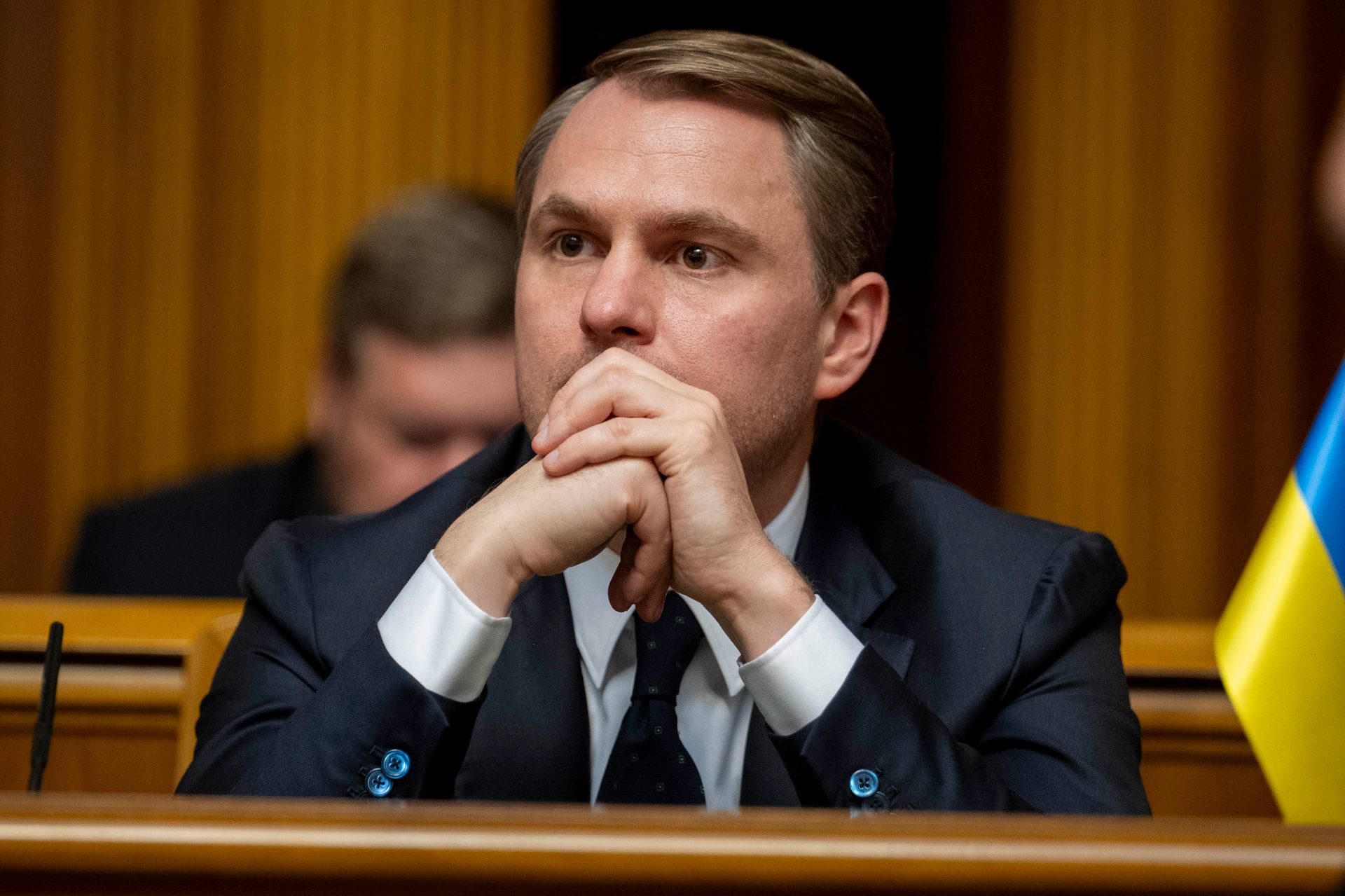
The resignation that isn’t really a resignation
Ruslan Kravchenko submitted his resignation on September 7, but the framing tells the real story. He called it a political decision. He said he did not want the office of prosecutor general turned into an instrument of political confrontation. The language was careful, rehearsed, and deliberately deflectional — because the facts inside the case file tell a different story.
A senior official in his own office, Serhii Kropyva, was detained and remanded in custody with a bail set at 120 million hryvnias, roughly $2.7 million. Another suspect, Yelyzaveta Ivakhnenko, faced bail of 20 million hryvnias. Recordings obtained by the National Anti-Corruption Bureau refer to a figure described as the boss — identified only by the patronymic Andriiovych, matching Kravchenko’s own name. A SAPO prosecutor at a September 6 hearing noted that Kropyva had arranged repair work on a house in Kozyn, the elite residential area where Kravchenko lives.
Kravchenko denies any involvement. He says he never directed anyone to facilitate illegal call centers. His office was searched as part of the investigation. And yet he resigned within hours of news breaking that he was not stepping down — a about-face that suggests the political cost of staying attached to this case far outweighed the institutional cost of leaving it.
What the scandal actually is
The scheme NABU and SAPO uncovered reads like a textbook wartime protection racket, adapted for the digital age. A criminal organization formed in mid-2025 inside the Prosecutor General’s Office, allegedly composed of serving prosecutors and outside associates, collected systematic bribes to let fraudulent call centers operate without interference. These were not minor operations — they targeted both Ukrainians and foreigners, laundering millions of hryvnias through property purchases, third-party assets, and bank accounts belonging to the organizers’ associates.
Five members have been identified. Two have been detained. The investigation is ongoing.
The call-center fraud industry in Ukraine has been a persistent problem for years, but what makes this case structurally different is the institutional location of the protectors. This was not a ring of local officials turning a blind eye. This was a operation running from inside the prosecution service itself — the very body tasked with investigating corruption at the highest levels.
Why the timing matters more than you think
Ukraine’s anti-corruption architecture is not decorative. It is the hinge on which Western financial and military support turns. The European Union has tied membership进程的 to measurable reform progress. The United States Congress has repeatedly conditioned aid on verifiable anti-corruption outcomes. When Kyiv stumbles on this front, the consequences are not abstract — they travel directly into legislative debates in Brussels and Washington.
Kravchenko’s resignation came at a moment when Ukraine needs the appearance of institutional cleanliness most. The war continues. Budget gaps remain. Every dollar and every euro in external support is negotiated against a backdrop of Ukrainian governance scores. A corruption scandal rooted in the Prosecutor General’s Office does not just damage a reputation — it hands ammunition to those who argue that aid is being funneled into a system that cannot police itself.
Who wins, who loses
Kravchenko wins the short term. By resigning before any formal charges are brought against him, he avoids the kind of public indictment that could further erode confidence in the state’s judicial machinery. He leaves office on his own terms, preserving a path — however narrow — back into politics. His denial that he was involved in the scheme remains untested in court.
The Ukrainian state loses. The scandal confirms the worst skepticism foreign partners already harbor: that anti-corruption institutions in Ukraine are real but fragile, that reform has made genuine progress in some areas but remains vulnerable to capture at the top. Each new revelation about protection rackets operating inside the prosecution service makes the next tranche of aid harder to justify to skeptical legislatures.
NABU and SAPO gain. The investigative bodies that built this case are precisely the institutions the West has bet on. Their ability to uncover a scheme running inside the Prosecutor General’s Office, to seize recordings, to detain suspects and secure remands — this is the story these organizations need to tell. The question is whether their institutional credibility can survive the fallout from the very office they were investigating.
What happens next
A new prosecutor general must be appointed or elected through parliament. The process will be closely watched by EU anti-corruption monitors and US legislative staff. Whoever takes the role inherits a damaged institution and a public that will demand swift, visible action — not just against the five named suspects, but against the systemic conditions that allowed the scheme to operate for over a year.
The High Anti-Corruption Court will continue to hear the case. Kropyva and Ivakhnenko remain in custody. If the investigation uncovers evidence of Kravchenko’s personal involvement — beyond the circumstantial links so far presented — the resignation will look less like political sacrifice and more like pre-emptive damage control.
Western partners will respond with what they always respond with: statements calling for accountability, reminders of conditionality, and quietly increased scrutiny of disbursement schedules. The aid will not stop. Ukraine is too strategically important for that. But the negotiations will be harder, the language sharper, and the benchmarks more demanding.
The broader point
Ukraine’s war against Russia is fought on multiple fronts simultaneously. The battlefield in the east is the most visible. The battlefield over governance is quieter but no less consequential. Every corruption case that surfaces during active warfare is a tactical loss in that second struggle — not because Ukrainians are uniquely corrupt, but because the perception of corruption travels faster than the reality of reform.
Kravchenko’s resignation removes one figure from the immediate controversy. It does not remove the structural problem that the case reveals. The call centers were protected from inside the Prosecutor General’s Office. That is the detail that foreign partners will remember when they sit down to discuss the next round of support.