The UN Walkouts That Prove Diplomacy Is Dead — and Alive
When US and Iranian delegations stormed out of each other's speeches at the UN General Assembly, it looked like the end of diplomacy. But behind the theater, a secret negotiation track was already moving — and the world's energy markets are watching every step.
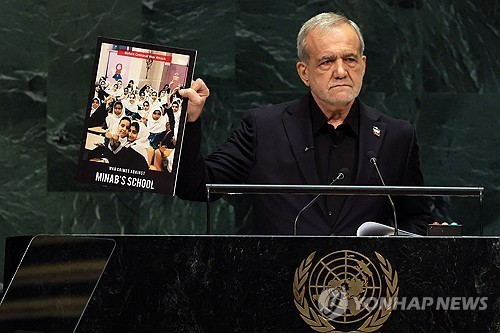
The Rupture Was Staged — But Not for Nothing
The images from the 81st United Nations General Assembly were almost cinematic in their absurdity. On September 23, Iranian President Masoud Pezeshkian rose to speak at the UN General Debate. Within minutes, the entire US delegation turned in unison and walked out. The cameras caught it all — rows of blank seats where American diplomats had been moments before, a gesture of contempt so deliberate it could only have been choreographed.
The day before, the table had been set the other way around. During Donald Trump’s address, Iran’s delegation had similarly fled, leaving behind a single practical staffer to glare silently at the podium. Two days. Two walkouts. Two superpowers performing their divorce on the world stage.
But here is what the footage does not show: beneath the theatrical rupture, a working diplomatic relationship was already in motion. Trump had just concluded a three-hour bilateral meeting with Ukrainian President Volodymyr Zelenskyy and told reporters the conversation about Iran had gone “very well.” Pezeshkian, in his very speech that triggered the American walkout, explicitly named Trump and left the door open for negotiations — provided the United States abandoned what he called “the logic of force.”
This is the paradox of US-Iran relations in September 2026: the two countries are simultaneously at war’s edge and at the bargaining table, staging walkouts for the cameras while sending envoys through back channels. The theater is real. The negotiation is real. Both are happening at once.
What the Walkouts Actually Signaled
To understand what just happened at the UN, you have to understand what Pezeshkian was holding up.
As he began his address, the Iranian president lifted photographs — not of military installations or diplomatic documents, but of bombed school buildings and the faces of children. He referenced the assassination of former Supreme Leader Ayatollah Ali Khamenei. He cited over 150 elementary school students killed in combined US-Israeli airstrikes. “We come from a homeland where our respected supreme leader was assassinated without any legal justification or pretext,” he said, framing Iran not as an aggressor but as a victim of terrorism.
The American response was immediate and coordinated. Delegates rose and filed out. It was protest, yes — but it was also performance. Every nation at the UN understands that walkouts are a language. They signal that dialogue has broken down, that the speaker is beyond engagement. But they also create space. When the Americans left that chamber, they freed Pezeshkian to deliver an unrestrained address to an audience that included leaders from Gulf states, European capitals, and Global South nations — the very people Washington wants to reach when discussing Iran’s nuclear program and regional behavior.
Trump’s own words during the previous day’s session were no softer. He offered Iran what he described as a binary choice: “agree or face annihilation.” He called Iran “the rogue state of the Middle East.” The language of ultimatums does not belong in a speech at the United Nations General Assembly — it belongs in a war room. That it was spoken there tells you something important about where the administration thinks the crisis stands.
The Energy Calculus
The walkouts made headlines. But the real drama is playing out in markets that measure stability in barrels per day.
Iran holds approximately 9.1 percent of the world’s proven oil reserves and 32 percent of its natural gas reserves. More critically, the Strait of Hormuz — a narrow chokepoint through which roughly 20 percent of global petroleum flows pass — sits directly adjacent to Iranian territory. Any escalation between Washington and Tehran does not merely risk a regional conflict. It risks the single most important energy artery on the planet.
Oil prices reacted to the UN spectacle with the muted indifference of markets that have priced in Middle Eastern volatility for decades. But that indifference is itself a warning sign. When traders stop reacting to diplomatic incidents, it usually means they expect something worse to come.
The Iranian leadership understands this leverage. Pezeshkian’s speech was carefully calibrated to remind every Gulf state, every European capital, and every emerging economy sitting in that General Assembly hall that Iran can make energy security a crisis — not just a threat. The photographs of dead children were not only moral arguments. They were signals to an audience that includes the princes of Riyadh and the technocrats of Dubai, reminding them that their own pipelines run through waters adjacent to a country that has learned to weaponize geography.
The Back Channel Reality
Here is what English-language coverage has largely missed: despite the walkouts, despite the ultimatum language, despite the public posturing, actual negotiations were underway.
Trump’s three-hour conversation with Zelenskyy — conducted the day before the American delegation stormed out of Pezeshkian’s speech — specifically addressed Iran. That timeline is too precise to be coincidental. It suggests a coordinated strategy: publicly escalate while privately engaging. The walkouts served the domestic audiences — hardline hawks in both Washington and Tehran who need to see strength — while the real diplomatic work continued in rooms without cameras.
Pezeshkian’s closing remarks confirmed the dual track. He named Trump directly. He said Iran was ready to negotiate. But he attached a condition: the United States must abandon “the logic of force.” This is not the language of a regime preparing for total war. It is the language of a leadership seeking an off-ramp that preserves domestic credibility. The offer is real. The conditions are specific. And the fact that it was delivered in a speech that triggered a walkout is precisely the point — it allowed Iran to appear maximalist publicly while leaving a negotiation channel open privately.
What Comes Next
The UN General Assembly debate is over. The walkouts will be remembered as dramatic images. But the question that matters is whether the parallel negotiation track produces a framework that both sides can sell to their domestic audiences.
Washington faces a simple problem: how do you claim victory over a nuclear program you never publicly acknowledged was being discussed? Tehran faces the inverse: how do you accept limits on enrichment without appearing to surrender to American pressure? The walkouts were performances designed to solve exactly these political dilemmas — they allowed both governments to look uncompromising while their diplomats worked behind the scenes.
For global markets, the takeaway is sobering. The US-Iran conflict is not heading toward resolution. It is being managed — carefully, theatrically, and with enough ambiguity to prevent either side from being forced into a corner. Energy prices will remain range-bound. The Strait of Hormuz will stay open, for now. But the underlying tension is structural, not episodic. Every walkout at the UN is a reminder that the two countries are still enemies who have not found a way to coexist, only a way to avoid making the conflict worse.
That is not peace. It is not war. It is the longest, most exhausting stretch of all — the prolonged standoff where diplomacy becomes a form of combat and every stage appearance is a tactical calculation.