Unitree's IPO Is China's Playbook for AI Hardware Dominance
China's top humanoid robot maker just pulled one of the year's biggest listings, but the real story is what the CCP's fast-track approval reveals about Beijing's strategy to dominate AI hardware before Washington can block it.
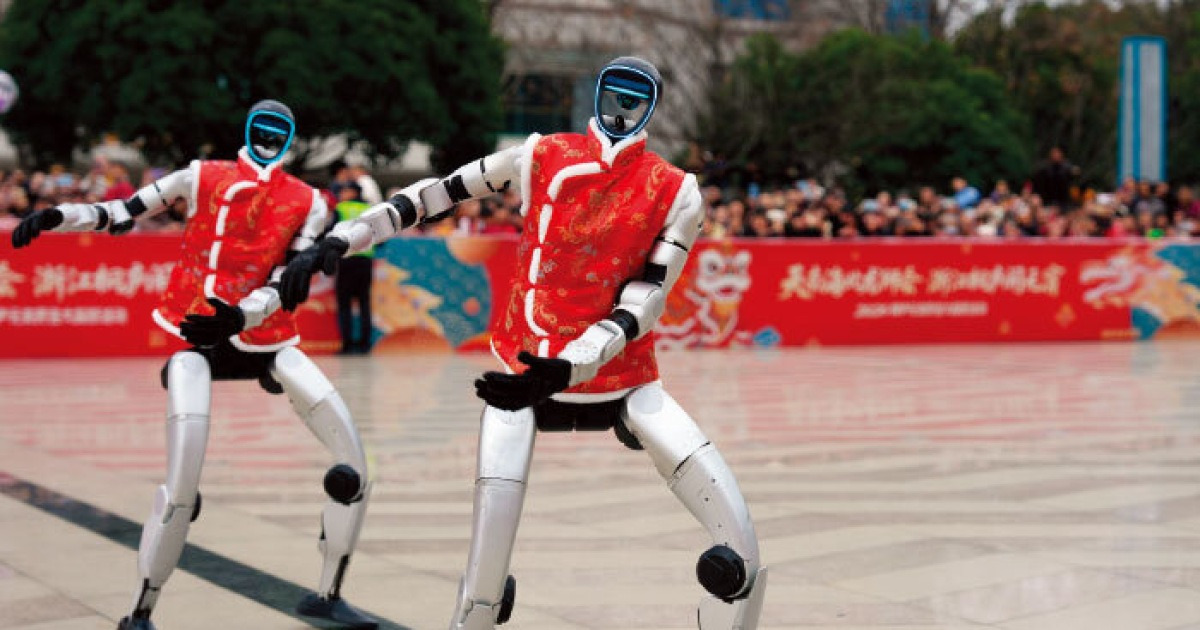
The Listing That Was Never in Doubt
Unitree’s listing on the Shanghai Stock Exchange’s Science and Technology Innovation Board, known as STAR Market, on August 19 was designed to be spectacular. It delivered. Shares opened 629% above the 150.8-yuan offering price, briefly pushing the company’s market capitalization to 444.9 billion yuan—roughly $63 billion. By close the next day, the stock had given back nearly a fifth of those gains, settling at 687 yuan. Even so, the first-day frenzy revealed something more consequential than the price action: China’s regulator fast-tracked this IPO through a pre-review system that cut the approval timeline to 104 days, less than a third of the 393 days it typically takes for other STAR Market listings.
Unitree was one of only two companies—the other was memory chip maker CXMT—to receive that expedited treatment in the last quarter. The timing and the paperwork are not coincidental. They are evidence of a deliberate policy architecture that treats cutting-edge hardware IPOs as strategic infrastructure, no different in the CCP’s calculus than roads, ports, or high-speed rail.
What Unitree Actually Sells
To understand why this matters, you have to separate the hype from the revenue. Unitree shipped 5,511 humanoid robots in 2025, capturing roughly 32% of the global market for the category. Revenue jumped 226.8% year over year to 1.699 billion yuan. The company is one of the rare robot builders operating profitably, largely because it vertically integrates its core components and drives costs to about a tenth of its competitors’. A G1 model retails for $13,500. An H2 costs $29,900. Those prices would be unthinkable from a Western manufacturer using the same supply chain.
But here is what the balance sheet does not show you: nearly three-quarters of Unitree’s 2025 humanoid revenue came from research, education, and performance use. Only about 9% of total revenue originated from industrial or business deployment. Of that smaller slice, just under a third came from actual factory floors, patrol operations, or production environments. The rest was showroom models and exhibition robots.
This is not a failure. It is a pattern. China’s humanoid robot industry is in the same position the EV sector occupied a decade ago—cheap enough to scale, not yet proven at the depth of industrial use. The difference is that China is treating the gap between demonstration and deployment as a funding problem, not a technology problem. Unitree’s IPO proceeds—6.1 billion yuan—will go toward AI model research, new product development, and factory expansion. The goal is to compress that gap faster than any Western competitor can replicate the manufacturing base.
The US Move That Came Too Late
In July, the Federal Communications Commission banned the import of Unitree’s existing robots and any future quadruped and humanoid models from China. The restriction targets radio-frequency components and falls under existing national security provisions. It is a meaningful blow. Unitree derived 13% of its total revenue from the American market last year. That share will now have to be replaced by other geography.
But the ban also confirms what Beijing already assumed: the US views humanoid robotics as a strategic sector on par with semiconductors and advanced AI models. The irony is that the restriction applies only to new imports. It does not dismantle the supply chains Unitree has already built inside China, nor does it slow the domestic rollout of these machines. And it does not prevent Unitree from selling the same robots through third countries or repackaging them under different brand names. The FCC order is a wall, not a moat.
Washington’s response has been narrow because it has been incremental. Each new restriction addresses a single company or component. China’s response has been structural. The pre-review IPO system, the subsidies, the state procurement pipelines, and the domestic capital markets all operate as a single machine. Unitree’s listing is the latest gear in that machine engaging.
The Chinese Retail Frenzy That Should Worry Institutional Investors
The subscription period for Unitree’s retail offering attracted roughly 9.78 million individual investors. The competition ratio was 5,526 to one. Total order value reached 8.1 trillion yuan—surpassing even the CXMT memory chip IPO the month before. This is not passive capital. It is a nation of retail traders betting that state-backed technology champions will deliver returns that outpace the alternatives in an economy where property has stalled and bond yields are near zero.
The danger for outside investors is that this kind of demand distorts pricing in ways that fundamentals cannot justify. Unitree’s offering price implied a price-to-earnings ratio of 219. That is six times the robotics industry average. The stock has already given back a meaningful portion of its first-day surge. But the underlying question remains: if 9.78 million people can bid into a single IPO, how much of the valuation is driven by conviction versus the fear of missing out on a state-favored winner?
Korean investors cannot buy Unitree directly. It is an A-share, restricted to domestic retail participants. Indirect exposure is possible through funds like Samsung Asset Management’s KODEX China Humanoid Robot ETF, which may add Unitree as early as September 2 if index methodology conditions are met. The ETF route is a reminder that Western and Korean institutional players are already positioning for a sector where retail China has bet its savings.
The Bigger Picture: Red Tech as Export Strategy
The term Red Tech entered Chinese policy discourse after Western sanctions reshaped the calculus around technology self-reliance. The original assumption was defensive: build domestic alternatives to replace what the US might block. The newer assumption, visible in Unitree’s case, is offensive. The goal is no longer just substitution. It is scale, price leadership, and global market share in categories where the US has not yet established dominance.
Humanoid robotics fits that description precisely. The US leads in foundational AI models and in some sensor and actuator components. China leads in manufacturing scale, cost reduction, and state-coordinated capital deployment. The two advantages do not cancel each other out. They create a new competitive axis: who can get these machines cheap enough to replace human labor in factories, warehouses, and service roles before the other side figgers out how to compete on price.
Unitree’s IPO is a milestone in that race. The 629% opening pop is noise. The 104-day regulatory fast track is signal. The fact that a robot maker can raise 6.1 billion yuan from retail investors while the company still derives less than 10% of its revenue from actual industrial use tells you exactly where China thinks it is winning: not in today’s P&L, but in tomorrow’s supply chain.
What happens next depends on whether the US broadens its restrictions beyond radios and components into software, data, and manufacturing equipment. If it does, China’sRed Tech machine will accelerate. If it does not, Unitree and its competitors will keep flooding the global market with robots that cost a tenth of what Western equivalents would charge. Either way, the listing on August 19 was never just about raising capital. It was about declaring that China considers humanoid robots a strategic export category—and it is ready to fund that claim at public-market scale.