US Sanctions Now Cut Off Iranians From Family, Classrooms and Stadiums
The US has eliminated the last humanitarian exceptions in its Iran sanctions regime, blocking personal remittances, academic exchanges and sports. The move sends a message of total economic isolation — and forces universities, unions and allies to pick sides.
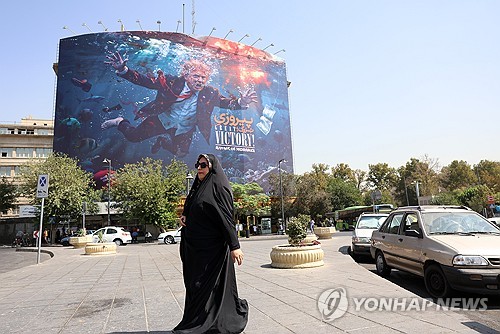
The Last Exception Just Died
For years, the US had been squeezing Iran through layers of sanctions while leaving one thin crack open: a narrow exemption that allowed Americans to send money to family members still living there, routed through a handful of third-country brokers who knew the procedure. It was never meant to be generous. It was a pressure-valve — a way to let the regime’s critics at home claim the sanctions were not inhumane.
That valve is now sealed.
On August 24, the Treasury Department’s Office of Foreign Assets Control (OFAC) confirmed that the personal-remittance exemption would no longer be applied. Around the same time, it published an expanded list of prohibited categories covering academic and educational services, and both amateur and professional sports exchanges with Iran. The message, however implicit, was unmistakable: this is no longer about constraining behavior. It is about isolating a society.
CNN reported the details first, and the consequences — for ordinary Iranians, for diaspora communities, for universities and athletic federations — are already rippling outward.
Money That Was Never About Commerce
The remittance block is the most immediate human impact. Thousands of Americans of Iranian descent have been sending money home to parents, siblings and children through a fragile but functioning pipeline. It was always a small stream — not commercial trade, not sanctioned goods, just survival money crossing borders that the US had increasingly treated as sealed.
The US had tolerated this channel precisely because it went through controlled intermediaries. Eliminating it does not change Tehran’s behavior. It changes what happens to families in Tehran, Mashhad and Shiraz who now have one fewer thread connecting them to relatives abroad.
Diaspora communities in Los Angeles, London, Stockholm and Toronto have spent decades building exactly this kind of bridge. They are now told to cut it. The psychological signal is as significant as the financial one: the US is no longer distinguishing between the Iranian state and Iranian people in its sanctions architecture.
The Academic Freeze
The ban on academic and educational service exchanges with Iran is the second major escalation, and it lands with particular force on American universities — many of which already face domestic political pressure over research collaborations.
Iranian students have long been among the top international enrollees in US STEM programs. Iranian researchers collaborate with American labs on everything from materials science to Middle Eastern history. These ties are not trivial. They are the soft infrastructure of a relationship that has been on life support since the 1979 revolution.
Banning them does not make Iran less dangerous. It makes the next diplomatic opening harder to reach, because there will be fewer channels left through which trust can accumulate incrementally. It also risks driving Iranian academic cooperation eastward — toward Chinese and European institutions that face no such restrictions.
Universities across the US will now have to audit their existing arrangements with Iranian partners and decide, quickly, which relationships survive and which must end. The ones that survive will do so under greater legal risk. The ones that end will disappear entirely, not just pause.
The Stadiums Go Dark
Sports was already the canary in the sanctions mine. During the 2026 FIFA World Cup — co-hosted by the US — Iranian national team members faced unprecedented movement restrictions. Visas were issued only to essential personnel. Teams had to enter the host country within 24 hours of a match and depart immediately afterward, returning to Mexico rather than staying for normal transit.
Those rules drew global criticism from football’s governing bodies and from fans who saw a sporting event being weaponized. The new OFAC directive now codifies what was, in World Cup terms, an ad hoc experiment: sports exchanges with Iran are formally prohibited, amateur and professional alike.
This will reverberate beyond football. Iranian artists, musicians, wrestlers and athletes have used sports and cultural events as rare diplomatic backchannels. Those doors are now closed. International federations that depend on Iranian participation will face a choice: enforce the US sanctions and exclude Iran, or ignore them and risk secondary penalties.
Secondary Sanctions Reach Further
Perhaps the most consequential element of the new sanctions package is the expansion of secondary sanctions — penalties imposed not on Iranians, but on third-country entities that do business with them in designated sectors: digital assets, technology, gold, aviation and shipping.
These are the areas where Iran has historically found loopholes: converting sanctions-evasive payments into cryptocurrency, routing transactions through shell companies, using gold as a hard-currency substitute. Washington is now threatening foreign banks, shipping firms and tech companies that continue to facilitate such workarounds.
For European and Asian companies, the calculus is brutal. The EU has repeatedly objected to the extraterritorial reach of US secondary sanctions, calling them incompatible with international law. But objection does not protect a German bank from losing access to the dollar clearing system. The choice is no longer abstract — it is balance-sheet concrete.
Several countries will feel the squeeze immediately. Nations with significant trade with Iran, including China and Turkey, will have to decide whether that trade survives under the new terms. Smaller economies dependent on Iranian shipping routes or energy flows may face harder adjustments.
Who Wins, Who Loses
The winners are easy to name: hardliners in Tehran who can point to proof that the West wants total isolation, and hardliners in Washington who argued the exemptions were a betrayal. The lose side is broader and less organized: Iranian families separated by borders, American universities losing a pipeline of talent and partnership, global sports federations forced to politicize competition, and companies in allied countries caught between two sovereign legal systems.
There is also a strategic cost that US policymakers may be underweighting. When you eliminate every channel of contact — money, knowledge, sport — you remove the very mechanisms that have historically built the familiarity necessary for negotiation. Sanctions that isolate completely do not necessarily coerce; they can entrench. Iran has survived worse than this. What it cannot easily rebuild is the web of relationships that makes diplomacy possible when the moment eventually arrives.
The question now is not whether the sanctions will bite. They will. The question is what kind of Iran emerges on the other side — and who is left standing when the next crisis demands a conversation.