Israel's Stalemate Election and What It Means for the Middle East
Final polls point to a hung Knesset — and a fragile post-election period that could reshape Israel's foreign policy. With Arab voter turnout potentially surging, even one seat could tip the balance in Washington's most consequential regional ally.
The Polls Say Nobody Wins
Israel is heading into what looks like another hung Knesset — and the final polls tell a story far more complicated than a simple Netanyahu-vs-everyone framing.
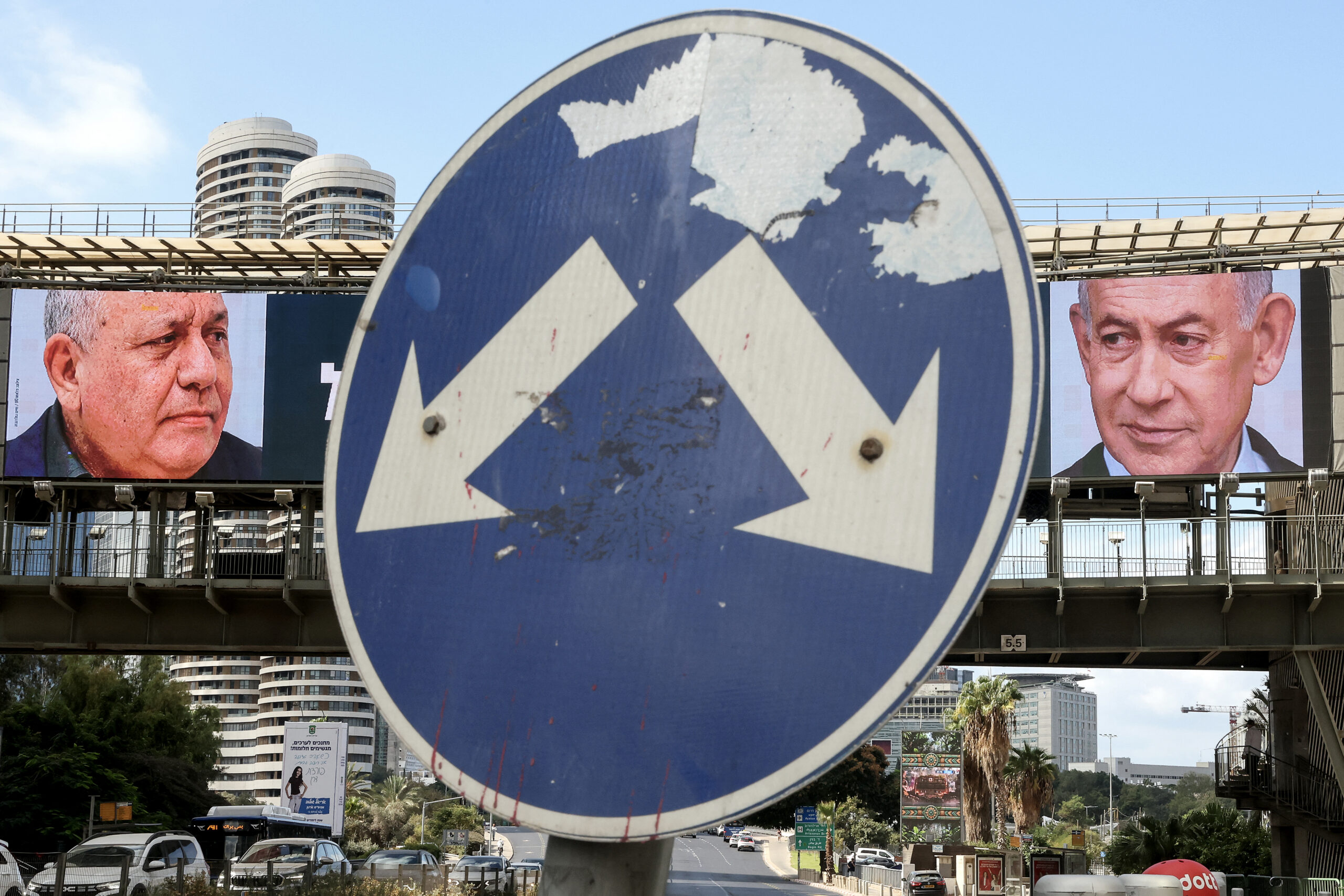
The overall polling average puts Prime Minister Benjamin Netanyahu’s coalition at roughly 54 seats and the opposition bloc led by former IDF chief Gadi Eisenkot at 50. Both fall short of the 61-seat majority required to govern. That gap — four seats — is smaller than most commentators are acknowledging, and it matters enormously once you factor in the next variable.
Because Israeli electoral law bans poll publication from Friday until election day, the public won’t see new data before voting begins Tuesday. That creates a blind window where campaigns operate on momentum, not measurement. And momentum, in a country this fragmented, can shift fast.
The more interesting divergence isn’t between the averages — it’s between the sources. Mainstream TV and newspaper polls, averaged across six outlets, actually give Eisenkot’s bloc a narrow lead: 52 to 50. Right-leaning Channel 14 and i24 News, which use pollsters with Likud ties, project a Netanyahu majority of 61 seats to Eisenkot’s 45. That’s not a margin of error. That’s a chasm built on methodology, not mood.
What this tells us is that Israel’s electorate isn’t just divided along ideological lines. It’s divided along institutional ones — which news organ you trust, which pollster you believe, which version of reality you inhabit. That fragmentation is itself a political force.
The Arab Vote Could Rewrite the Math
Here is the part most English-language coverage will undersell: Arab voter turnout.
The Joint List and Ra’am are polling at 14 seats combined, down slightly from their 2020 record of 15 when they ran as a unified list. On paper, that’s not world-changing. But Stat-Net — the polling institute that specializes in Israel’s Arab population — projects turnout among Arab citizens could reach 68 to 69 percent this cycle, up from roughly 50 percent over the past decade.
Why does that matter beyond the seat count? Because higher Arab turnout raises the effective threshold for entering the Knesset. Israel’s electoral threshold sits at 3.25 percent of the national vote. More votes cast means more votes needed to clear that bar. Parties hovering near the line — Amcha Yisrael and the Reservists and Economy Party, both stuck around 3.25 percent in recent surveys — could be squeezed out entirely if turnout surges.
In the mainstream polls, the Reservists and Economy Party averages three seats. Crucially, it has not committed to recommending either Netanyahu or Eisenkot for prime minister. That positions it as a kingmaker in a hung parliament — or as a casualty of a higher turnout floor. Both outcomes shift the arithmetic.
Higher Arab turnout also boosts overall national turnout, which benefits larger parties proportionally more in Israel’s proportional system. The net effect is unpredictable but directional: it adds uncertainty to every projection, and uncertainty is the one resource a fragile coalition doesn’t need.
Who Wins, Who Loses
Netanyahu loses if the stalemate holds and he cannot assemble a governing coalition. He has governed before through maneuver, not mandate. But each iteration erodes his bargaining position — with his own right flank, with Washington, and with the Israeli public’s tolerance for political theater. A second or third failed coalition attempt in rapid succession is not inconceivable, and each failure makes the next attempt harder.
Eisenkot wins only if he can hold together a coalition of people who do not naturally sit at the same table. The former general has credible security credentials, but his bloc includes parties ranging from centrist to secular-left to Arab-list partners. Governing Israel requires more than a majority in theory. It requires a majority that agrees on defense policy, settlement policy, and the basic narrative of the country’s conflicts. Eisenkot’s coalition is a necessity alliance, not an organic one.
The kingmakers — the Reservists and Economy Party, potentially Amcha Yisrael if they clear the threshold — win by virtue of irrelevance. In a hung Knesset, the parties that refuse to pick a side gain leverage they would never have in a stable government. That leverage will be spent on portfolio positions, policy concessions, and possibly prime ministership recommendations that go to whichever bloc offers the most favorable terms.
What Washington Should Watch
A hung Knesset is not a crisis for Israel. It is a condition of Israeli politics. But it is a moment of vulnerability for US-Israel relations, and Washington should treat it as such.
Netanyahu’s relationship with the Trump administration has been transactional and frequently strained. A weakened prime minister negotiating from a position of coalition instability has less capacity to deliver on controversial agreements — whether on Iran, Gaza reconstruction, or normalization with Saudi Arabia. Conversely, an Eisenkot-led government would represent a qualitatively different posture toward the US, one more aligned with traditional diplomatic frameworks but potentially less flexible on settlement policy and security arrangements that have defined the current era.
The timeline matters. Coalition negotiations in Israel can take weeks. In that window, policy freezes are common — defense procurement, diplomatic initiatives, settlement approvals all slow down or stop. For a region already volatile, a three-to-six-week policy vacuum on the Israeli side is not abstract. It creates space for actors on every flank to test boundaries.
The Bigger Picture
Israel’s election is never just about Israel. The stakes here are layered: domestic governance, regional security dynamics, and the trajectory of US engagement in the Middle East. A stalemate outcome means none of those layers resolve cleanly.
The polling gap between mainstream and right-leaning sources suggests that even after Tuesday, Israel will not know who won until theKnesset meets and the arithmetic becomes real. That ambiguity is its own kind of risk — for Jerusalem, for Tel Aviv, for Washington, and for every capital watching how a country of nine million people decides who gets to steer it next.