Voyager 1 Reaches 1 Light-Day — But Its Instruments Are Quietly
Voyager 1 has reached a historic distance—173 times the Earth-Sun gap, where even light takes a full day to arrive. But the spacecraft is dying, and NASA's future depends on choices made long before this signal arrives.
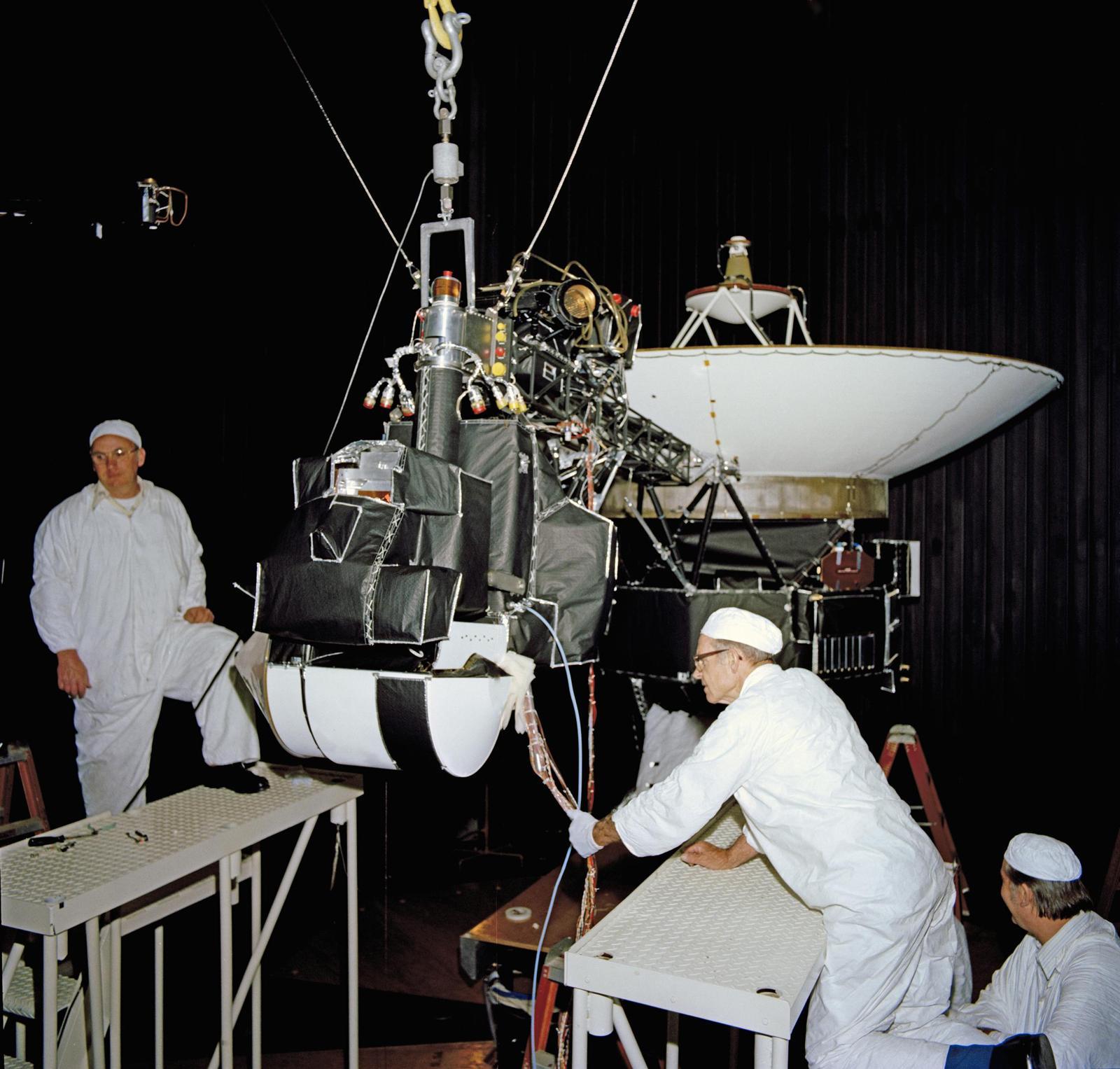
A Signal That Takes a Day to Arrive
There is a particular kind of loneliness that comes with watching something you built continue moving when you can no longer reach it.
On November 18, 2026, NASA confirmed that Voyager 1 had crossed a threshold no human-made object had ever reached: one light-day from Earth. Twenty-five point nine billion kilometers. One hundred seventy-three times the distance between our planet and the Sun. When ground controllers send a command to that probe today, they will not receive an acknowledgment until tomorrow evening.
Two full days pass between question and answer. Voyager 1 is moving away at roughly 61,000 kilometers per hour—fast by earthly standards, yet slow enough that the math feels almost gentle. It arrived at this distance after forty-nine years of uninterrupted coasting, having slipped past Jupiter and Saturn in the late 1970s, snapped its famous “Pale Blue Dot” photograph in 1990 from six billion kilometers away, and in 2012 became the first human artifact to enter the space between stars.
It is, by any reasonable definition, the most distant thing we have ever built. And it is quietly running out of power.
The Lights Going Out
What makes this milestone feel bittersweet—and why it should unsettle anyone who cares about American science—is that Voyager 1 is dying while we celebrate its arrival. Not dramatically, not suddenly, but in the same way a candle gutters when the wax runs thin.
The spacecraft runs on heat generated by the decay of plutonium-238. Over nearly five decades, that heat output has dropped steadily. NASA has responded by switching off instruments one by one: cameras, spectrometers, particle detectors—all sacrificed to keep the core systems alive just long enough to send back whatever data remains possible.
As of this writing, only two instruments are still operational: the magnetometer and the plasma wave receiver. Two sensors on a probe that once carried more than a dozen. The rest are dark, their circuits cold, their work done.
This is not failure in the conventional sense. Voyager 1 has exceeded every expectation placed upon it. Its designers built it for four years of planetary flybys; it has operated for fifty. But there is a difference between enduring beyond your design life and having the runway simply disappear beneath you.
Each instrument NASA turns off represents a loss of knowledge that no one will recover. We do not know what phenomena lie in the heliosheath or the outer reaches of interstellar space that those dormant sensors might have detected if they were still listening. Every shutdown is a small death of curiosity.
Why This Should Matter Right Now
The timing of Voyager 1’s one-light-day milestone lands in a political environment where NASA’s budget faces scrutiny, where deep-space exploration is routinely treated as discretionary spending rather than strategic investment, and where the agency’s next flagship mission—the Europa Clipper—already required painful compromises before launch.
There is no direct causal link between Voyager 1’s fading instruments and congressional appropriations decisions. But the symbolism is impossible to ignore: here is America’s greatest deep-space achievement, approaching an entirely new regime of distance and darkness, operating on borrowed time, while the people who fund and oversee it debate whether such ventures deserve priority funding.
The argument against sustained investment in deep-space science is usually framed around opportunity cost: why spend billions exploring the outer solar system when problems exist on Earth? That argument is familiar, ancient even, and not wrong on its face. But it rests on a category error. Space exploration does not consume resources that would otherwise cure disease or build infrastructure. It consumes political attention, and political attention is a renewable resource—if you choose to invest in it.
Voyager 1 was launched during the Carter administration, funded through a process that did not involve viral marketing campaigns or social media tie-ins. It was built because scientists and engineers believed that understanding the outer solar system mattered intrinsically—that the Pale Blue Dot image, taken from six billion kilometers away, would change how humanity saw itself. It changed more than perception. It changed philosophy, theology, literature, and environmentalism. Carl Sagan’s book inspired by that photograph entered the global consciousness permanently.
The return on that investment cannot be measured in kilowatts or kilograms. It has been measured in exactly one metric that matters: did anything good come from it? Yes. Everything good, in fact.
The Fragility of Long-Running Missions
Voyager 1’s declining power illustrates a structural vulnerability in deep-space exploration that policymakers rarely consider. These missions operate on timelines that outlive electoral cycles, administrative terms, and sometimes the careers of the scientists who proposed them. Funding decisions made in one decade determine what instruments are online—or offline—in the next.
There is no contingency plan for a failing probe at twenty-five billion kilometers. There never was. When the plutonium decays and the last instrument goes dark, Voyager 1 will continue moving into interstellar space for millions of years, silent and powerless, carrying with it a golden record intended as a message to any intelligence that might one day find it.
That record includes sounds of Earth—wind, thunder, whales, a mother kissing her child—alongside images of human anatomy, DNA structures, and mathematical constants. It is humanity’s longest-lived postal service,投递 into a void that may never yield a response. That is not a flaw in the design. It is the design.
The emotional resonance of this moment comes from exactly that tension: we have sent something fragile across distances so vast that communication itself becomes an exercise in patience, and we are doing so with equipment that was conceived before many of us were born, guided by mathematics and courage rather than guarantees.
What Comes Next
NASA has announced plans for a global event on November 17, inviting people worldwide to shine flashlights or phone lights in the pattern of “VGR” in Morse code—a nod to Voyager’s call sign. A documentary marking the fiftieth anniversary of the launch is scheduled for next year. These gestures matter. They remind a public increasingly distracted by immediate crises that some of our most enduring projects require nothing more than time and commitment.
But events and documentaries cannot replace institutional investment. The real question facing American science policy is not whether we can afford to support missions like Voyager—it is whether we can afford the alternative, which is a future in which the only probes leaving the solar system are those funded by private actors whose priorities may not align with open scientific inquiry.
Voyager 1 will cross two light-days from Earth within the next year and a half. At that point, a command sent today will take nearly three days to arrive. The gap widens continuously. The signals grow fainter. Eventually, the probes will go silent entirely, drifting into galactic orbits we cannot predict, carrying forward everything we knew about them at the moment of their final transmission.
This is not tragedy. It is completion. But it is also a reminder: these achievements do not sustain themselves. They require ongoing support, ongoing belief, ongoing willingness to invest in outcomes that will not be visible for generations. The fact that Voyager 1 is both our oldest and farthest probe, operating on dwindling power, while Congress debates whether deep-space exploration deserves priority funding, is not coincidence. It is a choice.
The choice, so far, has been generous. The question is whether it will remain generous when the next milestone arrives and the instruments are already dark.