Wash at Jackson Hole: The Fed–Treasury Split That Could Redraw Asian FX
Kevin Wash faces his first major test at Jackson Hole, caught between a Treasury that wants lower long-term yields and a Fed that sees higher rates as a form of quiet tightening. The rift matters far beyond America — the Korean won and other Asian currencies are already pricing in the fallout.
The speech nobody is talking about — yet
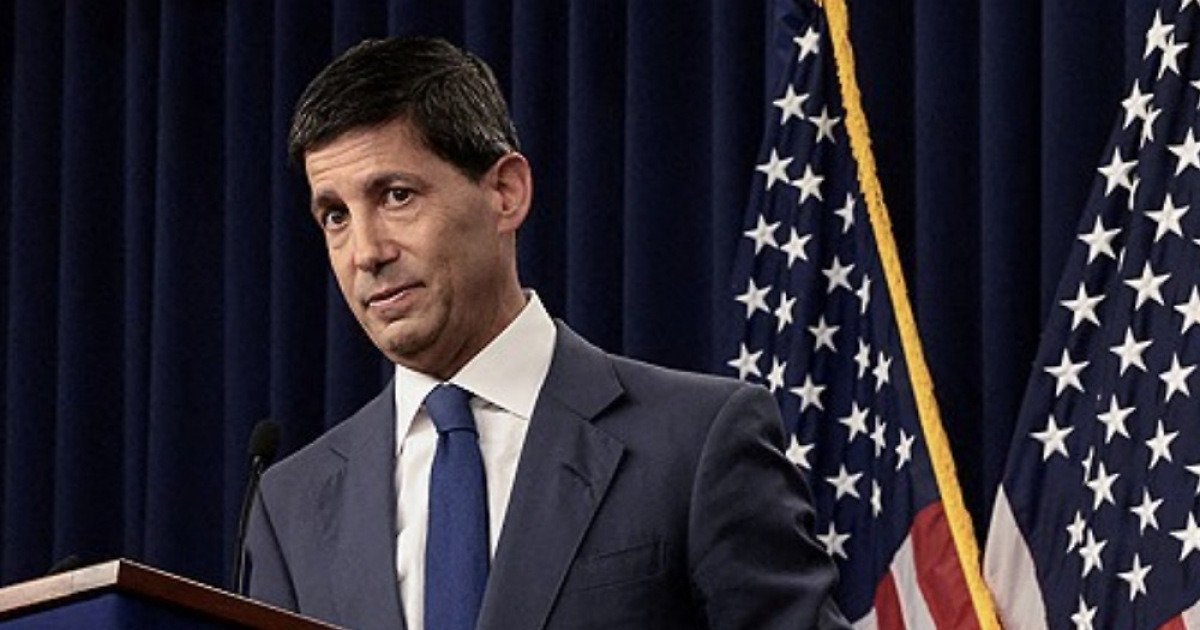
Jackson Hole is traditionally a venue for central bankers to signal direction. This year, it has become something else: a showcase for an open disagreement between two branches of American financial power. Fed Chair Kevin Wash is set to deliver his first major address at the economic symposium on Thursday evening (Korea time), and the market is watching not just what he says about inflation or growth, but what he implies about the relationship between the Fed and the Treasury.
The background is straightforward and potentially volatile. The 30-year US Treasury yield has climbed into the 5.3 percent range — the highest level since 2007. That move has not gone unnoticed. Treasury Secretary Scott Bessent’s department has responded by doubling its long-bond repurchase program, raising the per-session ceiling from $2 billion to at least $4 billion. The stated aim is to restore liquidity and ease borrowing costs for households and businesses.
Wash appears to disagree with the premise. According to reports from The Hill, he has signaled that rising long-term rates may themselves serve a tightening function, reducing the urgency for the Fed to act further. In this reading, the market is doing the central bank’s job — pricing in tighter financial conditions without a single rate hike. That puts him on a collision course with Bessent, whose entire intervention strategy depends on proving that market prices are wrong and need correction.
SilverGoldBug’s Eric Bregler put the divide plainly: Wash wants the Fed to let bond-market price signals speak for themselves, while Bessent is actively working to muffle those signals through intervention.
What Wash might actually say
Expectations for the speech are remarkably low. Morgan Stanley noted in a recent report that it believes Wash is genuinely inclined to minimize forward guidance on both the economic outlook and the monetary policy path. The assumption is that he will offer few new data points and even fewer policy revelations.
That caution is consistent with a chair who has preferred to let markets reach their own conclusions rather than announcing one. But it also raises a question that investors are increasingly voicing: if Wash refuses to acknowledge the financial-condition tightening already happening, what happens when the data starts confirming it?
There is a growing camp of market participants who want Wash to be explicit about one thing — how much weight he gives to long-term bond yields as an indicator of financial conditions. The current ambiguity is itself a policy choice. Silence in this environment is not neutrality. It is a bet that the market’s own discipline will do what direct action cannot.
Why the Korean won is already moving
The won has not been idle. The Korean currency has been sensitive to the same dynamics driving US long yields higher, and it is absorbing the shock through two channels. First, the outright rise in US rates makes the dollar a more attractive hold, pressuring the won simply through capital flows. Second, and more subtly, any sign that the Fed will tolerate higher yields — or worse, interpret them as sufficient tightening — removes the case for the Bank of Korea to stay accommodative while inflation pressures linger.
The Korean central bank already raised rates recently amid domestic cost-push dynamics and a housing-market overhaul cycle that has spooked investors. Every incremental signal from Washington that the US is fine with tighter financial conditions adds to the external pressure on Seoul. The won’s vulnerability is not just about the dollar — it is about the Fed quietly endorsing a tighter global financial environment.
For AsianFX traders, the equation is slightly different but equally real. The yen, the ringgit, the rupiah — all carry dollar-denominated debt maturities that become more expensive as long yields climb. A Fed that is comfortable letting 30-year yields sit at 5.3 percent is, whether it admits it or not, exporting financial tightening to every economy with a dollar-currency mismatch.
Who wins, who loses, and what comes next
If Wash uses the Jackson Hole platform to reaffirm his hands-off stance on long yields, the immediate market implication is a stronger dollar and continued pressure on emerging-market currencies. The Treasury’s intervention program will likely continue, but its effectiveness diminishes if the Fed is not aligned. Bessent can buy bonds, but he cannot control the terminal rate narrative. That tension is unlikely to resolve before year-end.
The biggest loser in this scenario is the borrower — whether a US household with a mortgage or a Korean exporter converting dollars back into won. The biggest winner is the dollar itself, which benefits from a Fed that treats market pricing as a policy tool whether it admits it or not.
There is a third possibility, of course. Wash could use the speech to nudge the conversation toward financial-condition metrics without explicitly endorsing the Treasury’s approach or rejecting it outright. That would preserve ambiguity and buy time. But ambiguity is not a strategy, and markets have already started pricing the current trajectory. The real test will come in the weeks after Jackson Hole, when the Fed’s next meeting approaches and the question of whether long yields count as tightening moves from the periphery to the center of the policy debate.
What English-language readers usually miss is that this is not merely a Washington dispute. It is a structural shift in how American financial policy is being coordinated — or failing to. The won, the yen, and every Asian currency watching from the sidelines are not passive observers. They are the variables in an equation that Wash and Bessent are still writing.