Washington Is Forcing Japans Hand on Rates—and It Gets Messier From Here
The US Treasury is demanding Japan raise rates while the yen stalls near 160. Tokyo now faces a policy trap: fight the currency collapse with higher rates, or watch long-term borrowing costs spiral—and drag American markets down with it.
Washington Is Forcing Japans Hand on Rates—and It Gets Messier From Here
Scott Bessent told Japanese officials they need to move on rates and fiscal discipline. Two weeks later, the yen is back where it started. Japan is now trapped between a currency in freefall and a bond market that refused to stay asleep.
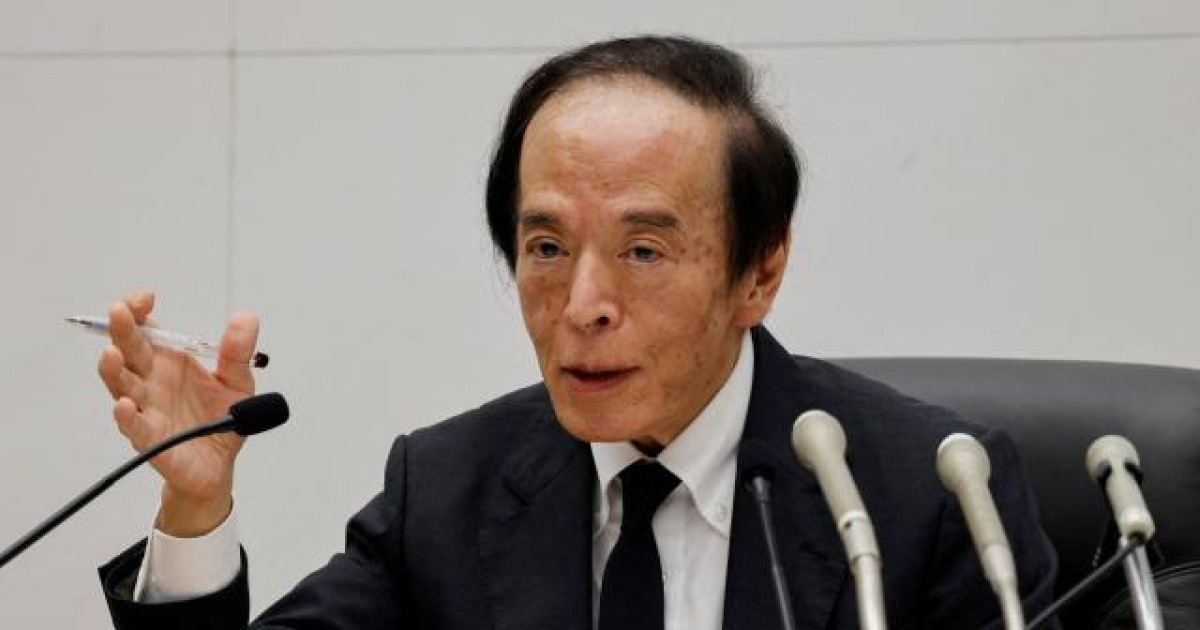
Undersecretary of the Treasury Erin Brown confirmed the meetings on September 1st: Bessent pressed BOJ Governor Kazuo Ueda and Finance Minister Satsuki Katayama separately ahead of the G20 finance ministers and central bank governors gathering, urging Tokyo to lay out a clear path for both fiscal sustainability and a credible rate-hike trajectory. Katayama confirmed the talks but drew a line—monetary policy specifics are the BOJ’s call. The phrasing was polite; the content was anything but.
Bessent went public on CNBC the day before: Japan should expect measures that strengthen the yen. He claimed, characteristically, to possess information the market did not. That may have been bravado. Or it may have been a signal to traders watching the dollars per yen cross.
The yen did nothing. After the July 31 US-Japan coordinated intervention briefly pushed the currency to 155 per dollar, it drifted back to 160 and stayed there. Intervention without a rate narrative is a temporary shock, not a trend change. The market now believes the BOJ will finally lift rates at its September 17–18 meeting—with a 90% probability, according to Nikkei calculations. Pricing for half a percentage point of hikes through December sits at roughly 70%.
The bond market reacted faster than the currency ever did.
Japan’s 10-year JGB yield climbed to 3.000% intraday on September 1st, the first time it has touched that level since September 1996. The auction that same day cleared at 3.011%. That is a line drawn in a thirty-year horizon.
So why does Washington care? Not only because a弱 yen hurts American exporters. The deeper anxiety is about the feedback loop between Japanese rates and American ones.
The logic runs in three steps. First, if the BOJ raises the policy rate, the interest rate differential narrows and capital flows home, giving the yen some support. Second, a rising short-term rate lifts expectations for long-term yields. Bondholders sell existing low-coupon JGBs, prices fall, yields rise. Third, if Japanese long rates climb steeply on fiscal fears rather than growth confidence, institutional investors—especially life insurers drowning in dollar-denominated liabilities—may reduce their holdings of US Treasuries and shift capital back to Japan. Less Japanese demand for American debt pushes US yields higher. That squeezes American mortgages, corporate borrowing, and the federal deficit at exactly the moment Bessent is trying to bring spending under control.
In other words, Washington is asking Japan to tighten monetary policy without spiking its own borrowing costs. It is asking Tokyo to walk a path that has not existed in practice since the mid-1990s.
The fiscal side of the problem is not getting easier. Ministry budget requests for the 2027 fiscal year, still being compiled, are tracking toward 143 trillion yen—another all-time high. Prime Minister Sanae Takaichi’s government is doubling down on expansive spending. When the finance minister was asked about fiscal sustainability after the meeting, his answer was that he had emphasized the goal of reconciling strong growth with fiscal discipline and believed he had gotten understanding. Understanding is not a reform package.
Long-term yields rose from roughly 1.6% when Takaichi took office last October to 3% in less than a year. That speed of repricing reflects one thing the market already knows: Japan’s debt-to-GDP ratio is above 250%, and every basis point higher in borrowing costs adds trillions of yen to annual interest outlays.
The BOJ faces a direct contradiction. To defend the yen, it must raise rates. But higher rates feed fiscal anxiety, which itself pushes long yields up. The two goals—currency stability and debt sustainability—are moving in opposite directions.
External forces are compounding the squeeze. Fed Vice Chair Kevin Wash, at Jackson Hole on August 28th, said there would be “something to do” if inflation does not convincingly decelerate. US 10-year Treasury yields subsequently climbed to the 4.7% range, the highest since January 2025. Middle East tensions lifted oil prices, adding an inflation layer that makes pre-emptive tightening more attractive for every central bank in the region, including the BOJ. None of this is new. All of it raises the floor under Japanese long rates whether Tokyo likes it or not.
There is a narrow window where the 3% level itself could attract buyers. The BNP Paribas fixed-income strategist quoted by Nikkei called it an attractive entry point, provided fiscal fears do not dominate. Some demand did appear in the September 1 auction. But the moment investors believe long yields will keep climbing—Nikkei’s expert survey points to a 2026 high around 3.5%, with some scenarios touching 4%—the rationale for buying at 3% evaporates. No one buys a bond at the front of a staircase.
The wider implication for Asia is worth spelling out. South Korea, Taiwan, and ASEAN economies watched closely when the US-Japan intervention failed to hold the yen. Each faces its own currency pressure, its own export-dependent growth model, and its own central bank that has been slower to tighten than the US Fed. If the BOJ moves aggressively while the rest of the region holds steady, capital will flow toward Tokyo and away from neighboring markets. If the BOJ hesitates, the yen weakens further and import-driven inflation bleeds across the region through energy and food prices.
Either path creates friction. The US Treasury prefers the first, because a stronger yen eases American competitive pressure on Japanese goods. But Washington also prefers the second, because a chaotic yen collapse would trigger emergency interventions that ripple through global liquidity. Bessent’s dual ask—to Japan—reflects exactly that contradiction: move, but not too fast.
That is a message any central bank can hear and interpret in whatever direction serves its own constraints. The BOJ will likely raise rates in September. The question that is still unanswered is what it does after, and whether Japan can let long yields climb without breaking something else.
If the answer is no—if Tokyo attempts rate hikes but simultaneously signals it will cap long-term borrowing costs through bond purchases or other devices—the market will eventually punish the contradiction. If the answer is yes, and rates rise freely, Japan re-enters uncharted territory. Thirty-year highs in bond yields are not merely data points. They are stress tests for governments that have not paid more than 1% on their longest debt in decades.
Washington is pressuring Tokyo because American markets can absorb the shock. Japan is absorbing the pressure because it has no alternative. The yen will either strengthen through higher rates, weaken through inaction, or become a bargaining chip in discussions that have nothing to do with Tokyo. Three outcomes. Only one involves Japan setting its own pace.