What a German State Loss Means for Europe's Far-Right
Germany's far-right AfD is on track to win its first state government since World War II. The implications stretch far beyond Saxony-Anhalt — reshaping EU migration policy and testing democratic resilience across Central Europe.
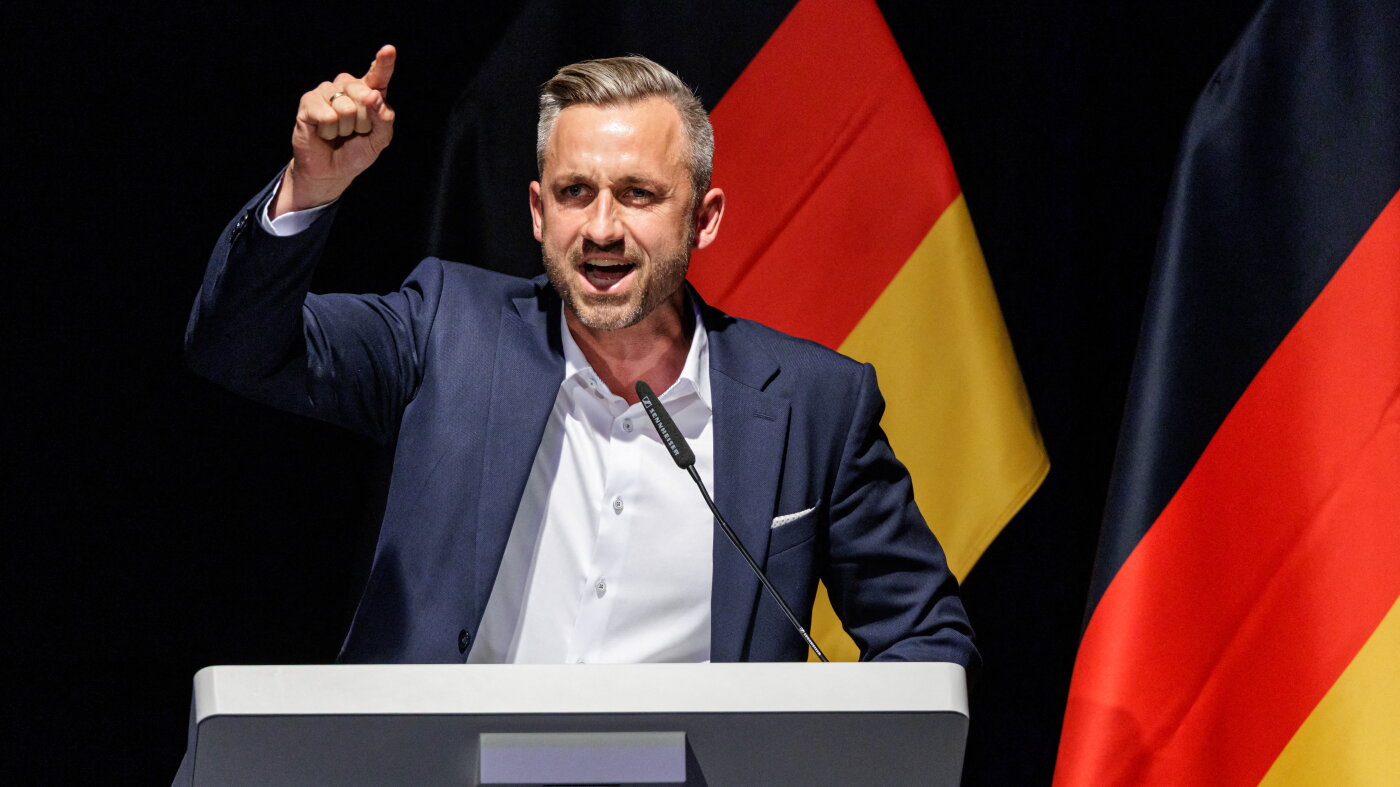
The Polished Face of Germany’s Far-Right
Ulrich Siegmund stands out at AfD rallies — not just for his policy positions, but for his appearance. The 35-year-old candidate for governor of Saxony-Anhalt arrives in immaculate white polos, his side parting neatly aligned, a practiced smile never faltering even when discussing mass deportations. He has nearly as many TikTok followers as there are eligible voters in this small eastern German state, and he answers their questions personally from his back porch.
This is the new face of Germany’s far-right: professional, media-savvy, deliberately温和 compared to the grimacing politicians who came before. Siegmund’s campaign trades in pep talks rather than policy detail. The real substance — the kind former AfD supporter Hannes Kreschel tries to force into conversations over beer and bratwurst — gets buried under carefully curated optimism.
But beneath the polished surface lies a party classified as right-wing extremist by domestic intelligence authorities in multiple German states, and a platform that includes barring “culturally foreign” health workers from Germany’s hospitals.
A Historic Breakthrough
Sunday’s election in Saxony-Anhalt could produce Germany’s first far-right state government since World War II. The Alternative for Germany currently leads polling comfortably, and a victory would mark a seismic shift in German politics — one that reverberates far beyond the state’s borders.
At the federal level, the AfD already polls first nationally. A state-level win would legitimize the party in ways internal classification reports cannot contain. It would transform the AfD from a protest movement into a governing force with access to state budgets, civil service appointments, and policy levers that shape millions of lives.
Who Votes AfD — and Why
Alexander Winsek, a 49-year-old aviation engineer waiting in line for lunch at a Halle market, represents the party’s expanding appeal. He says he would be voting AfD for the first time, attracted by their immigration restrictions while insisting he wants to stay in NATO and keep the euro. He is not pro-Russia, he stresses — but he finds Siegmund’s cheerful demeanor refreshing compared to what he describes as the doom-and-gloom rhetoric of other AfD figures.
Marcel Lewandowsky, a political scientist at Martin Luther University Halle-Wittenberg and author of “What Populists Want,” argues that most AfD voters are pro-democracy — but believe German democracy is not currently functioning. The party’s anti-establishment appeal, Lewandowsky notes, thrives because mainstream parties appear unwilling to share institutional power with what the AfD frames as a “silent majority.”
This framing has proven effective beyond eastern Germany. The AfD’s rise was once confined to the former East, but federal polling shows it leading nationally — a geographic expansion that mirrors its ideological one.
The Domino Question
A far-right government in Saxony-Anhalt does not exist in isolation. Germany anchors the European Union, and a state governed by a party committed to mass deportation and skeptical of EU integration sends shockwaves through Brussels and capital cities across Central Europe.
Poland and Hungary already govern with explicitly illiberal parties that share ideological DNA with the AfD. A German state falling to similar forces would provide political cover and organizational experience to movements across the region. It would also strengthen the negotiating position of Viktor Orbán and others who argue that border control trumps democratic norms.
For East Asian observers — in Japan, South Korea, and elsewhere — the implications cut differently. These countries watch Germany’s migration debate with particular interest, as their own societies grapple with aging populations and decisions about importing foreign labor. The AfD’s argument that doctors from India and other non-European countries “endanger patient well-being” reflects a broader pattern of nationalist resistance to multicultural workforce integration that resonates in conservative circles worldwide.
The Cost of Change
Kreschel, the former AfD voter turned critic, describes confrontations at rallies where campaigners have tried to hit him with microphones. He posted those encounters online, though they garner far less attention than Siegmund’s polished content. His conversion came after reading the party’s actual policies rather than absorbing the campaign spin — specifically its economic platform, which he argues benefits only the financially secure.
“I figured out that this is not the country I would like to live in,” Kreschel says. “I would like to live in an open country which is friendly and not full of hate.”
Yet Winsek and thousands like him see not hate but hope — and they are willing to overlook policy inconsistencies in favor of a candidate who projects competence and optimism.
What Comes Next
If the AfD wins in Saxony-Anhalt, the immediate consequences will include a dramatic restructuring of state migration policy, the appointment of controversial figures to key administrative positions, and a testing of Germany’s coalition-building norms. Chancellor Friedrich Merz’s own position faces pressure, as his party must decide whether to cooperate with or contain the AfD — a choice with federal implications.
Beyond Germany, the election will be closely monitored by European partners concerned about the stability of the EU’s migration framework and the cohesion of the Western alliance. Japan, South Korea, and other global observers will track how Germany’s democratic institutions respond — or fail to respond — to a far-right electoral breakthrough.
The smiling man on TikTok may be the face of tomorrow’s Germany — or at least tomorrow’s Saxony-Anhalt. But behind that smile sits a party that intelligence agencies consider a threat to the democratic order, and a political moment that could reshape Central Europe for decades.
What happens next depends on whether Germany’s established parties can offer a vision of democracy that competes with the AfD’s promise of belonging — or whether they continue to look, to too many voters, like an establishment unwilling to share power.