What WARDOGS' 210K Launch Signals for the Tactical FPS Race
A 100-player tactical shooter hitting 210K concurrent players on day one of early access is a jolt to an industry still recovering from the Valorant hangover. The numbers suggest Asian players are hungry for something bigger, and builders may have found their new home.
A number that shouldn’t be ignored
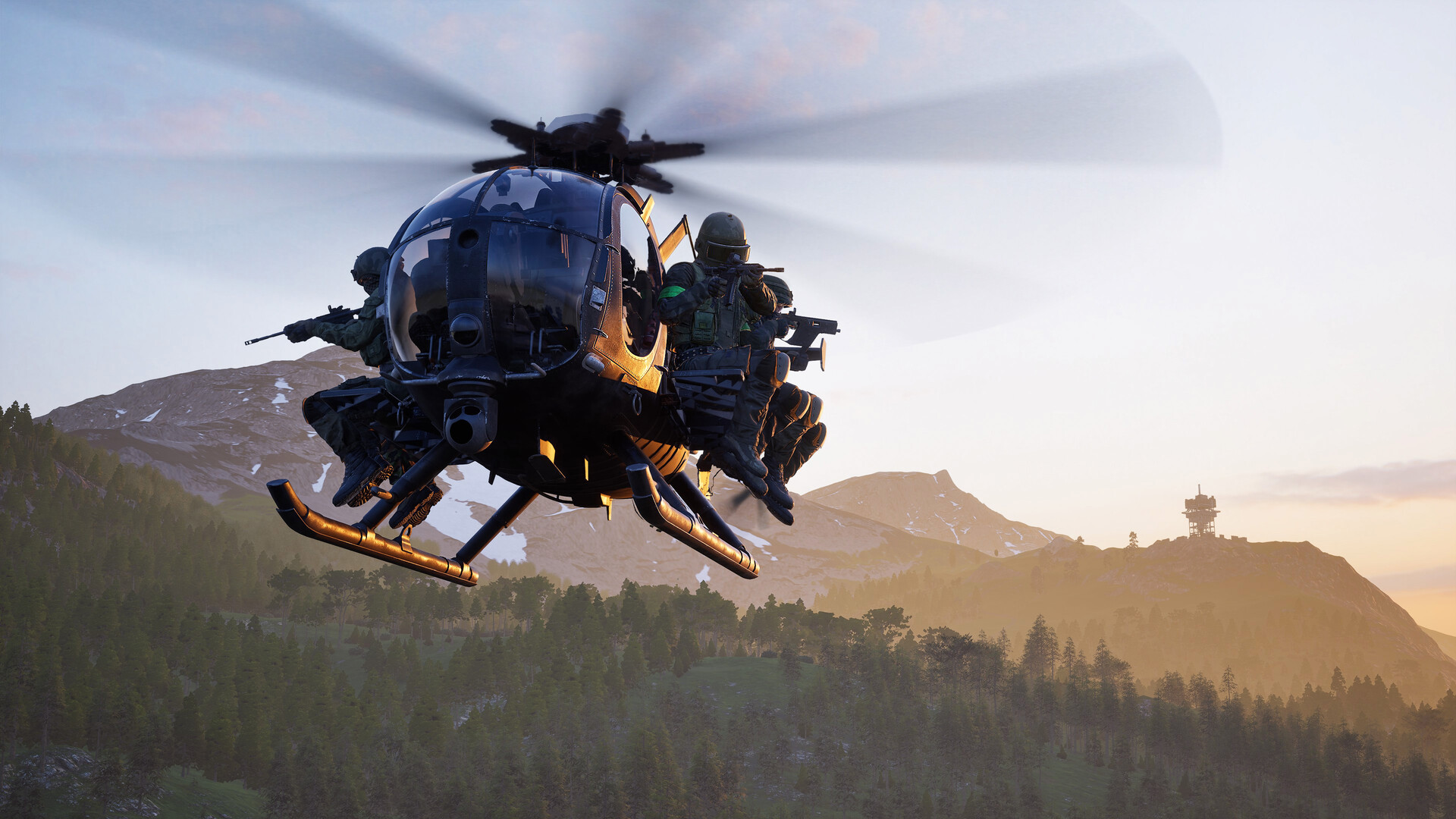
210,000 concurrent players on a single day. That is the figure released for WARDOGS during its early access launch window of September 7 through September 13, 2026. For a 100-player tactical FPS that is still technically in early access and has no confirmed retail price, that is not a soft opening. It is a market statement.
The game is being tracked by 4Gamer.net as one of the week’s major releases, but the real story is not the release itself. It is what the player count reveals about where the tactical shooter audience has been moving, and where it is willing to go next.
Who WARDOGS actually is
The setup is straightforward on paper. Three teams, a 256-square-kilometer map set in a post-industrial Eastern European landscape, and a control zone mechanic that spawns randomly every two kilometers. Points accumulate based on how many players are inside the zone, and the first team to 100 wins. You build. You fight. You hold ground.
What makes it stand out is the scale. Most tactical shooters now operate in the 5v5 or at most 10v10 format. Counter-Strike, Valorant, Rainbow Six Siege — the genre has converged on small-team precision. WARDOGS is testing whether there is appetite for something denser, messier, and more chaotic. One hundred players in a single match is a deliberate departure from that orthodoxy.
The builder-brawler opening
This is where the number gets interesting. The builder-brawler hybrid — part construction, part shooter, part battle royale — has had a rollercoaster trajectory. Games like Ratchet & Clank: Rift Apart showed the concept could work in a polished single-player package. Multiplayer experiments in the space have been mixed at best.
But the early access success of WARDOGS suggests the model is finding its footing in Asia, particularly Japan, where large-scale multiplayer experimentation has historically moved faster than Western publishers realize. Japanese players have been early adopters of everything from Monster Hunter Rise’s companion mechanics to the recent wave of arena shooters that prioritize mobility over positioning. The appetite for chaotic, high-participation matches exists. WARDOGS is simply the first title to package it clearly as a tactical FPS rather than a battle royale.
Why 210K matters beyond the hype
A launch number like this does several things at once. It gives publishers confidence to invest further. It signals to competitors that there is headroom for larger matches. And it creates a self-fulfilling loop: more players join because other players are already there.
The real implication is for the tactical FPS genre as a whole. For years, the dominant model has been Valorant and Counter-Strike — small teams, precise execution, economic rounds. That formula works. But it also creates a ceiling. Once you have saturated the audience for five-versus-five tactical shooters, growth comes from expanding the scope, not refining the micro.
WARDOGS is making that bet explicitly. Whether it sustains beyond early access is the next question. But the opening weekend proves the demand is real.
What this means for the competition
Valorant continues to dominate the tactical FPS conversation, but its growth in Asia has hit some friction. Chinese regulators have made periodic changes to the game’s content, and the title has faced localization challenges in multiple markets. WARDOGS, as a domestic Japanese release with a different design philosophy, occupies a space that Valorant does not — larger matches, more environmental interaction, less emphasis on individual ability precision.
Smaller competitors in the space should watch this closely. The 100-player format is not a gimmick. It is a legitimate alternative to the 5v5 paradigm, and if WARDOGS holds its player base through the full early access period, it will force every tactical FPS publisher to reconsider what scale means in this genre.
The other releases this week
Beyond WARDOGS, 4Gamer.net highlights three other titles launching this week. Halloween: The Game arrives September 9 as a one-vs-four asymmetric stealth horror on Steam and Xbox, priced at 5,100 yen with a Phantom pre-order bonus. It lets players experience the 1978 Halloween night from both the killer and the victim sides, which is a familiar but reliable hook for the genre.
Romance of the Three Kingdoms XIV with Power-Up Kit Complete Edition drops September 10 across Steam, PS Store, and My Nintendo Store at 9,680 yen. It bundles the 2020 strategy game with all past DLC plus new systems covering information warfare and general development — a collector’s package aimed squarely at series veterans who have been tracking the franchise since the 1980s.
And Touhou Koumaden: Scarlet Devil ~ the Embodiment of Scarlet Devil., released September 10 for 1,990 yen, remakes the 2002 doujin shooter for the first time. It is a vertical bullet hell that follows Reimu and Marisa as they breach the Scarlet Devil Mansion, and it appeals to a niche that has remained remarkably loyal across two decades.
The bigger picture
WARDOGS is the week’s most significant release not because of its franchise pedigree — it has none — but because of what its launch numbers prove. The tactical FPS genre is not dead. It is changing. And the shift is happening in markets that Western coverage often lags behind.
If the early access figures hold, 2026 could mark the moment the 100-player tactical shooter stops being an experiment and starts being a viable format. That would change everything about how these games are designed, marketed, and played.