When AI Cuts Its Prices in Half, the Whole Market Shifts
OpenAI's GPT-6 Sol and Luna slash API prices to half of the previous generation. The 'budget AI' race between OpenAI and Anthropic is doing something more important than making chatbots cheaper — it's rewriting the economics of who gets to use advanced AI and who gets left behind.
The Price Drop That Wasn’t Supposed to Happen So Fast
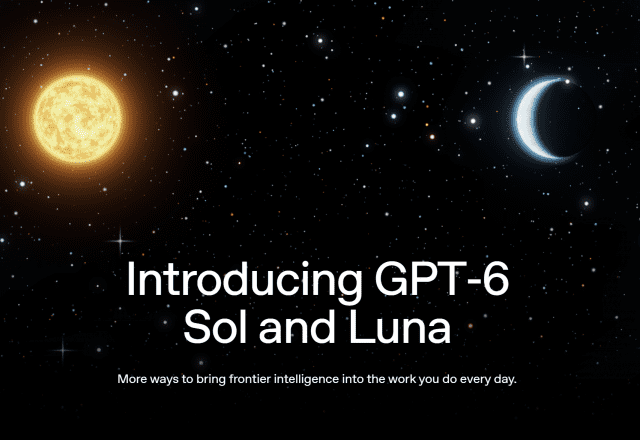
OpenAI released two new models on September 23 — GPT-6 Sol, aimed at coding and complex reasoning, and GPT-6 Luna, built for fast document summarization and information extraction. Both hit the market at API prices roughly half that of the GPT-5.6 generation. Inside factual accuracy tests, Sol cut its error rate by approximately 50 percent compared to its predecessor. Within ninety minutes of OpenAI’s announcement, Anthropic retaliated by cutting its own pricing and unveiling Opus 5.5 at a lower tier.
What looks on paper like a routine product launch is actually a structural shift in who gets to participate in the AI economy. For years, the story was simple: advanced AI was expensive, and only well-funded teams could run it at scale. That story is ending. When the cost of intelligence drops by half in a single generation cycle, the set of people who can afford it changes dramatically.
Who Wins When AI Gets Cheap
The immediate winners are developers and companies that were previously priced out. A startup in Seoul building a customer support tool on top of GPT-5.6 was likely running lean on API credits, carefully throttling usage, and making tradeoffs between quality and cost every day. With Sol and Luna at half price, that same company can now run more queries, test more variations, and iterate faster without burning through its budget. The constraint was never the idea — it was the per-token math.
Anthropic, of course, is the other side of this equation. It did not wait for OpenAI to set the terms. Its Opus 5.5 announcement undercut on price and claimed parity on performance — a direct challenge to OpenAI’s claim that Sol matches Astra-level reliability at a fraction of the cost. The pricing war is real, and it is intensifying. Both companies are racing to make advanced capability affordable while protecting their margin structures, which means the pricing floor keeps dropping faster than anyone outside these organizations can fully track.
The Global Implication: AI Is No Longer a Silicon Valley Monopoly
This is where the story matters beyond the Valley. For developers in markets like South Korea, India, Brazil, or Nigeria, the cost of AI access has always been a gatekeeper. APIs priced in dollars, charged per token, with volume discounts that only large enterprises qualify for — the system was designed to concentrate advantage. When OpenAI cuts prices in half, it is not just a discount. It is a redistribution of capability.
Consider the economics of a mid-size agency in Busan that builds custom AI automation for local businesses. Under the old pricing, they might have used GPT-4-class models for light tasks and saved the expensive tier for critical jobs. With Sol and Luna, the old distinction blurs. The same model that previously required careful justification now costs less per task than a mid-level developer’s hourly wage in many contexts. That changes what kind of work gets automated, what kind of service becomes viable, and which markets see AI adoption first.
The South Korean context is especially instructive. OpenAI and Anthropic are both watching the region closely — not just as a market but as a laboratory. Korea has one of the highest per-capita AI usage rates globally, a dense ecosystem of startups, and government pressure to compete on domestic models. When American companies cut prices here, they are not just gaining customers; they are locking in usage patterns that will shape the next generation of AI-native applications in a market that already consumes them voraciously.
The Hidden Cost of Free Competition
There is a paradox at the center of this pricing war. OpenAI and Anthropic are making AI cheaper for everyone, but they are also making themselves more indispensable. When every developer and startup builds their product on Sol or Luna, the switching cost rises. The data flows, the fine-tuning pipelines, the integrations — all of it anchors to the providers who set the prices. The race to the bottom on cost is simultaneously a race to the top on dependency.
This is not unique to AI. It is the pattern of every platform economy: open the gates, then charge for the roads. The difference now is the speed. In the past, platform lock-in took years. In AI, it is happening in months. A team that migrates its entire workflow to GPT-6 models during a price drop will find itself structurally committed to OpenAI’s ecosystem long after the promotional pricing expires.
What Comes Next
The most likely scenario is that the pricing war does not stop here. OpenAI and Anthropic will keep pushing costs down, not because they are generous but because the alternative is ceding ground to competitors — including Chinese models like DeepSeek and Qwen, which have already proven that lower-cost inference is possible at scale. The global AI market is about to fragment along price tiers: premium models for enterprises that need the highest reliability, budget models for everyone else, and domestic alternatives for markets that refuse to depend entirely on American infrastructure.
For developers outside the United States, the immediate opportunity is clear. Build faster, experiment more, and ship products that were previously economically unviable. The medium-term risk is equally clear. The companies that win this round will be the ones that use cheap AI to build something defensible — a dataset, a workflow, a distribution channel — before the pricing war settles and the ecosystem consolidates around fewer players.
The release of GPT-6 Sol and Luna is not just a product update. It is a signal that the era of AI as a luxury good is over, and the era of AI as infrastructure has begun. Who controls that infrastructure, and who gets to use it without paying a premium, will determine the shape of the next decade of software.