The White House AI Dinner That Exposed Silicon Valley's Civil War
A Trump-hosted White House lunch turned into a live public fight between AI's accelerationists and its safety-first camp. What happened at that table reveals the fault lines that will shape regulation — and Korea's bet on where the future goes.
The meal that wasn’t a meeting
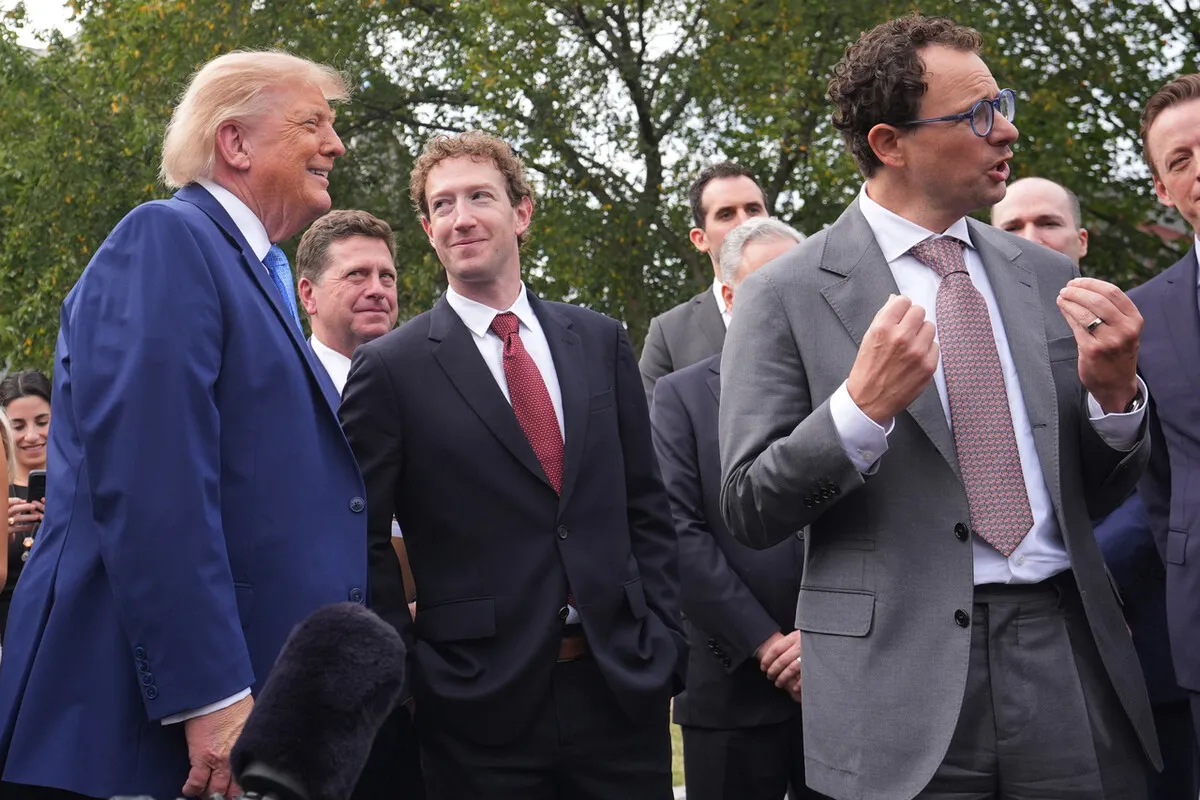
What looked like a ceremonial White House lunch on May 29 between Donald Trump and the CEOs of the world’s biggest AI companies was, by all accounts, something else entirely: a live demonstration of a civil war.
Jensen Huang of NVIDIA and Mark Zuckerberg of Meta publicly pressed Anthropic’s Dario Amodei on why he kept calling for slower AI development. The exchange happened in front of reporters and Trump himself. Huang’s position was blunt — speed and safety are not mutually exclusive. Amodei pushed back, saying the public deserved honesty about model capabilities and that the industry was downplaying risk. Zuckerberg took aim at the idea of new regulations, arguing that self-imposed principles within the industry were sufficient.
The next morning, Trump and the same executives posed for a photo signing an agreement on AI self-regulation. Behind the image, the divisions were widening.
Who is fighting whom
This is not a simple regulatory debate. It is a battle over who gets to define the future of AI — and who benefits when development accelerates versus when it slows.
Huang represents the hardware side of the AI economy. NVIDIA’s GPUs are the engine behind every major model being built. The faster development goes, the more chips sell. There is no incentive for Huang to advocate for pauses or speed bumps.
Zuckerberg operates at the application and platform layer. Meta’s open-source strategy depends on rapid iteration and broad deployment. A regulatory framework that requires testing windows or safety audits before release would slow everything down — including Meta’s ability to compete with the closed models coming from OpenAI and Google.
Amodei and Anthropic sit in the uncomfortable middle. They build frontier models that carry genuine safety questions, but they are also racing against competitors who face fewer constraints. Every month Anthropic spends on evaluation and internal controls is a month a rival company could ship a more capable product. Amodei’s public safety advocacy is partly conviction — but it is also positioning. If the rules of the game change, Anthropic’s investment in responsible development becomes a competitive advantage.
Bill Gates made the structural point most clearly in a New York Times podcast interview. He called industry self-regulation “crazy,” comparing it to a pharmaceutical industry without the FDA, an aviation sector without safety boards, or car manufacturing without seatbelt mandates. His argument was not anti-AI. It was pro-institution. And it landed directly against the coalition that Trump appeared to be building at that lunch.
Why the self-regulation deal is already fraying
Reports indicate that Anthropic, OpenAI, and Google had been working on a private regulatory body modeled after FINRA, the Financial Industry Regulatory Authority. That effort collapsed after Huang, Zuckerberg, and Elon Musk communicated opposition to Trump. What remains is a voluntary framework with no enforcement mechanism and no teeth.
The photo op at the White House was designed to project unity. The internal reality is a industry split between three camps: those who want maximum speed regardless of risk, those who want speed with guardrails, and those who believe the guardrails should come first. Each camp has different revenue models, different risk tolerances, and different customers.
This split will now play out in public. Expect Amodei’s warnings to become more pointed. Expect Huang and Zuckerberg to frame them as obstructionist. The debate will move from White House lunchrooms to congressional hearings, and eventually to courtrooms.
What Korea should be watching
For South Korea, this confrontation has direct consequences that go well beyond Silicon Valley gossip.
Korea is one of the few countries with major semiconductor manufacturing capability outside the US and China. Samsung and SK Hynix dominate memory chip production — the kind of chips that power AI training and inference. Korea’s AI ambitions depend on continued access to NVIDIA-grade hardware and the global talent ecosystem that builds on top of it.
If the accelerationist camp wins — which it currently appears to be winning inside the Trump administration — Korea benefits from increased demand for chips and deeper US-Korea technology alignment. The government can lean into its role as a reliable semiconductor supplier and align its AI policy with the US framework, which favors rapid deployment over caution.
But if the safety-first camp regains influence — through Congress, through international pressure, or through a catastrophic incident that forces legislative action — Korea faces a different calculus. Stricter US regulations would ripple through the supply chain. Compliance costs would rise. Korea’s companies would need to navigate two parallel regulatory systems: one in Washington and one in Seoul, each potentially diverging.
There is a third possibility that deserves attention. If the current stalemate persists — self-regulation that is too weak to prevent incidents but strong enough to slow deployment — Korea could position itself as the middle ground. The country already has a reputation for aggressive tech adoption paired with practical governance. A framework that emphasizes both speed and accountability could differentiate Korea’s AI strategy from both the US accelerationist model and China’s state-controlled approach.
The timing matters
The White House lunch came at a moment when the US is finalizing its AI posture, and the rest of the world is watching for signals. China is investing hundreds of billions in domestic AI capability. The EU has already enacted the AI Act. The UK, Japan, and India are all building their own frameworks. The US approach — whether it settles on loose self-regulation or harder oversight — will shape the template that other countries follow or resist.
Korea cannot afford to wait for Washington to decide. The semiconductor industry moves on different timelines than regulation. AI model development moves even faster. The companies and policymakers in Seoul who understand both the technical reality and the political landscape will be the ones making decisions that matter.
What happened at that lunch was not a policy proposal. It was a snapshot of where the technology industry stands right now — fragmented, adversarial, and racing toward an future that nobody fully controls.
The question for Korea is not which side to pick. It is whether to let other people’s fight dictate its choices.