The White House Ban on CNN, Politico and MS NOW Is a Test of Constitutional Limits
A lawsuit challenging Trump's ban on three news outlets from White House grounds is about more than press credentials — it's a direct confrontation over whether the executive branch can punish journalism based on its content.
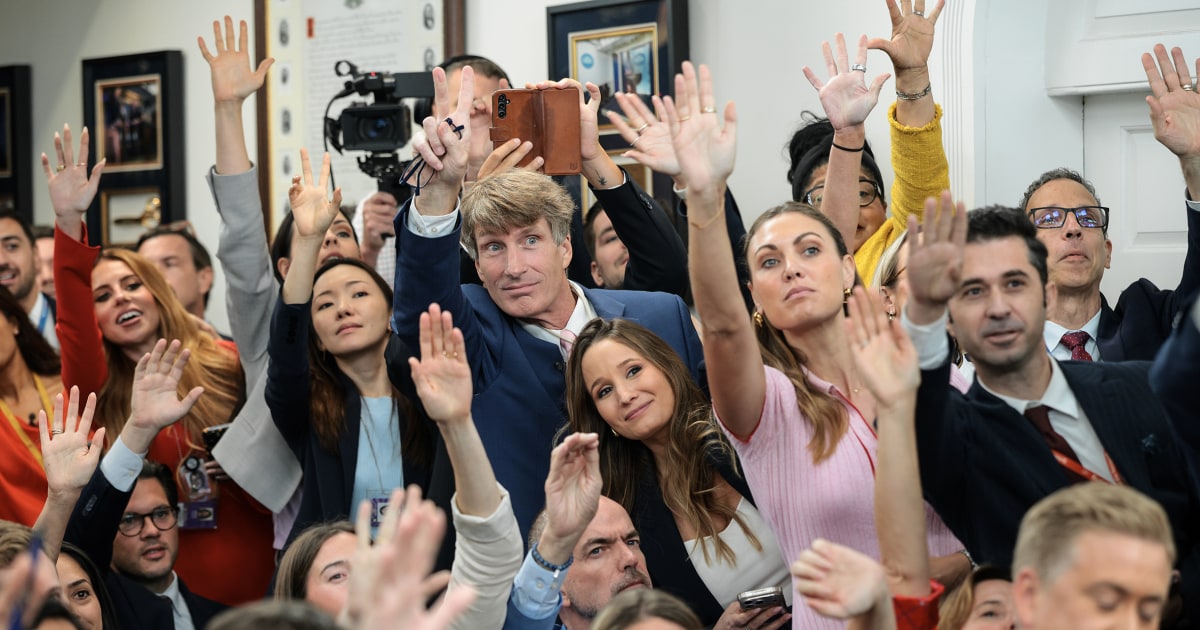
The White House Ban on CNN, Politico and MS NOW Is a Test of Constitutional Limits
When Donald Trump banned CNN, Politico and MS NOW from White House coverage last Friday, he didn’t just exclude three news organizations — he initiated a confrontation with the First Amendment that could redefine the relationship between the press and the executive branch for decades.
The lawsuit filed Monday in U.S. District Court challenges the administration’s authority to revoke press credentials without due process. But the deeper question isn’t legal technicality. It’s whether a president can retaliate against journalists for reporting stories he dislikes, and what happens to democratic accountability when the White House door closes on critical reporters.
The plaintiffs — MS NOW’s Akayla Gardner, CNN’s Betsy Klein and Politico’s Cheyenne Haslett — were denied access to White House grounds on Saturday after Trump’s announcement. Their credentials were confiscated. CNN and MS NOW workspaces sat empty. A photographer was turned away; a producer was let through. The inconsistency itself signals a system operating on discretion, not policy.
The Precedent That Could Anchor This Case
Judge Timothy Kelly, appointed by Trump in 2017, will hear the case. He has already ruled on a similar dispute. In 2018, he ordered the White House to temporarily reinstate CNN’s Jim Acosta after the administration revoked his credentials following a heated press conference. The administration relented days later and restored Acosta’s pass permanently.
That outcome doesn’t guarantee the same result here. The legal landscape has shifted since 2018. The current suit argues the ban constitutes viewpoint discrimination — a more constitutionally problematic category than the conduct-based restrictions at issue in the Acosta case. The 27-page filing states Trump was “expressly clear about his viewpoint discriminatory motive,” citing his Truth Social post that accused the outlets of “constant ‘reporting’ FAKE NEWS.”
Kelly is set to hold a hearing Wednesday on the request for a temporary restraining order. The administration must respond by Tuesday. The clock is ticking on a system that already operates on uncertainty.
The Pool System as a Canaries-in-the-Coal-Mine Story
The TV pool system collapsed on Monday. CNN was scheduled to provide pool coverage — one network films an event, and the footage goes to all pool members. After Klein was turned away, the White House removed CNN from the rotation. The other networks — NBC, ABC, CBS and Fox News — refused to step in.
The five networks issued a rare joint statement: “The public has a vital interest in receiving accurate, independent information about its government. No administration should restrict a news organization because it objects to its reporting.”
Print and radio pools remain operational. TV pools for other parts of the administration continue. But the suspension of presidential TV pool coverage is significant. It means American and international audiences lost access to raw, unfiltered footage of the president’s activities on Monday — footage that would normally flow through C-SPAN, Newsmax, One America News Network and global newsrooms.
The pool system has operated across administrations from both parties for decades. It wasn’t designed as a privilege system. It was designed as a practical mechanism for managing limited White House space while ensuring broad access. The administration’s disruption of that mechanism suggests a calculated move to control the visual narrative of presidential coverage.
What Happens Next Matters Beyond American Borders
The implications extend well beyond Washington. Journalists worldwide already face pressure from executives who view critical reporting as disloyalty. A precedent allowing the U.S. president to penalize news organizations for their coverage would embolden authoritarian impulses everywhere.
Turkey’s government has revoked licenses from outlets it considers hostile. Hungary’s prime minister has harassed journalists with lawsuits. Brazil’s former president attacked the press openly. When any democracy normalizes the idea that the state can silence media organizations for inconvenient reporting, it shifts the Overton window for every leader considering similar tactics.
The Knight First Amendment Institute’s Jameel Jaffer put it plainly: “President Trump presents it as retaliation against these particular news organizations, but it’s really a move against the public’s right to know, and that’s the way that we should be thinking about it.”
The Political Calculus
VP JD Vance defended the ban by claiming Trump was “not banning media outlets,” despite the president’s own Truth Social post using exactly that language. Treasury Secretary Scott Bessent said the “legacy media equilibrium is so far out of kilter.” Senator John Barrasso told Meet the Press the move didn’t violate the constitution, adding that “the press has an obligation to report fairly.”
That last comment is particularly notable. It reframes press freedom as conditional — a right that exists only when journalists report in ways acceptable to the government. That framing, if accepted, would represent a fundamental departure from First Amendment jurisprudence, which protects unpopular speech precisely because it’s unpopular.
The administration has also targeted the Associated Press for refusing to use Trump’s preferred name for the Gulf of Mexico. That case is ongoing and adds another layer to what the lawsuit describes as a “broader pattern” of press hostility.
The Real Stakes
This lawsuit will determine whether press credentials are a revocable privilege or a protected right. If the court sides with the administration, the precedent opens the door for any future president to exclude outlets based on editorial content. The White House could punish investigative reporting, critical coverage or unfavorable photography.
If the court sides with the news organizations, it reinforces a boundary that has held for centuries: the government cannot choose which journalists are allowed to report on its activities. That principle isn’t abstract. It’s the foundation of accountable government.
The outcome matters because the White House press corps isn’t just a convenience for news organizations. It’s a structural check on executive power — one that depends on consistent, unfettered access. Remove that access at the president’s discretion, and you remove a check.
The case before Judge Kelly will be watched closely. Its resolution will shape not only American journalism but the global understanding of whether press freedom is a right or a gift that any administration can revoke.