Why $100 Oil Isn't About OPEC—It's About a Choking Middle East
Brent crude is closing in on $100, but not because of OPEC's usual supply lever. A narrowing war in the Gulf, attacks on Saudi infrastructure, and Iranian threats to reconfigure shipping in the Strait of Hormuz are rewriting energy risk pricing.
The $100 Mark Is Coming From the Wrong Front
Oil is breathing down Brent’s neck at $100 per barrel, and everyone is reaching for the wrong explanation.
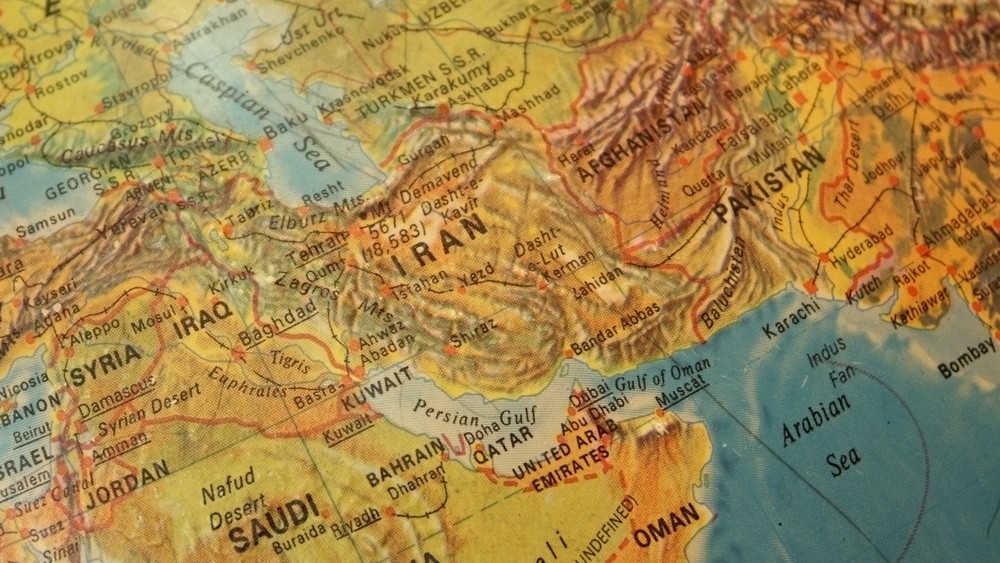
The instinctive read is OPEC+. It’s the well-worn script: cartel cuts output, prices climb. But look closer at where the price action is actually coming from, and the map changes entirely. Brent crude sat at $97.66 on the day in question, with West Texas Intermediate at $93.05—both driven not by quota decisions in Vienna but by a widening military confrontation in the Persian Gulf that threatens to constrict a chokepoint through which roughly 20 million barrels of oil flow every day.
The Strait of Hormuz is not a theoretical risk. It is a daily reality, and it is getting more dangerous by the week.
Iran Is Drawing a New Line
Iran’s statement on Monday was specific enough to move markets. Mohsen Rezaei, secretary of Iran’s Supreme National Security Council, said Washington had received a clear warning: economic warfare would be met with a maritime exclusion zone stretching across the Persian Gulf. He said Iran had fired a new, advanced missile at U.S. warships. The operational posture toward American vessels and bases, he said, had been fundamentally recalibrated.
This is not the language of a state bluffing. It is the language of a state reconfiguring its naval posture—and the global market has been pricing in the consequences ever since.
Iran also announced it would establish a new shipping corridor in the Strait of Hormuz. The implication is that tanker traffic, already subject to disruption from Houthi attacks and Iranian harassment, will face even tighter constraints. The Strait is narrow enough that rerouting is costly and slow. Every day of reduced throughput adds a risk premium that speculators quickly embed in futures prices.
The Jizan Refinery Hit Again
Meanwhile, the attack on Saudi Arabia’s Jizan refinery was not an isolated incident. It is part of a pattern. The facility, which processes 400,000 barrels of crude per day, has been targeted repeatedly by Houthi forces operating from Yemen. Each strike is a reminder that Saudi infrastructure—no matter how heavily fortified—is vulnerable to asymmetric attack, and that vulnerability is now baked into the price of a barrel.
Jizan is a refining asset, not just a production one. Disruption there means less refined product hitting regional markets, which tightens supply further downstream. The ripple effects reach into India, where rising crude and LNG prices are already pressuring the energy sector.
Speculators Are Betting on a Long War
The most telling signal may be the simplest. ING analysts noted that speculators have increased their net long positions in Brent crude as the prospect of a negotiated settlement evaporates. This is not a crowd fading into optimism. It is a crowd buying escalation.
ANZ analyst Daniel Hynes put a timeline on it: no full return to pre-war throughput until late Q1 or early Q2 2027. That is more than a year of constrained supply ahead of the market. A year is a long time to price in risk, and the longer the war drags, the harder it becomes for central banks to ignore the inflationary signal coming out of the energy sector.
What This Means for Inflation and Policy
Oil at $100 is not an abstract number. It translates directly into higher costs at the pump, in freight, in heating fuel, and in the input prices for everything from plastics to fertilizers. For central banks that have been cautiously optimistic about inflation heading toward target, a sustained oil spike is unwelcome news.
The Federal Reserve, the European Central Bank, and the Bank of England are all watching the same data point. If oil stays elevated for quarters rather than weeks, the path to rate cuts narrows. If oil spikes above $100 and holds, the path flips entirely—central banks could find themselves having to hold rates higher for longer, or even reconsidering whether to cut at all.
Emerging markets feel this first and hardest. Countries that import more oil than they produce—India, Turkey, Pakistan—see their current account deficits widen almost immediately. Currency pressure follows. The IMF has flagged energy price shocks as a leading risk to global growth this year, and this particular shock is coming from a supply channel, not a demand channel, which makes it harder to absorb.
Who Wins. Who Loses.
The winners are straightforward: oil producers with low extraction costs, particularly Saudi Arabia and the UAE, which can profit from high prices even as they face physical threats to their infrastructure. Traders with long positions in crude are also winning—ING’s observation about rising net longs is the market saying exactly that.
The losers are anyone who imports oil and watches their trade balance erode. India, already wrestling with high crude and LNG prices, is in a precarious position. European consumers face a repeat of the energy bill shock from 2022, except this time there is less margin for political maneuver. Households in the United States, despite being a net exporter, will still feel the pump price impact.
What Comes Next
The next few weeks will be decisive. If Iran follows through on its maritime exclusion zone threat and tankers are forced to reroute or suspend transit through the Strait, we will see a sharper move toward and possibly past $100. If diplomatic backchannels reopen and some de-escalation occurs, prices could pull back—but likely only partially, because the risk premium is now structural, not episodic.
Hynes’ 2027 timeline suggests the market should prepare for a prolonged period of elevated energy risk. That means persistent inflation pressure, tighter central bank policy, and a real chance that the global economy enters 2026 already weakened by energy costs rather than strengthened by them.
The $100 barrel is not a milestone. It is a symptom. The disease is a conflict that refuses to settle, and the patient is the global economy.