Why a BOJ Big-Step Hike Could Trigger Asia's Next Market Crash
The Bank of Japan may raise rates by 50 basis points next week, reviving fears of a yen carry-trade unwind that crashed Asian markets in August 2024. With $1 trillion in positions on the line, the question is whether policymakers will go easy this time.
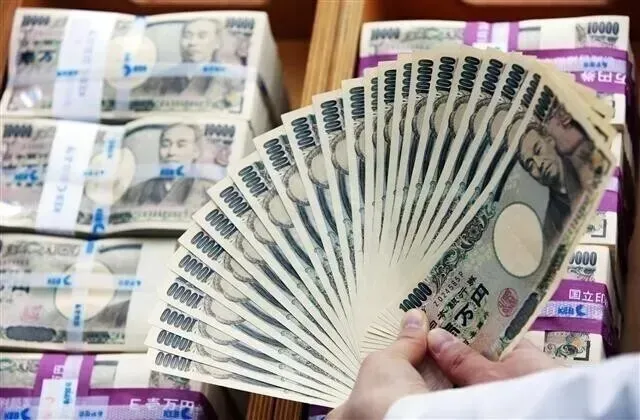
The BOJ Is About to Decide Again
Next Tuesday, September 18, the Bank of Japan convenes its policy meeting with one question hanging over every desk in Seoul, Tokyo, and Singapore: how far does it go?
The current policy rate sits at 1.00%, the highest since 1995. Markets expect another increase — that part is consensus. What is not agreed upon is the size. Some Japanese outlets are reporting that the BOJ could raise rates by 50 basis points, a move traders call a “big step” and one that would be the most aggressive in decades.
Why does this matter beyond Japan? Because somewhere out there, roughly $1 trillion in yen-funded bets is waiting to see what happens. If the BOJ delivers more than expected, those bets start unwinding — fast.
What Happened in August 2024, Briefly
On July 31, 2024, the BOJ hiked rates again. Three days later, on August 5, the KOSPI dropped 8.8% and the KOSDAQ fell 11.3%. Both triggered simultaneous circuit breakers. The Nikkei tanked 12%. Over five trading days, the dollar-yen fell 5.2%, climbing from roughly 153 to 145 yen in a single week.
It was the largest single-day crash in Korean market history and a textbook illustration of the yen carry trade running in reverse.
The mechanics are straightforward enough. Investors borrow yen at near-zero rates and buy higher-yielding assets abroad — emerging market bonds, U.S. Treasuries, Southeast Asian equities. When the yen strengthens or Japanese rates rise, the trade becomes expensive to maintain. Borrowers must sell their foreign assets and buy back yen to repay their loans. That selling pressure spreads across every market the carry trade touches.
This time felt different because the positions had grown enormously since 2007, when the last major unwinding occurred. Hedge funds, pension funds, and proprietary desks all built similar trades. When the fire started, everyone ran for the exit at once.
Where the Positions Stand Now
The clearest gauge of remaining risk is the non-commercial yen futures net-short position at the Chicago Mercantile Exchange. These are speculative bets that the yen will weaken — the kind of positioning that profits from the very carry-trade strategy that gets crushed when rates rise.
As of July 28, those short positions stood at 163,000 contracts. For context, on the eve of the July 2024 rate decision, they were at 184,000. Each contract represents 125 million yen. In dollar terms, HSBC estimates the total carry-trade capital currently deployed globally at over $1 trillion.
That is not a marginal amount. It is large enough that a partial unwind — say, 20 to 30 percent of positions — could move asset prices across multiple continents in a matter of hours.
The Whipsaw That Wasn’t
On September 3, just days before the next BOJ meeting, Korean, Japanese, Chinese, and Taiwanese markets experienced a violent intraday reversal. Stocks plunged and then recovered within roughly half an hour, a motion that analysts described as a roller coaster.
The trigger was apparent: the dollar-yen dipped to around 157 in early afternoon trading, stirring fresh fears that the BOJ would act aggressively. But the panic proved temporary.
“The level was not enough to force carry-trade liquidation, but the market seemed to front-run the yen-strength narrative during the session,” said Lee Sang-heon, a research analyst at iM Securities, according to the source material. In other words, algorithms and human traders saw the yen moving and reacted preemptively, then calmed when the move didn’t escalate.
The episode mattered less for what it did to prices and more for what it revealed about sentiment. A 50-basis-point move is still theoretical. But the market is already pricing in the risk as if it were happening now.
Why This Time Could Be Different
There are two reasons to believe the BOJ will hold its hand. The first is political and practical: a 50-basis-point hike would be the sharpest move since the bank began its slow normalization path in 2024. It would also signal either extreme confidence in Japanese inflation or a complete indifference to financial stability — a dangerous combination for a central bank that has spent years trying to convince markets it is not in a hurry.
The second reason is the U.S.-Japan FX coordination that took place in late July. The two countries intervened together to support the yen, effectively capping how far depreciation could run and removing one of the key assumptions underpinning the carry trade. With the yen’s depreciation outlook compressed, the margin of safety for these positions has narrowed even before any rate decision.
Song Min-ki, a senior researcher at the Korea Financial Research Institute, noted that while a repeat of the August 2024 crash remains “relatively limited” in probability, the sheer scale of current positioning means even a modest unwind could ripple through Korean financial markets via foreign capital flows.
Who Wins, Who Loses
If the BOJ raises by just 25 basis points, the relief trade will be immediate — Asian equities bid up, the yen softens slightly, and carry-trade positions can breathe for another quarter. Bonds across the region, particularly Korean government paper, would see some relief as the risk of sudden capital outflows recedes.
If the BOJ raises by 50 basis points, the sequence reverses. The yen strengthens rapidly. Foreign investors pull money out of Korean and broader Asian equities. Emerging market bond funds face redemption pressure. The KOSPI could see a sharp correction regardless of where it sits at the open. And the USD/JPY pair — already one of the most traded currency pairs in the world — would become the clearest flashpoint, with moves that could exceed 3 percent in a single session.
Japanese domestic stocks are the ambiguous case. A stronger yen hurts exporters like Toyota and Sony on translation grounds, but it also lowers Japan’s import bill and could gradually improve household purchasing power after decades of stagnation. The net effect depends on whether the BOJ’s move is seen as disciplined normalization or panic-induced tightening — and that judgment will shape the entire trajectory.
What Comes Next
The BOJ has spent 2024 signaling patience. It has moved one basis point at a time, always leaving the market guessing. Any departure from that cadence on September 18 would be interpreted as a shift in philosophy — from cautious to decisive, or from measured to reckless, depending on your position.
For Korean investors, the monitoring framework is clear: watch the yen-dollar on Tuesday morning, watch the CME short positions on Wednesday, and watch foreign ownership flows in the KOSPI throughout the week. A move above 155 yen per dollar within 48 hours of the decision would be a signal worth acting on. Anything below 150 would be a full-blown carry-trade event.
The 2024 crash was a shock because it happened to people who thought it could not happen again. The positions are larger now. The warning signs are louder. Whether the BOJ heeds them or not will determine whether September becomes another quiet month or the start of something much worse.