Why a Record El Niño Already Has Central Banks Scrambling
The strongest El Niño in recorded history is reshaping food-supply strategy and inflation forecasts worldwide. UK ministers are advising citizens to stockpile food — a signal that this is no ordinary weather event.
The UK government is telling people to stock up. That is not a weather advisory.
When ministers in Britain begin urging households to fill pantries ahead of a weather pattern, the conversation has already moved past meteorology. The current El Niño is tracking as the strongest on record — and its shadow is already landing on balance sheets, supply chains, and central banks that have spent years assuming inflation would stay stubbornly tame.
This is not a speculative scenario. It is happening now.
Why this El Niño is different
Scientists measure El Niño intensity using a relative index that strips out the baseline warming caused by climate change. By that metric, the ocean temperatures off the equator in August sat 2.3°C above average — a figure that dwarfs readings from previous strong El Niño events. Two other factors make this episode stand out even more.
It arrived early. El Niño typically peaks between November and January. This one is already running hot weeks before the seasonal window opens, and it has not yet reached its maximum strength.
It is compounding background warming. The UN has placed the planet in what it calls the “danger zone” of extreme weather. Every El Niño cycles heat out of the Pacific and into the atmosphere, but叠加 on top of a climate that is already warmer, the net effect is sharper. Scientists project that 2027 will likely see record-breaking global temperatures if the current trajectory holds.
The Pacific is already on fire — literally
Indonesia is fighting massive wildfires this month that scientists directly link to the drought conditions the El Niño is driving. In the Pacific basin, satellite imagery shows four active tropical cyclones stretching from near Japan to Hawaii — a configuration that is unusual because El Niño typically concentrates cyclone activity in the eastern and central Pacific, where warmer water now sits.
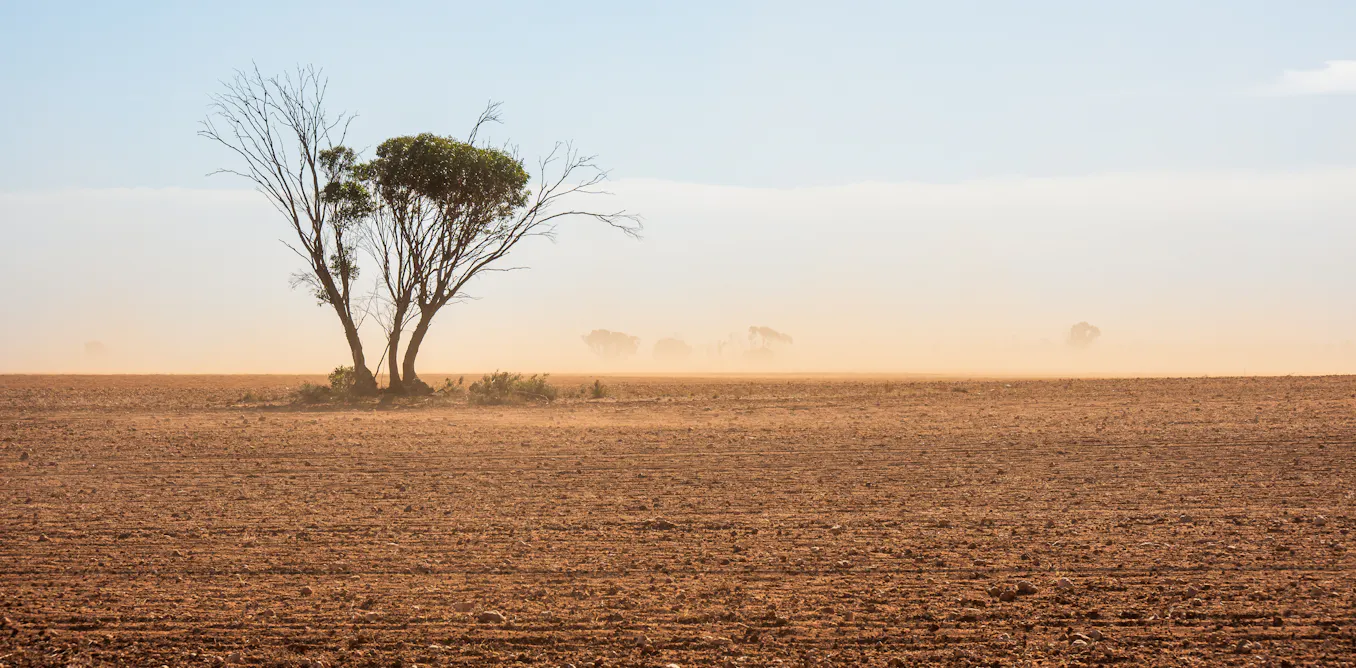
Australia, while slightly more removed, is already feeling the textbook response: unseasonable heat reaching 37°C in parts of the north and drying conditions rolling across eastern and central regions. The Bureau of Meteorology is warning of an unusually dry spring and summer with heightened bushfire risk.
But history also cautions against simple analogies. The strong El Niño years of 1997–98 and 2015–16 did not produce uniform drought across Australia. Some areas received drenching rain while others barely registered moisture. A record-breaking event does not guarantee a catastrophic fire season everywhere — but it does guarantee unpredictability, which is often more expensive to manage than plain disaster.
Who is already losing
The most disadvantaged communities are bearing the first blows. Nearly 50 million people in vulnerable regions are projected to face acute hunger as crops fail across parts of Africa and floods destroy harvests in South America. These are not distant figures. They are consumers who will compete for whatever food supply remains, and their absence from the market is felt immediately in prices.
Coral bleaching is accelerating on the Great Barrier Reef, another early signal of stress that extends beyond aesthetics. Healthy reef ecosystems support fisheries and tourism; damaged ones do not. The economic loss compounds quietly, then all at once.
How central banks are listening
Inflation is not just a monetary phenomenon. It is an agricultural one, a logistics one, and increasingly, a climatic one. When El Niño disrupts palm oil production in Indonesia, wheat yields in the Black Sea region, or coffee harvests in Brazil, those supply shocks travel through commodity markets and arrive at the consumer price index months later. Central banks that spent the post-pandemic era debating whether inflation was transitory are now staring at a pattern that makes “transitory” a harder argument to sustain.
The UK’s food-stockpiling advice is a political signal, but it is also an economic one. Governments do not issue that kind of guidance lightly. It implies that supply-chain resilience has been judged insufficient and that authorities expect disruption severe enough to warrant precautionary hoarding by citizens themselves.
For central banks, the implication is straightforward: food and energy prices are becoming harder to forecast. When weather-driven supply shocks grow more frequent and more intense, the variance around inflation projections widens. That means higher risk premiums, tighter monetary policy that may be mistimed, and central banks that look either behind the curve or overly aggressive depending on when they move.
The strategy shift nobody is announcing yet
Multinational food companies and commodity traders are already revising sourcing maps. Palm oil, rubber, cocoa, and wheat are the first lines of exposure, but the cascade reaches further — into fertilizers, shipping routes, and insurance markets. Regions that were historically stable agricultural zones are being re-evaluated not because of long-term climate trends alone but because El Niño’s intensity is exceeding historical envelopes.
Investors are pricing in what the data suggests. Commodity futures markets respond to El Niño forecasts with the same urgency they once reserved for geopolitical shocks. The difference is that weather is now the geopolitical shock — predictable in its general shape, devastating in its specific impacts.
What comes next
The El Niño will peak later this year and then fade, as these cycles always do. But the economic damage will not reverse on schedule. Crops lost this season do not regenerate. Farmers whose livelihoods collapse do not simply return to planting the next cycle. Communities pushed into hunger do not bounce back without sustained intervention.
The UN’s call for more modelling capability is urgent, particularly for Australia, where the interaction between climate change and strong El Niño events remains poorly understood. Better models mean better preparedness, but preparedness only matters if governments and institutions act on the projections rather than treating them as academic exercises.
There is, arguably, a brighter possibility embedded in the crisis. A record-shattering El Niño that disrupts food systems and unsettles inflation forecasts may be the catalyst that finally accelerates the transition away from fossil fuels. The same warming that intensifies El Niño is the warming that makes the current trajectory unsustainable. The question is whether policy moves fast enough to turn catastrophe into momentum.
The world’s central bankers, finance ministers, and supply-chain managers are no longer watching from the stands. They are in the game now. And the scoreboard is already changing.