Why AI Data Centers Are Fueling a Rare-Metal Crisis
Copper, indium, and gallium prices are surging as AI data-center buildouts collide with concentrated supply chains. Korea Zinc is positioning itself at the center of what could become a structural metals crisis.
The AI Appetite Just Met a Hard Ceiling
Copper hit an all-time high of $14,455 per ton on the London Metal Exchange this month. Gallium has tripled in a year. Indium prices more than doubled, climbing from $355 to $800 per kilogram. On the surface, these are market movements. Underneath them is something more structural: artificial intelligence’s insatiable demand for physical infrastructure is colliding with supply chains that were never built for this scale of growth.
For years, Western analysts treated base metals and rare-earth materials as separate from the AI story. Copper belongs to construction and electrification. Gallium and indium belong to semiconductors and displays. AI was a software problem, or at most a chip problem. That framing is collapsing.
An AI data center does not simply consume electricity. It consumes copper wiring, copper transformers, copper cooling systems, and copper backbones in the power grid leading to it. The same data that flows through AI servers travels over fiber-optic cables containing indium-phosphide lasers. The power semiconductors managing that energy use gallium-based materials. The infrastructure stack is thicker, and more metal-intensive, than anyone outside the engineering side had been accounting for.
Who Is Winning Right Now
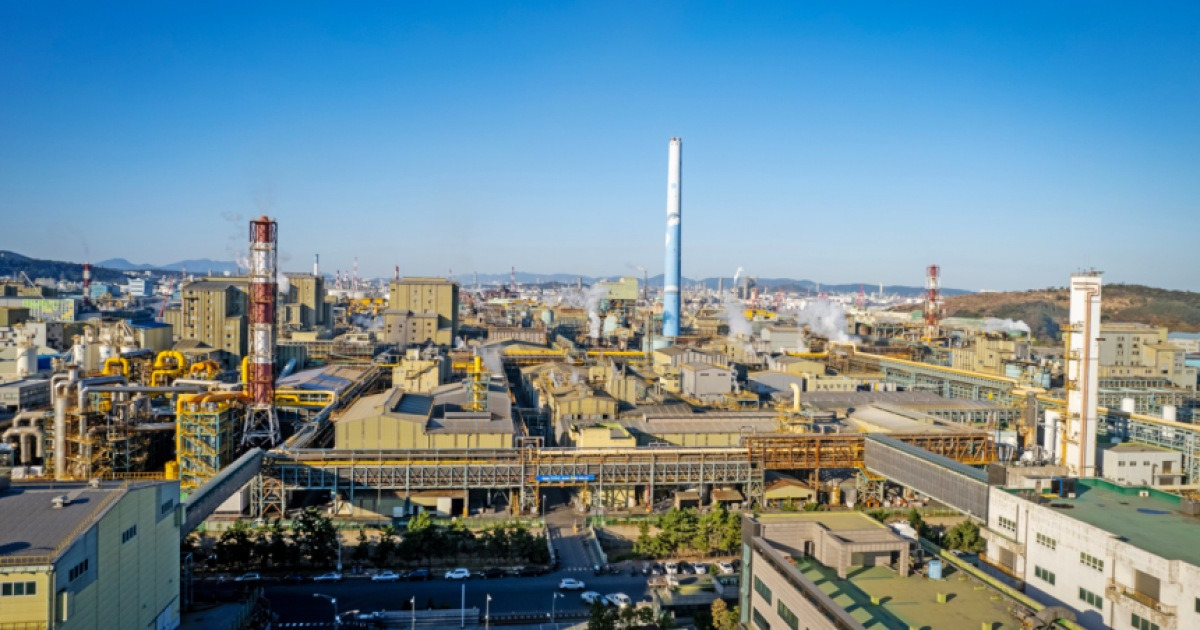
Korea Zinc, a South Korean company that might not make headlines in Silicon Valley, is currently one of the few pure-play beneficiaries of this convergence. The company produces copper, indium, and gallium from its ONsan smelter. In the second quarter alone, copper sales volume jumped 15.9% year over year, with revenue surging 75.5% to 190 billion won. Indium sales volume climbed 51% quarter over quarter. The company is now investing roughly 55.7 billion won to build a gallium production line with 15 tons of annual capacity by 2028.
The strategic logic is straightforward. Korea Zinc sits on an existing smelting infrastructure that extracts indium and gallium as byproducts of zinc refining. Building out those lines required no new mine development, just a reconfiguration of an already-operational system. That is cheaper and faster than greenfield mining, which typically takes a decade or more to come online.
But Korea Zinc is also small relative to the scale of the demand shift. The International Energy Agency projects global copper demand will rise 48% between now and 2040. Gallium demand could grow sixfold over the same period, at a compound annual rate of 12.7%. Korea Zinc’s 15-ton gallium capacity by 2028 is a start. It is not yet a solution.
The Geographic Risk Nobody Is Pricing In
Here is where the situation becomes genuinely dangerous. China produces roughly 99% of the world’s gallium. It controls more than 90% of germanium output as well. Indium refining is similarly concentrated, though slightly less so than gallium. The United States, the European Union, and Japan all face a severe processing gap for these materials. They can design chips. They cannot easily refine the metals those chips require.
This is not a new problem. Supply-chain decoupling from China has been a policy priority in Washington for years. But AI has compressed the timeline. When China restricted gallium and germanium exports in 2023, the move was widely read as a geopolitical signal. Prices rose. Then prices stabilized, and attention drifted. Now AI capex is reaching a scale where even modest supply disruptions create immediate price volatility.
William Osnato, a commodities analyst at Barchart, told CNBC that the primary driver behind the current copper price surge is precisely this: the combination of AI data-center buildouts and the grid expansion required to power them. That statement should carry more weight in Western policy circles than it currently does.
The Smaller Players With a Larger Footprint
Korea Zinc is also pursuing germanium production, another critical metal with extreme Chinese concentration. The pattern is becoming clear: companies that already operate smelters in jurisdictions outside of China have a strategic option that Western companies largely lack. The smelter exists. The byproduct streams exist. The question is whether you can extract and refine to the purity levels the market requires.
A researcher at Samsung Invest & Securities, Kim Jin-beom, noted that the United States lacks refined capacity for gallium, germanium, and indium despite its ambition in AI, defense, and semiconductor manufacturing. That gap represents both a vulnerability and a market opportunity. The question is whether it will close in time to matter.
What Happens Next
Three outcomes are plausible.
In the first, prices remain elevated but supply adjusts through existing smelting operations and recycling. This is the most optimistic scenario and the one most consistent with current market pricing. It assumes that incremental capacity from operators like Korea Zinc, plus improved recycling, can bridge the gap without triggering sustained shortages.
In the second, supply disruptions accelerate. China tightens export controls further, or other geopolitical events — a Taiwan Strait crisis, for instance — disrupt the already thin alternative supply routes. In this scenario, gallium and indium become the bottlenecks that slow AI deployment, not silicon or memory capacity. Data centers that are designed and funded simply cannot be equipped.
In the third, new mining and refining capacity comes online faster than expected, driven by high prices and policy support. This is what free-market models predict. But mining and refining have historically been slow, capital-intensive, and politically contentious. The speed of AI investment now far outpaces the typical timeline for bringing a new metal supply chain online. The mismatch is the problem.
The one thing that is not in dispute: the metals themselves are not running out. Copper reserves are vast. Indium and gallium are recovered as byproducts of other mining operations, meaning their supply is tied to the economics of zinc, aluminum, and lead — not to dedicated mining. The constraint is processing capacity and geography, not geology.
That distinction matters. It means the solution is not speculative exploration or deep-sea mining. It is industrial policy, facility investment, and supply-chain diversification. And right now, the countries with the most to lose are the ones least prepared for the delay.