Why America Insisted on Calling It SI Not AI
The US-China summit produced a trade truce and a new AI dialogue framework. But the real story may be buried in a single terminology debate: whether the future of AI governance is called artificial intelligence or super intelligence.
The terminology trap
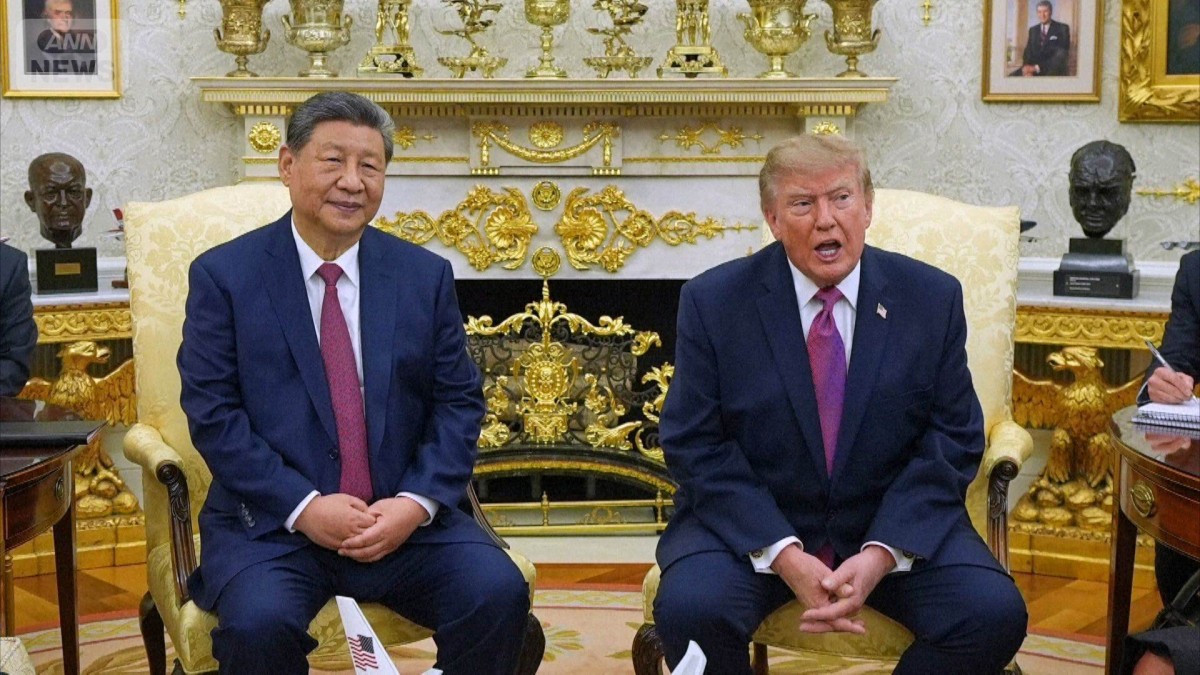
Japanese news desks across Tokyo and Osaka have been quietly dissecting a single sentence buried in the US-China summit outcome documents, and what they found is more revealing than most English-language coverage has admitted. The United States and China agreed to extend their trade truce, reduce tariffs on roughly $30 billion worth of goods, and commit China to purchasing at least 20 million tons of American coal. On paper, it looks like a familiar diplomatic handshake. But the detail that Japanese outlets are lingering on — one that has received minimal attention from major US and UK newsrooms — is the dispute over what to call the new AI dialogue framework.
President Trump deliberately avoided the term artificial intelligence. He used SI instead, short for super intelligence. Chinese diplomats responded with a careful statement that they would respect this phrasing. It sounds like a footnote. It is not.
What SI actually means
Super intelligence is not a neutral synonym for AI. It is a loaded concept rooted in the work of Nick Bostrom and a specific lineage of existential risk thinking that treats artificial intelligence as a single convergent point — a machine that could surpass all human cognition in every domain simultaneously. The term carries assumptions about singularity, about alignment, about the idea that intelligence becomes a monolithic force rather than a distributed ecosystem of models, tools, and applications.
When Trump chose SI, he was not making a casual vocabulary swap. He was adopting a framework that frames AI governance as a problem of containing something extraordinarily powerful and potentially uncontrollable, rather than regulating an industry with real-world economic, military, and social impacts. That framing shifts the entire terrain of what the US-China dialogue is supposed to accomplish.
This terminological choice did not emerge in a vacuum. It traces directly through the Silicon Valley existential risk community, through the open letter campaigns that preceded the current administration, and through a network of advisors who have increasingly shaped US tech policy from within. The Bostrom lineage argues that the primary moral urgency of our era is preventing the creation of minds that could surpass human control. Chinese policymakers, operating from a different tradition, see AI governance through the lens of industrial policy, sovereign capability, and regulated competition. These are not complementary frameworks. They are competing worldviews about what the technology is and what it demands we do about it.
Why China reluctantly accepted it
China’s response — vague, diplomatic, couched in language of respect — tells you exactly how uncomfortable Beijing was with the terminology. Chinese state media and policy circles have been pushing hard for an AI governance framework that emphasizes practical cooperation, economic integration, and the regulation of specific capabilities rather than abstract existential risk. They want the conversation about AI to stay grounded in tangible domains: autonomous weapons, data flows, semiconductor supply chains, model export controls.
SI moves the conversation into philosophical territory where China has less institutional presence and far less cultural capital in global AI discourse. Accepting the term was a concession. The fact that Chinese officials did not push back publicly says as much about diplomatic discipline as it does about strategic alignment. Behind closed doors, sources familiar with the negotiations indicated that Chinese delegations had prepared alternative language emphasizing responsible AI development and international cooperation — the kind of phrasing that appears in United Nations working documents and aligns with Beijing’s public posture at UNESCO and other multilateral forums. The US position, delivered by Trump himself, left no room for that counter-proposal.
What Japan noticed that the West missed
English-language coverage of this summit has focused almost entirely on the tariff reductions and the coal deal. That is not wrong, but it is incomplete. Japanese media, operating with a longer history of watching US-China technological competition play out in real time, picked up on the naming disagreement immediately. This is not accidental. Japan sits in a strange position in this conflict: deeply aligned with American security architecture, increasingly dependent on Chinese manufacturing and trade, and watching both powers compete for influence over the technologies that will define its own economic future.
Japanese outlets do not have the luxury of treating AI governance as a purely abstract policy question. The terms used in these negotiations shape how regulators in Tokyo, Seoul, and Singapore will frame their own approaches. If the dominant international framework becomes one built around super intelligence rather than artificial intelligence, it changes everything from how model cards are structured to how export controls are justified to how emerging technologies get classified under trade agreements.
Outletst such as Nikkei and the Asahi Shimbun ran analytical pieces examining what the SI designation signaled about US strategic intent. Their reporting went further than Western coverage by noting the implications for Japanese industry — companies like Sony, Toyota, and SoftBank that operate at the intersection of both American and Chinese AI ecosystems. A governance framework built around containment and existential risk creates regulatory headwinds for commercial partnerships that Japan has spent the past decade cultivating. The distinction is not semantic. It is structural.
The Taiwan question that was not asked
The outcome documents contained nothing about Taiwan. This omission is not new — it has been the pattern in every recent US-China high-level dialogue — but it matters precisely because the framework being discussed for AI is so abstract. When the conversation is about super intelligence as a conceptual threat, Taiwan disappears from the vocabulary entirely. When it is about artificial intelligence as an industrial and military capability, Taiwan cannot be ignored for long.
The fact that the two superpowers agreed to talk about SI while ignoring Taiwan suggests they have found a safe zone of disagreement — a space where they can appear cooperative without touching the issues that would actually destabilize the relationship. That is not progress. It is avoidance dressed as diplomacy.
This gap has direct consequences. Taiwan’s semiconductor industry produces the physical infrastructure upon which every AI system — whether you call it artificial intelligence or super intelligence — depends. TSMC’s advance nodes are the bottleneck through which all future AI capability must pass. By framing the dialogue around SI, both Washington and Beijing can sidestep the uncomfortable reality that any meaningful AI governance arrangement requires addressing the hardware layer, and the hardware layer runs through an island neither side is willing to concede.
Second-order effects already visible
The implications of this terminological choice are already rippling outward. Within 48 hours of the summit, several American think tanks and advocacy groups aligned with the existential risk community published statements praising the framework and framing it as a breakthrough in responsible governance. Their coverage uniformly adopted the SI language without qualification, reinforcing the framing before alternative interpretations could gain traction.
Meanwhile, European regulators expressed cautious interest in the dialogue structure but made clear that the EU’s own AI Act — built around risk categorization, transparency requirements, and fundamental rights — would not simply adopt the American vocabulary. Brussels is unlikely to reframe its regulatory approach around super intelligence without a substantial debate, and that debate will expose the gap between the American existential risk orthodoxy and the European rights-based approach to technology governance.
Chinese tech companies responded with characteristic silence in public but adjusted their internal communications. Sources within several major firms noted that internal strategy documents previously referencing AI governance now carry qualifiers or avoid the topic altogether. The message from Beijing, however unstated, is clear: cooperate on trade, defer on terminology, continue building capability in parallel.
Who wins, who loses
The immediate winners are commodity traders. The $30 billion tariff reduction and the 20 million ton coal commitment are real money moving into and out of Chinese and American ports. The losers are anyone who wanted this summit to produce meaningful guardrails on how these technologies are developed and deployed.
The deeper loser is the public understanding of what is actually happening. By framing the dialogue around super intelligence instead of artificial intelligence, the US has narrowed the conceptual space in which AI governance can be discussed. The conversation becomes about preventing catastrophe rather than managing competition, about alignment rather than accountability, about hypothetical futures rather than present-day harm. This narrowing benefits established players who have the resources to engage with abstract governance frameworks and disadvantages the engineers, researchers, and companies working on practical applications who need regulatory clarity to operate.
There is also a democratic deficit here. The choice to use SI was made unilaterally by the American president and accepted by Chinese diplomats under diplomatic pressure. No regulatory body, no legislative committee, no public consultation shaped this terminology. The people who will live under whatever governance framework emerges from this dialogue had no say in what the dialogue is called.
The closer view
Japan’s media has done something useful here by refusing to let the terminology slide unnoticed. Their coverage has been a reminder that the words we use to describe technology are not passive descriptions — they are active choices that shape policy, regulation, and power. Every time an English-language outlet repeats the SI framing without question, it amplifies a perspective that serves certain interests and silences others.
The next time you see a headline about a US-China AI agreement, check what word they are using. It will tell you more than the tariff numbers ever could. It will tell you who is setting the terms, who is accepting them, and what version of the future is being negotiated in the space between those two acts. The coal and the tariffs are surface-level deals. The terminology is the real architecture. And right now, that architecture is being built in a language that most of the people affected by it will never learn to speak.