Why the CIA Chief Just Met Russian Spies in Moscow
John Ratcliffe's unannounced trip to Moscow and the Kremlin's careful public framing reveal what backchannel diplomacy looks like when great-power relations are at their lowest point.
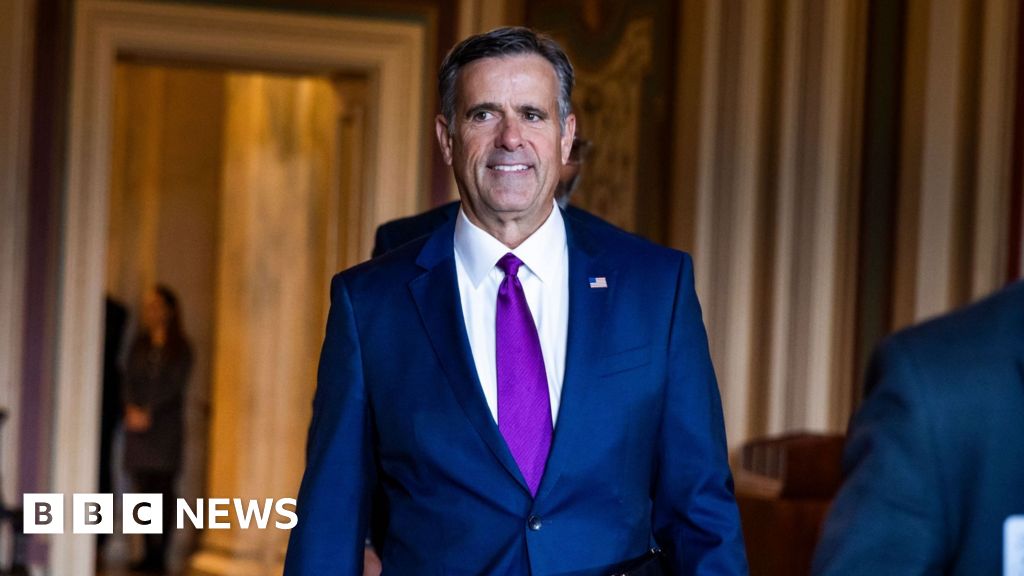
The Meeting That Wasn’t a Meeting
The Kremlin confirmed it on a Tuesday. CIA Director John Ratcliffe had been in Moscow. He had spoken with Russian intelligence services. There had been no meeting with Vladimir Putin. That was the entire transcript, delivered with the dry precision that has become Dmitry Peskov’s trademark.
The careful minimalism of the announcement is itself the story.
In diplomatic language, saying nothing while making sure everyone heard you say something is a specific skill. Peskov called the contacts a “positive phenomenon” and noted they often continue “even during the most difficult moments” between the two countries. He then immediately qualified that by saying it was too early to assess any impact on bilateral relations, which remain in what he called a “profound crisis.”
The message, read across the lines: we talked, we always talk, it does not mean anything yet.
What made this noteworthy was not just the fact of contact but the manner of its disclosure. In an era where both Washington and Moscow have grown skeptical of opaque backchannels, the decision to go on the record — however minimally — signals a shift. Both sides apparently concluded there was value in letting their domestic audiences know that communication, however limited, was still possible. That is a subtle but meaningful distinction from the total silence that characterized the final months before the 2022 invasion.
Why This Matters
Ratcliffe appears to be one of the highest-ranking US officials to set foot in Moscow during Trump’s second term. The last CIA director to visit was William Burns in November 2021. He went to warn Russia against invading Ukraine. Three weeks later, Putin launched his full-scale war.
The gap between those two visits — over four years — says everything about where US-Russia relations stand. They are not merely strained. They have crossed into a category where a sitting intelligence chief traveling to Moscow is notable enough to require on-the-record confirmation from the Kremlin press secretary.
To understand the gravity, it helps to look at the broader pattern of US-Russia intelligence engagement. Before 2022, meetings between CIA and FSB directors were relatively routine, occurring at least annually through intermediaries in third countries. The collapse of those arrangements after the invasion did not eliminate the incentive for contact; it drove them underground. What Ratcliffe’s trip represents is a tentative re-emergence of that institutional channel, tested and constrained but intact.
The structural reason backchannels persist is simple: neither side wants a miscalculation to become a catastrophe. When formal diplomacy stalls — and the Trump-Putin Alaska summit last year produced no breakthrough, and subsequent peace talks between the US and Ukraine appear to have stalled — the intelligence community becomes the default communication line.
That is not ideal. It is what happens when politicians step back.
The Sequencing That Speaks Volumes
Before Ratcliffe arrived in Moscow, the US told Ukraine that a senior delegation was traveling and asked Kyiv to suspend strikes until the delegation had left. A senior Ukrainian official confirmed this to CBS. The request itself is revealing.
It means Washington still considers Moscow a destination worth navigating carefully around Ukraine’s military actions. It means there is an expectation that the talks had some purpose beyond photo opportunity. And it means Kyiv, however reluctantly, is being asked to absorb a pause in its operational tempo for the sake of a conversation it had no seat at.
That dynamic is likely to generate friction in Kyiv. Ukrainian officials have grown increasingly impatient with the pattern of Washington managing its relationship with Moscow while Ukraine bears the costs on the ground. A CIA director visiting Russia without consulting Kyiv publicly will not endear Ratcliffe to anyone in Ukraine’s security establishment.
But the friction extends beyond Ukraine. European allies, already anxious about the durability of American commitments, will read this visit as another signal that Washington is reopening channels Moscow has long sought to normalize. Germany and France, which have maintained their own limited diplomatic links with Kremlin officials, may privately welcome the broader engagement. But publicly, they face a dilemma: endorsing the move risks appearing to accommodate Russian isolation-breaking, while criticizing it risks undermining the very channel through which crisis communication flows.
What the Public Framing Reveals
The fact that the Kremlin chose to go on the record at all is noteworthy. Normally, these contacts stay deniable. An unannounced visit confirmed through a daily press briefing — with Peskov carefully hedging every sentence — suggests both sides wanted to send a signal without committing to one.
For Moscow, acknowledging the meeting reinforces the narrative that Russia remains a power Washington must engage, even indirectly. For Washington, allowing the visit without pre-announcing it preserves plausible deniability while keeping the channel open.
Both narratives serve their respective audiences. Neither serves clarity.
There is also a domestic politics dimension worth considering. In Washington, any engagement with Moscow carries political risk. The bipartisan consensus on Russia hardness leaves little room for visible outreach. By keeping the visit unannounced and the details opaque, the administration avoids giving opponents a clear target. In Moscow, Putin faces no such constraints — the Kremlin’s willingness to confirm the meeting at all suggests it calculated that the propaganda value of demonstrating continued access to Washington outweighed the risk of appearing eager.
What Comes Next
The most useful question is not what was discussed — Peskov declined to say, and the CIA and White House have not commented — but what the timing indicates.
We are approaching a diplomatic window. Peace talks between Russia and Ukraine have stalled. The Trump administration has shown intermittent interest in brokering arrangements, and the Alaska summit demonstrated that direct engagement between the two presidents remains possible, if unproductive so far. Intelligence contacts like this one typically serve as precursors or parallel tracks to formal negotiations, providing off-ramps and test balloons before anyone takes a public position.
If Ratcliffe was probing Moscow’s posture on potential negotiations, the follow-through will depend on whether Washington and Moscow can agree on any framework that Kyiv does not immediately reject. The hardest question will not be what Russia demands but whether the US can offer Ukraine enough security guarantees to make territorial concessions politically survivable for Kyiv’s leadership. That is a calculation no intelligence channel can resolve on its own.
If he was managing escalation risk — perhaps around specific operations or deployments — the lack of detail works in both sides’ favor. There are perennial flashpoints: Russian naval activity near NATO waters, electronic warfare incidents over the Baltic, the status of detained Americans and Russians in each other’s prisons. Some of these issues require the kind of low-level, technical conversations that intelligence services are uniquely positioned to hold.
But there is a second-order effect that deserves attention. Every time the CIA director travels to Moscow, the professional intelligence community gains a measure of institutional autonomy that civilian leadership may not always welcome. The backchannel becomes a constituency. Officers who participated in the trip will have a vested interest in maintaining it. That creates a self-reinforcing dynamic: the channel exists because it was used, and it will be used again because it exists.
The pattern is clear. When relations are this low, the intelligence community becomes the buffer. It is not a substitution for diplomacy. It is what remains when diplomacy has nowhere else to go.
The next move will tell us whether this contact was a signal flare or a foundation. Watch for any follow-up visits, any hints of prisoner swaps discussed in parallel, any shift in the tone of Kremlin briefings. Until then, Peskov’s words will have to suffice: contacts happened. Nothing more was decided. And neither side is ready to say what comes next.