Why Ghibli's AI Skepticism Is Actually a Strategy
Toshio Suzuki's candid interview about AI reveals something unexpected: Ghibli's resistance to the technology isn't ignorance—it's a deliberate brand positioning that could define the studio's future.
The Producer Who Actually Uses AI
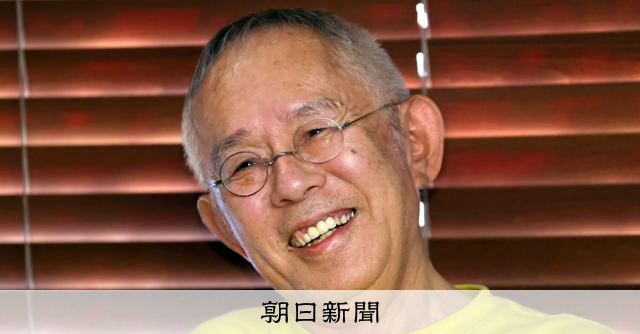
Toshio Suzuki is not the character the headline paints. The Asahi interview’s title—“Miyazaki doesn’t even know what AI is”—frames the Ghibli producer as a gatekeeper of analog tradition, a man defending his director’s artistic immunity against a wave of generative tools. But Suzuki himself tells a different story.
He has been using AI. He started out of curiosity, as he puts it, and within minutes the system identified him by name. “You must be Suzuki-san from Ghibli,” it said. That wasn’t sorcery—it was the inevitable result of decades of interviews, articles, and public statements living online, feeding the training data of every major model. Suzuki called it “having a brilliant assistant who knows everything about your past.” He acknowledged it was helpful.
This is the detail most English-language coverage of this interview will miss. Suzuki is not an Luddite. He is a pragmatic 78-year-old producer who has shepherded almost every Ghibli film through production and who is actively experimenting with the same tools that have animators and writers across Japan terrified of obsolescence.
That makes his subsequent judgment far more interesting than a blanket rejection.
What Happens When You Let AI Write
Suzuki gave AI a straightforward task: write a manuscript for him. The result was, in his words, immediately recognizable as worthless. “You can tell right away that if you leave everything to this, it produces something terrible.”
His conclusion was not that AI is dangerous or deceptive. It was that AI requires a human with a clear sense of what they want to produce. “Unless you know clearly what you want to write, you cannot use it effectively,” he said. The tool amplifies intent; it does not generate it.
He then pushed further, describing AI as having a kind of personality—one that responds differently depending on how you approach it. He told it, half-jokingly, to stop making hasty judgments and learn more. The AI, according to Suzuki, would apologize.
This is not the language of someone who fears being replaced. It is the language of someone who has learned to treat AI as a subordinate rather than a competitor. The relationship, he noted, requires discipline. “If you don’t treat it honestly and seriously, you will suffer consequences.”
The Miyazaki Factor
The interview’s headline zeroes in on Miyazaki’s supposed ignorance of AI. Suzuki did not contradict this characterization directly in the published portion of the conversation, which suggests the gap is real enough to be notable. Miyazaki has long operated with a distinctly analog philosophy—hand-drawn frames, physical models, practical effects—and there is no evidence he has begun integrating generative tools into his workflow.
That absence matters more than it should. Miyazaki is not merely a director; he is Ghibli’s primary brand asset on the global stage. His name carries weight in markets where the studio has built a cult following that spans decades and continents. Every film he touches becomes an event. Every public statement about his process becomes news.
If Miyazaki truly does not engage with AI, that is not necessarily a weakness. But it is a strategic choice worth examining.
Ghibli as Analog Fortress
Japan’s animation industry sits at a peculiar crossroads. Major studios like Toei, Production I.G, and Kyoto Animation have faced chronic labor shortages and declining margins for years. AI promises efficiency gains that could solve some of those problems—or dismantle the craft entirely. The debate in Japanese media is heated and often polarized: AI as liberation versus AI as cultural erasure.
Ghibli occupies a different position. It is not struggling for relevance. Its library generates steady revenue through theatrical re-releases, streaming licensing, and theme park integration at Tokyo Disneyland’s GiBRI Pavilion. The studio’s brand equity is so strong that its mere existence feels like an anachronism in an industry racing toward automation.
Suzuki’s willingness to experiment with AI while maintaining Miyazaki’s hands-off stance creates a subtle but powerful signal. Ghibli is not anti-technology. It is pro-craft. The distinction matters.
Who Wins, Who Loses
The winner in this dynamic is Ghibli itself, at least in the near term. Its refusal to flood its pipeline with AI-generated content preserves the scarcity value of its output. When every studio is churning out competent-but-generic AI-assisted animation, Ghibli’s hand-drawn aesthetic becomes a premium product by default. That is a defensible positioning strategy, not naive resistance.
The loser is less clear-cut. Japanese animators at smaller studios, who lack Ghibli’s brand cushion, face a different calculus. For them, AI may be less a threat than a survival tool—or a trap that devalues their labor while promising efficiency. Suzuki’s experience suggests the difference between using AI as an assistant and being replaced by it comes down to one thing: whether you know what you are trying to say.
What Comes Next
Ghibli’s next film will likely come from Miyazaki or someone within his immediate orbit. Neither is known for adopting new technology rapidly. The studio’s library will continue to generate revenue without major new releases for some time. Suzuki, who has hinted at considering retirement, may eventually hand over creative direction to a new generation that has grown up alongside these tools.
That transition point is where this story becomes consequential. If the next Ghibli producer treats AI the way Suzuki does—as a capable but undisciplined assistant that must be managed—then the studio’s analog identity will evolve rather than shatter. If they treat it as a replacement for human judgment, the brand’s meaning changes fundamentally.
Until then, Ghibli remains what the Asahi article calls it: one of the last strongholds of analog culture. But Suzuki’s honesty about his own AI experiments suggests that stronghold has gates, not walls.