Why HBM's Moat Just Got Deeper — Not That Anyone Told You
OpenAI and Intel just admitted CXL can't replace HBM — it's a complement, not a substitute. The implication: Samsung and SK Hynix's stranglehold on AI memory tightens further, with consequences for chip affordability and US export controls.
The HBM Alternative That Wasn’t
A panel at an AI infrastructure conference in the US on September 16 delivered a verdict the semiconductor industry had been speculating about for months: CXL — the Compute Express Link interconnect protocol many hoped would democratize AI memory — cannot replace HBM. It is, as Intel’s architecture head put it bluntly during the session, a complement. A helper. Not a rival. The admission landed quietly, without fanfare, but its implications rippled through every corner of the AI supply chain.
OpenAI’s assessment was equally unrewarding for CXL’s advocates. Their engineers, speaking off the record to several attendees, reported finding no meaningful role for CXL-attached memory in actual model-training environments. The protocol’s only practical use case, they said, was shelving rarely accessed data — checkpoint archives, historical telemetry, infrequently queried datasets — far from the high-bandwidth, low-latency demands that define training runs and large-scale inference at production scale. One OpenAI systems engineer described it as “using a freight train to deliver overnight packages.”
This matters more than the technical details suggest, and not simply because it settles a debate that has occupied semiconductor strategy teams for two years. For a long stretch, CXL was pitched as the escape hatch from HBM’s pricing trap. As AI clusters multiplied — not merely grew, but multiplied, with new deployments scaling from dozens of GPUs to tens of thousands — HBM costs became the hidden tax on every compute deployment. Nobody talked about memory in press releases, but every CFO tracking GPU acquisition costs knew the real bottleneck sat in the packaging floor, not the fab. CXL promised to let you use cheaper, commodity DRAM instead. A level playing field. Modular memory that scaled independently of compute. That narrative just died on a Tuesday morning in a conference room most engineers will never hear about.
Who Wins, Who Loses
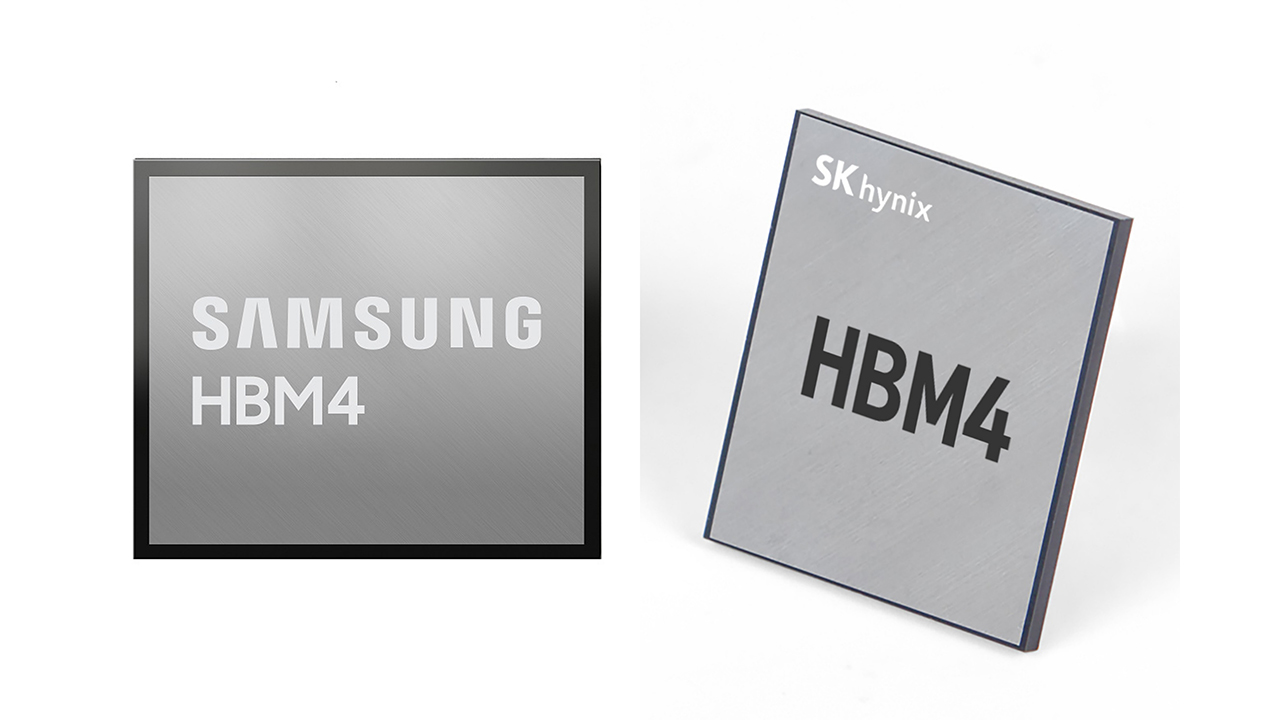
Samsung and SK Hynix win outright. Between them, they control an estimated 80 to 85 percent of the HBM market by revenue. Samsung supplies roughly half; SK Hynix, which has held the edge in HBM3e yield rates and qualified first with NVIDIA’s flagship architectures, takes the other significant share. The rest belongs to a Chinese industry that has yet to produce anything competitive at volume — CXMT’s announcements, impressive on paper, remain precisely that: announcements.
Every company building AI infrastructure loses a little. No alternative means no leverage. Big cloud providers and AI vendors have been quietly hoping that CXL or some other protocol could introduce a second source of memory that drives price competition and forces suppliers to bid against each other. That door is now closed, at least for the foreseeable future. The next round of contract negotiations between NVIDIA’s customers and the Korean memory houses will be defined by scarcity, not choice.
Chinese AI chipmakers lose the most — and not just from the absence of alternatives. South Korea’s dominance in HBM coincides with tightening US export controls aimed at curbing China’s access to advanced semiconductor supply chains. When Washington restricts China’s access to HBM-capable GPUs, it simultaneously fortifies the Korean position. There is no loophole through CXL. No workaround that lets Chinese labs build their own AI memory stacks from commodity components sitting on open-market shelves. The feedback loop is self-reinforcing: export controls choke off China’s access, Korean firms capture the freed demand, their revenues fund the next generation of R&D, and the gap widens further.
The strategic feedback loop is straightforward: stronger Korean HBM dominance → tighter Chinese containment → more pressure on Beijing to achieve self-sufficiency → more US incentive to keep the chokepoint intact → more Korean dominance. It is a closed system, and no participant outside Seoul and Taipei can break the cycle without fundamentally restructuring the global semiconductor architecture.
The Numbers Behind the Moat
HBM3e modules currently trade in the range of $1,500 to $2,000 per unit for the highest-density configurations, though prices are fluid and heavily negotiated under long-term contracts that lock in allocation months or even years in advance. What the list price obscures is the capacity constraint. Samsung and SK Hynix are running their HBM lines at or near full utilization. New capacity is coming online, but not fast enough to meet the trajectory of demand.
NVIDIA’s upcoming Blackwell and Rubin GPU lines will each require significantly more HBM per chip than previous generations. Rubins reportedly need up to 192 gigabytes of HBM per GPU, a jump that intensifies the memory squeeze at exactly the moment the industry was hoping demand might stabilize. Each generation of NVIDIA’s flagship requires roughly 30 to 40 percent more HBM than the one before it. The compounding effect across millions of chips is staggering.
Samsung’s new Fab 2 project in Texas and its expanded Pyeongtaek facilities in Korea are both targeting HBM production capacity increases of 50 percent or more over the next two years. SK Hynix is pursuing a similar trajectory with its own capacity expansion plans. Neither timeline offers near-term relief for buyers locked into contracts that don’t yet cover 2028 demand. And neither accounts for the possibility that demand could accelerate beyond current forecasts — a scenario that is increasingly likely given the pace of model development.
China’s CXMT has announced ambitions to enter the HBM space, but independent analysts estimate its first viable product won’t reach volume before 2027 — if then — and will likely lag the current generation by one full step. Export controls on advanced lithography equipment, particularly EUV tools from ASML, make catching up structurally difficult. Every generation China misses is a generation of lost learning, and in memory manufacturing, learning compounds. The gap is not just technical; it is temporal.
Second-Order Effects
The consequences of this moment extend well beyond pricing and allocation. There are at least three second-order effects that deserve attention.
First, the consolidation of value capture. When memory is commoditized and decoupled from compute, value flows to the companies that design and assemble the final system. When memory is constrained and proprietary, value flows upstream to the memory manufacturers. HBM’s architectural coupling to GPUs means that Samsung and SK Hynix are capturing a larger share of the total AI infrastructure value chain than they would in a world where CXL had succeeded as a substitute. This reshapes the competitive landscape in ways that extend far beyond the memory segment itself.
Second, the innovation trajectory of GPU architecture. If HBM remains the only viable memory tier for training clusters, chip designers will continue optimizing around memory bandwidth rather than exploring architectures that decouple computation from memory. We are likely to see continued investment in HBM stacking density, interposer design, and silicon photonics for memory-to-GPU links — all directions that reinforce the existing supply chain rather than challenging it. Alternative architectures, such as those that rely on host-memory pooling or disaggregated storage, will remain confined to inference and non-training workloads where bandwidth requirements are less punishing.
Third, the policy dimension. The US has already restricted HBM exports to China. This new confirmation that CXL cannot substitute for HBM strengthens the case for maintaining — and potentially expanding — those restrictions. If CXL had offered an alternative pathway, Washington would have faced a harder decision: restrict the alternative or accept a loophole that could be exploited. Now the choice is simpler. The regulatory environment will likely tighten further, not loosen.
What Happens Next
The immediate consequence is pricing discipline. With no credible alternative emerging, HBM buyers — primarily NVIDIA, Microsoft, Google, and Meta — will continue to concede to supplier terms. Samsung and SK Hynix gain bargaining power not just on price but on allocation priority during supply crunches. NVIDIA, which cannot ship its best chips without HBM, is the most exposed. Its customers will feel the pressure indirectly, through longer lead times and higher effective costs per training run.
There is also a quieter consequence: the erosion of vertical integration ambitions. Several large cloud providers have entertained the idea of designing custom memory solutions or partnering with alternative memory manufacturers to reduce dependence on the Korean suppliers. CXL had been the technical foundation for those plans. Without it, the calculus shifts. The path of least resistance remains working within the existing supply chain, however unfavorable the terms.
A third consequence involves the pace of Chinese self-sufficiency efforts. Frustration with export controls and Korean dominance is likely to accelerate Beijing’s investment in domestic memory production, particularly through CXMT and state-backed research initiatives. But acceleration without access to the underlying tooling and IP is slow acceleration. The result will be a fragmented memory ecosystem — one tier for the rest of the world, another for China — with different performance characteristics, different cost structures, and different security postures.
Why English-Language Coverage Missed This
The panel discussion itself received limited attention outside specialist circles. The transcript was never published. No press release accompanied it. But its implication cuts across every narrative currently circulating in Western tech media. There is a pervasive story that AI infrastructure costs will come down as new architectures emerge and competition intensifies. This story is now weaker. There is another narrative that Korea’s semiconductor advantage is narrowing as Taiwan, China, and the US invest heavily in domestic capacity. The opposite appears true at the most strategically critical node — AI memory.
The realignment is not dramatic. Nothing collapsed. CXL still has a role — just not the role its advocates hoped it would play. It will serve as a bandwidth extender, a pooling mechanism for inference workloads, and a bridge between memory tiers that don’t need HBM-level performance. But in technology, the boundaries between substitute and complement often determine who captures value. HBM buyers will continue to pay a premium. Korean memory makers will continue to set the terms. And the geopolitical implications of that arrangement — who controls the memory that powers the most powerful systems on Earth — are only beginning to crystallize.
The companies that understood this before the panel spoke will already be adjusting their strategies. The ones that don’t will learn the hard way, the same way every other industry does, when the cost of an input they assumed would normalize instead doubles while they were looking the other way.