Why Nintendo Is Dropping Two Dirs in One Week
Nintendo's decision to book two consecutive Directs — one dedicated to the Zelda 40th anniversary — signals a strategic pivot. After Gamescom, Nintendo is reclaiming the news cycle on its own terms.
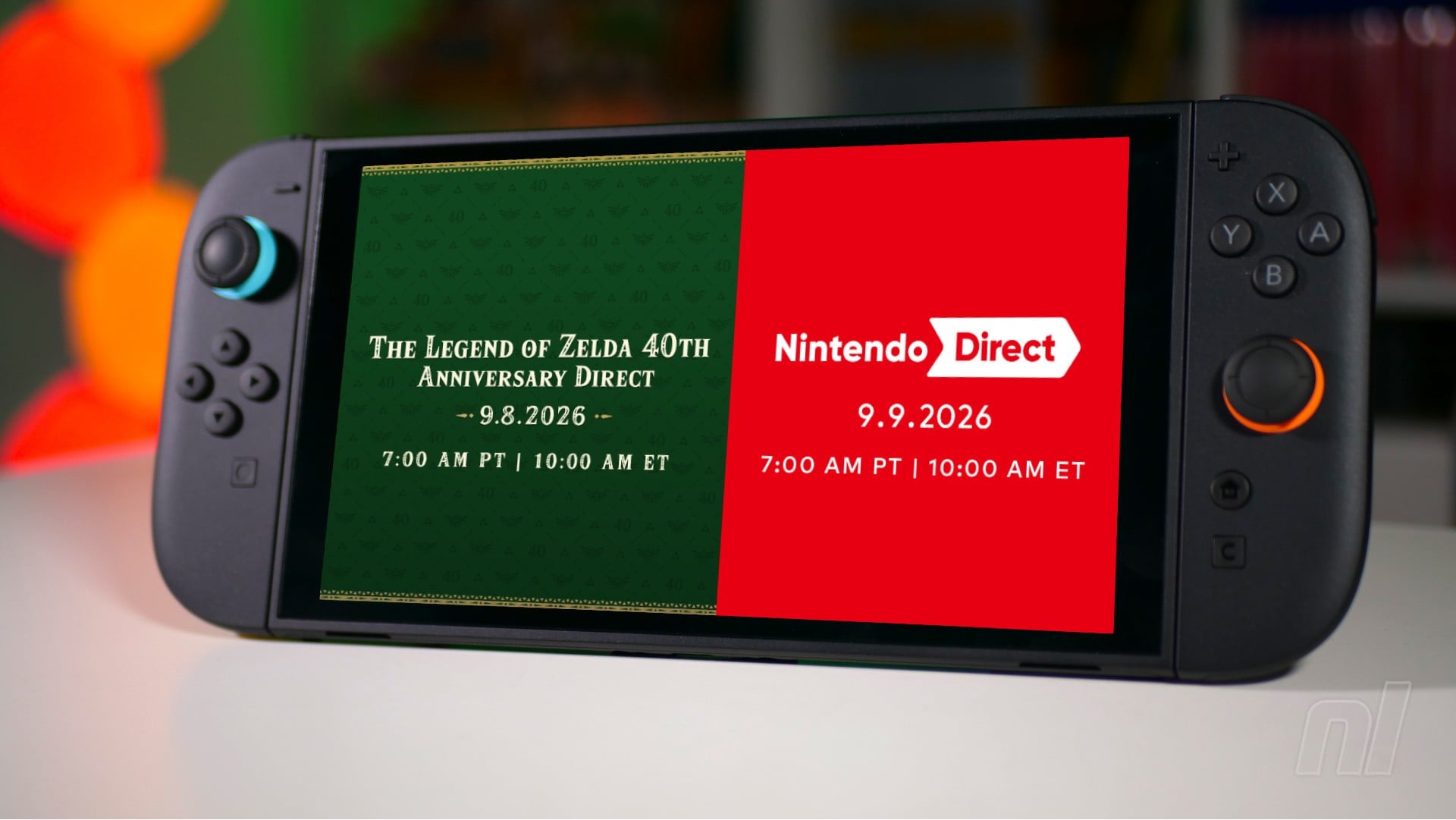
Back-to-Back Nudges
Nintendo announced two Directs next week — September 8th and 9th — and that pairing alone is worth pausing for.
The company does not scatter its showcases across consecutive days unless it has something specific to accomplish. A single event handles a standard update. Two means it is trying to build momentum, to turn one week into a sustained news cycle rather than a single headline that burns bright and dies fast.
The first Direct on September 8th carries a special designation: The Legend of Zelda 40th Anniversary Direct. It runs roughly 30 minutes and covers “a variety of information related to The Legend of Zelda” — language Nintendo typically deploys when it wants to withhold specifics while still promising substance. The second event on September 9th is a standard 45-minute Direct. Then, as a follow-through, Nintendo will host a Treehouse presentation featuring gameplay footage from titles shown during the second showcase.
Three events. One week. That is not a press conference schedule. That is a campaign.
Nintendo has done back-to-back Directs before, most notably in late 2021 when the Switch Pro rumors were swirling and the company needed to address hardware questions directly. But those were reactions. This feels different — this is proactive, deliberate, and anchored around one of the company’s crown jewels.
Why the Zelda Focus Matters
The original Legend of Zelda launched in Japan on February 21, 1986, as a Famicom Disk System exclusive. Forty years later, the franchise remains Nintendo’s most globally recognized property outside of Mario. But recognition and momentum are different things, and the gap between them has widened.
The franchise has been quiet on new original entries for years. Tears of the Kingdom dominated headlines in 2023 and carried that momentum into 2024 and 2025, but each passing year without a new canonical entry erodes the cultural weight of the brand. A 2025 article from Bloomberg noted that internal discussions at Nintendo about a new Zelda title reportedly stalled after creative disagreements about direction. Whether those talks have resumed or concluded remains unclear, but the silence itself tells you something.
The 40th anniversary marks a moment where nostalgia meets urgency. Nintendo knows this. The company has a long history of leveraging anniversaries not as nostalgic exercises but as launchpads — the Super Mario Bros. 30th anniversary in 2015 gave us Mario Kart 8 Deluxe years ahead of its time, and the Donkey Kong 35th celebration in 2024 was essentially a trailer for the upcoming Donkey Kong Country Returns HD.
A standalone anniversary Direct — separated from the broader showcase — signals that whatever is coming is being treated as event-grade content, not a mid-cycle bullet point. Whether it is a new entry, a significant re-release, or a mixed package, the framing matters. Nintendo chose to frame it as a milestone event because it understands that the Zelda fanbase, unlike many others, measures the company’s commitment by the frequency of original entries rather than remasters and compilations.
The anniversary Direct may also serve a secondary purpose: damage control. For years, fans have complained that Nintendo treats Zelda as an afterthought between major releases. Booking an entire Direct around the franchise sends a message, however calculated, that the company hears those concerns and intends to act on them.
The Timing After Gamescom
Gamescom is the other European trade show of the year, and Nintendo traditionally does its heaviest showcasing there in even-numbered years. The assumption going into September was that Nintendo would use Gamescom to plant seeds and then go quiet until the next major event. The company’s Gamescom presence typically focuses on third-party partnerships and Nintendo Switch exclusives with broader appeal — titles like Mario + Rabbids or Metroid Prime 4 breakdowns rather than flagship franchise announcements.
That did not happen. Instead, Nintendo is appearing again, almost immediately, which suggests it wanted to control the narrative rather than cede it.
There is a practical consideration here too. Gamescom generates global coverage, but that coverage fragments across dozens of publishers, streamers, and platforms. A Nintendo Direct delivers a single, controlled message directly to the audience. Doing it twice doubles the surface area. Two Directs in one week generate more sustained conversation than one large event could on their own. The second Direct feeds off the energy of the first, creating a week-long runway rather than a single day of noise.
But there is a competitive dimension as well. Microsoft and Sony both ran major showcases in recent months, and the gaming news cycle has been dominated by their announcements. Nintendo staying quiet through September would mean ceding the entire month to competitors. By filling the week with its own programming, Nintendo forces everyone else onto its schedule.
Who Wins and Who Loses
Consumers win. More content, more gameplay, more direct communication from Nintendo means less speculation and more concrete information. The Treehouse segment following the 9th Direct is the kind of hands-on footage that usually leaks or gets shared weeks later — here it will be official, controlled, and framed the way Nintendo wants it framed.
Competitors lose attention share. Microsoft, Sony, and others rely on windows of silence to build anticipation. Nintendo just turned the entire week into its own. Any third-party announcement in that window will compete against Zelda news and Nintendo-led coverage. This is especially relevant given that September is traditionally a heavy month for Fall Game of the Year candidates and holiday marketing pushes.
Content creators also lose something. When Nintendo controls the pacing, journalists and YouTubers react rather than lead. This is a deliberate shift in leverage — one that Nintendo has been gradually building toward since the Direct format replaced the old Nintendo Letter Builder email newsletter in 2011. The Direct was always about removing intermediaries. This expansion of the format reinforces that philosophy.
Retailers and distributors likely see an opportunity as well. Two Directs mean two waves of potential pre-orders, two moments to push hardware bundles, and a fuller shelf presence heading into the critical holiday quarter. Nintendo has been explicit about its intent to drive Switch 2 adoption through bundled promotions, and a Zelda-anchored week gives those promotions fresh ammunition.
What Comes Next
The exact content of each Direct has not been revealed. The Zelda showcase will cover “a variety of information” — plural, vague, deliberately open. The 45-minute Direct on the 9th is described as a standard presentation, which in Nintendo’s vocabulary usually means a mix of new announcements, updates, and minor reveals rather than one towering headline.
What is notable is the structure itself. Three events in seven days. A full week of Nintendo-directed coverage. Treehouse footage to close.
This is not a company that typically overcommunicates. Nintendo has historically operated on a scarcity model — few announcements, long gaps between them, and an almost steely discipline about not sharing information before it is ready. The fact that it is choosing to do more, not less, suggests Nintendo sees an opportunity to recapture the center of gaming conversation — and it wants to spend the whole week doing it.
Industry observers should watch for two things: whether the Zelda content actually delivers on the anniversary weight, and whether the second Direct contains enough substantive news to justify treating it as a full event rather than a follow-up. If either falls short, the scheduling will look like overreach. If both land, this could mark the beginning of a more aggressive, more frequent Direct cadence — something the company has resisted for years.
The scheduling does not raise doubts. The content will.