Why Power of Siberia 2 Changes Everything for Russia and China
Xi and Putin's Bishkek meeting isn't just another diplomatic photo op. The long-stalled Power of Siberia 2 pipeline could redraw gas flows across Eurasia — and lock Russia into a permanent dependency on Beijing.
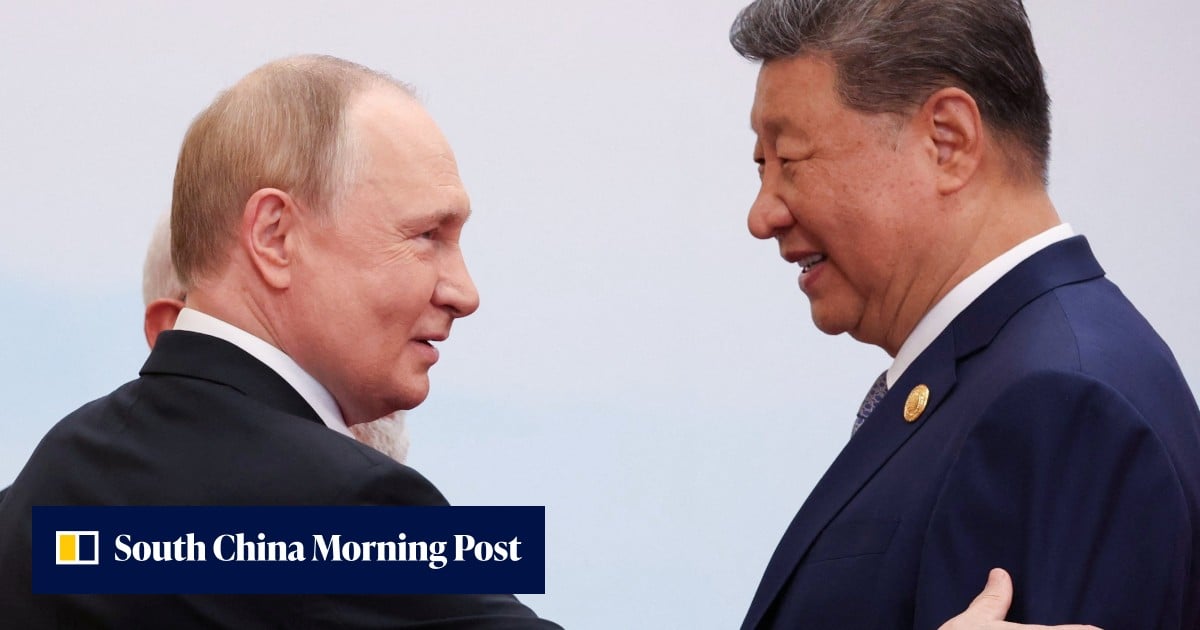
The Meeting No One Is Talking About Correctly
When Vladimir Putin lands in Bishkek on August 31 for a meeting with Xi Jinping, the headlines will focus on diplomacy, partnership, the performative warmth of autocrats who’ve been doing this dance for over two decades. But there is one item on the agenda that matters far more than any joint statement: the Power of Siberia 2 pipeline.
Russian presidential aide Yury Ushakov confirmed over the weekend that the stalled project — a $20 billion, 8,000-kilometer natural gas pipeline through Mongolia that would carry up to 40 billion cubic meters of gas annually from western Siberia to China — will be discussed bilaterally. It has not been finalized. And that uncertainty is exactly what makes this meeting worth watching.
What Everyone Missed About the Timing
Putin already visited Beijing in March, shortly after President Donald Trump traveled there. That sequence was deliberate — Moscow was trying to signal that its pivot to Asia was not being dictated by Washington but was happening on its own terms. This time, the context is different. The war in Ukraine has dragged on. European demand for Russian gas has collapsed from roughly 180 billion cubic meters annually before 2022 to under 60 billion now, with additional infrastructure like the Nord Stream cables cut and the Ukrainian transit route running down. Russia needs Chinese gas buyers. Not eventually. Now.
That shift in leverage is the single most important thing about Power of Siberia 2. When negotiations first surfaced around 2014, it was Russia with the cards. Siberian gas, a grateful China, the promise of mutual benefit. Today, China holds the leverage. Beijing can wait. It can dangle alternative suppliers — liquefied natural gas from Australia, Qatar, even the United States — and it does not even need to use them. The mere existence of those options is enough.
The Price Problem Nobody Has Solved
The core obstacle has never been engineering or geography. It is price. China has insisted on linking the pipeline gas price to oil, which would make it significantly cheaper than the spot-market LNG China also buys. Russia, stripped of its European market, needs any deal it can get, but it has so far resisted terms that would turn the pipeline into a long-term subsidy for Chinese industry. The numbers matter: if the gas arrives at $200 per 1,000 cubic meters instead of $350, that is a transfer of tens of billions of dollars every year from Moscow to Beijing, locked in for decades.
Ushakov’s comments suggest both sides expect discussion but not necessarily conclusion. “It will be discussed not only at the level of the Eastern Economic Forum” in Vladivostok later in September, he said. That framing — two meetings, two venues — implies the terms are still being shopped, and Moscow may still be hoping for a better arrangement elsewhere, however unlikely that has become.
Why Europe Should Be Paying Attention
The implications extend far beyond the Tannenberg line between Russia and China. Every billion cubic meters that flows east instead of west is a permanent reduction in European gas supply that cannot be undone. Europe has spent the last three years building LNG terminals, securing alternative contracts, and managing storage levels with the pragmatic terror of people who learned the hard way what happens when a pipeline nation weaponizes its shipments. Power of Siberia 2 would cement that loss. It would also remove the one remaining economic incentive Russia has had — halfhearted though it became — to negotiate a settlement in Ukraine. If Moscow can sell gas to China at any price, the war no longer costs it its energy revenue.
There is also a longer-term strategic dimension. The pipeline would give China a direct overland gas link to Central Asia and the Caspian basin, potentially sourcing additional volumes beyond Siberia itself. That is a network effect, not just a pipe. Europe’s gas decoupling from Russia, which looked like an emergency measure in 2022, would harden into infrastructure.
What China Gains Beyond Gas
Beijing is not just buying energy. It is securing a geopolitical architecture. A pipeline through Mongolia binds two landlocked Central Asian states to Moscow and Beijing. It integrates the Shanghai Cooperation Organisation’s energy framework with physical infrastructure. It gives China a stake in Mongolian stability it did not have before — and in any future scenario where Central Asia destabilizes, Beijing already has a reason to care.
There is also the quieter benefit: demonstrating to other regional players — India, Southeast Asian nations, perhaps even Iran — that Russia’s energy future runs through China. That message matters more than any contract clause.
What Russia Risks
Moscow gets revenue, yes. But it also gets trapped. A pipeline is not a shipping lane. You cannot reroute gas through a steel pipe once it is in the ground. By locking in a long-term deal with Beijing, Russia is converting its energy independence — the ability to sell to whoever pays the most — into a single-customer dependency. That is a historical reversal for a country that has used gas as a political instrument against Europe for twenty years.
The dependency cuts both ways, of course. If China decides the price is too high or finds an alternative, it simply shuts the valve. But unlike Europe, China has alternatives that are real, not aspirational. It has the world’s largest LNG import capacity under construction. It has domestic shale gas plays, however difficult to exploit. It has coal, which it will continue to burn. Russia has only the pipe, and it is already dug.
What Happens Next
Expect a announcement of progress, not resolution. Both sides will frame the discussion as productive. Ushakov’s phrasing — discussing rather than finalizing — suggests the deal remains in the zone where rhetoric can mask disagreement. The Eastern Economic Forum in Vladivostok later in September will likely see more technical working sessions.
But the trajectory is clear. Power of Siberia 2 will either be signed or it will die. If it dies, it dies because the price gap became unbridgeable, which would mean Europe had succeeded in breaking Russia’s energy backbone without triggering a desperate escalation. If it is signed, it becomes the single most consequential energy infrastructure project in Eurasia since the Nord Stream lines — except with the flow reversed.
The Bishkek meeting will not decide that outcome alone. But it will tell you which direction the gravity is pulling.