Why Samsung's HBM Grip Is Tightening While Western Analysts Miss It
HBM prices could leap 50% next year as general DRAM profitability overtakes advanced memory. The shift is reshaping negotiation leverage at Samsung and SK Hynix—and NVIDIA just handed them more room.
The Inversion Nobody Outside Seoul Is Tracking
General DRAM is now more profitable per unit than HBM. Not by a thin margin—by roughly 40 percentage points, according to Korean industry estimates. The reversal happened quickly. DDR5 server memory prices quadrupled in a single year, crossing HBM’s profitability curve somewhere in early 2025.
This is the quiet structural shift driving next year’s HBM pricing negotiations. And it is largely invisible in Western earnings call commentary.
For context: Samsung produces both standard DRAM and high-bandwidth memory. When you allocate a silicon wafer to one product, you forfeit the other. If HBM pays less per wafer than DDR5, the rational move for a fab operator is to shift capacity away—unless the customer agrees to pay a meaningful premium. That premium is about to materialize.
Korean brokerages are already pricing in contract-price increases of at least 50% for HBM going into 2026. UBS analyst Timothy Arcuri sees the average selling price of HBM climbing nearly 79% by 2027 compared with this year. These are not fringe projections. They reflect a fundamental recalibration of what HBM is worth when the alternative product on the same production line suddenly becomes more lucrative.
How We Got Here
The root cause is a convergence of two trends that Western desks often treat separately: AI chip demand and the broader memory cycle.
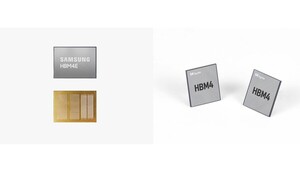
On the demand side, NVIDIA’s Blackwell and Vera Rubin platforms are hungry for HBM4 and HBM4E. Each GPU stacks memory differently than previous generations, consuming more wafers per chip. TrendForce estimates that by end of 2025, roughly 22% of all DRAM wafers will feed HBM production. Next year that figure rises to 30%. Yet on a bit-per-wafer basis, HBM’s share of total DRAM output grows from 9% to just 13%. In other words: more wafers, relatively fewer useful bits. That is an efficiency drag that compounds when the wafers could have been making money elsewhere.
On the supply side, DDR5 pricing exploded. Contracts locked in late 2024 were followed by spot-market runs that pushed 64GB RDIMM modules—and their underlying wafers—into uncharted territory. By Q1 2025, per-wafer revenue and margin on DDR5 surpassed HBM on a gigabit basis. The divergence was sharp enough to force a pricing conversation that had never existed at this scale.
HBM contracts also work differently. Most are annual, negotiated with multi-quarter lead times. DDR5 prices adjust faster through spot and spot-adjacent channels. So when DDR5 prices moved, HBM producers felt the profit gap immediately—while their existing customer contracts lagged behind.
The NVIDIA Factor
NVIDIA’s recent decision to raise AI server prices by over 15% is not just a demand story. It is a structural signal.
The company has been absorbing HBM cost inflation silently. Now it is passing some of that through. Graystone Blackwell and the upcoming Vera Rubin-based systems are both in scope. The message to suppliers is implicit: we have room to negotiate harder, and we know it.
Fubo Research estimates that even if HBM4 costs nearly double HBM3E, NVIDIA can sustain a 75–80% gross margin simply by adjusting final prices. That margin buffer is enormous by semiconductor standards. It means HBM price increases from Samsung or SK Hynix do not trigger the same panic they might have two years ago. The cost hit lands on a company that can absorb it and still post industry-leading profitability.
An industry source in Seoul put it plainly: when the downstream buyer has breathing room, the upstream supplier gains leverage. Next year’s negotiations will reflect that balance.
Who Wins. Who Loses.
Samsung and SK Hynix win. Their HBM pricing power strengthens not because demand is growing—everyone knows that—but because the opportunity cost of producing HBM instead of standard DRAM has risen sharply. Every wafer shifted toward HBM now carries a larger premium requirement. That premium translates directly into higher contract prices.
AI cloud providers lose first. Their server costs are already elevated. A 50% HBM price increase flows into GPU box prices, which flow into cloud instance pricing. Margins compress unless customers accept higher rates.
Western hyperscalers feel the squeeze secondarily. The dollar-denominated price of HBM does not just reflect Korean manufacturing costs—it reflects a global allocation decision about where scarce silicon capacity should go. As DDR5 profitability rises, the pressure on memory manufacturers to justify HBM’s wafer intensity increases. The counterpressure is price.
Competing memory makers—Micron included—face a difficult positioning problem. They cannot ignore the pricing trajectory set by Samsung and SK Hynix, yet they lack the HBM4 volume to match Korean output. The gap widens if DDR5 margins stay elevated, because Micron’s general DRAM business benefits more from the current pricing environment than its HBM segment does.
What Western Analysts Are Missing
The dominant narrative in US financial media treats HBM as a pure demand story: more AI chips, more HBM, prices rise. That is incomplete. The real driver this cycle is a profitability inversion between two products that share the same factory floor.
Western analysts tracking Samsung and SK Hynix typically focus on HBM shipment volumes and NVIDIA order books. They rarely model the opportunity-cost dynamics that sit between standard DRAM and HBM pricing. That gap matters. It explains why HBM price increases could outpace shipment growth next year—and why Korean brokerages, who monitor DDR5 spot prices weekly, are pricing in a 50% minimum bump.
The signal from Seoul is unambiguous: the math has changed. HBM is no longer automatically the most profitable product on the line. It must now bid against standard DRAM for silicon—and that bid is getting more expensive every quarter.
What Happens Next
Expect HBM4 and HBM4E contracts renegotiated at materially higher terms in early 2026. The 50% floor cited by Korean analysts is consistent with the DDR5-to-HBM profitability gap currently reported in the industry. Anything below that would represent a concession by Samsung and SK Hynix—and there is no evidence they are willing to concede.
NVIDIA’s server-price increase absorbs some of the shock but does not eliminate it. Gross margin resilience at 75–80% is strong, but it is not infinite. The company will push back on pricing, especially on products where competition from AMD or custom silicon options exists.
The broader implication: AI infrastructure costs are about to become more volatile. Memory is the bottleneck everyone notices. But the real volatility sits in the negotiation between two profit curves that have suddenly crossed each other.
For investors tracking Samsung, SK Hynix, and the companies that buy from them, the DDR5 price trend is now as important as any NVIDIA order announcement. It tells the story that the headlines are missing.