Why South Korea's 40-Million-Account Streaming Breach Should Alarm Global Users
TVING's breach exposed nearly 40 million accounts and stolen decryption keys — a failure that reveals how encryption means nothing without disciplined key management. For global streaming users, the lesson is stark.
The Numbers That Should Make You Rethink Your Streaming passwords
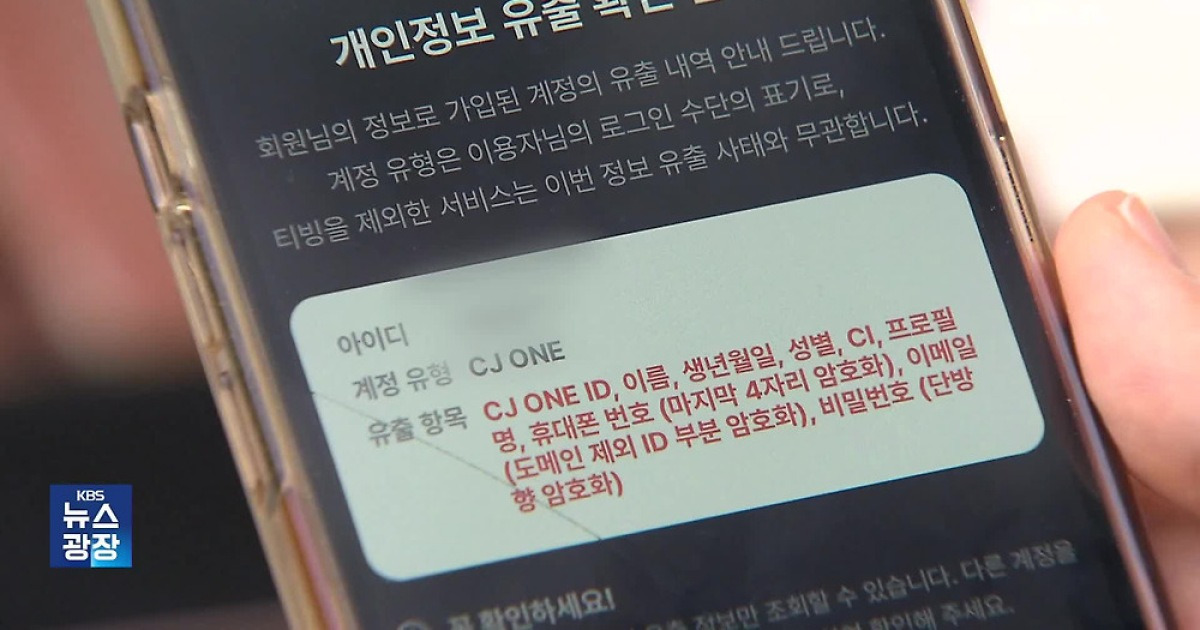
TVING, South Korea’s leading streaming platform, announced a breach that exposes roughly 39.54 million user accounts. The company has only about 5 million paying subscribers. That means the breached dataset is nearly eight times the size of its active customer base.
This is not a typo. The accounts include active users, dormant accounts, deleted profiles, and third-party sign-ins through Kakao and Naver. Twenty data fields were compromised, including names, birth dates, and the CI — a digital resident identifier unique to South Korea’s centralized ID system. Even more alarming: the hackers also stole the decryption keys needed to unlock phone numbers and email addresses that had been partially encrypted.
Encryption is supposed to be the safety net. When the net has holes, everything above it falls through.
How the Hack Happened
According to the joint investigation by South Korean authorities and TVING, the attackers followed a methodical two-stage process.
First, they used a development-environment access key that had been left exposed to infiltrate TVING’s internal infrastructure. This key should have been rotated regularly and restricted to authorized personnel only. It wasn’t.
Once inside, the hackers escalated to stealing an operations-environment access key — the kind of credential that grants direct access to production servers where live user data actually lives.
When the intrusion temporarily overloaded TVING’s servers and raised internal alarms, the hackers didn’t pull out. Instead, they built a hidden virtual server inside the network and used it as a staging ground to exfiltrate data at their own pace. By the time the breach was detected, the damage was already massive.
A mock penetration test had previously flagged the exposed development key as a vulnerability. TVING did not fix it.
What the Keys Actually Unlocked
The most consequential detail in this breach isn’t the volume of accounts — it’s what the stolen keys made possible.
Phone numbers and email addresses that were stored with partial encryption are now fully readable. In South Korea, where the CI (Digital Resident ID) is tied to banking, government services, and mobile contracts, the combination of a birth date plus a CI plus a phone number creates a near-complete identity profile.
Professor Lee Il-joon of Kookmin University, who specializes in cybersecurity, told reporters that this data combination is tailor-made for smishing attacks — text-message phishing that can bypass traditional email filters and reach users on their most personal device.
This is not a hypothetical risk. Smishing campaigns using South Korean CI data have already been observed in the wild following previous breaches.
The Delayed Response
TVING knew about the intrusion before it publicly acknowledged it. The investigation found that the company delayed reporting the breach even after detecting hacking activity. That delay matters for two reasons.
First, every day between discovery and disclosure gives attackers more time to harvest data. Second, delayed disclosure undermines the ability of affected users to take protective action — resetting passwords, contacting banks, flagging suspicious messages — while the threat is still fresh.
South Korea’sPersonal Information Protection Act requires prompt notification of data breaches. TVING’s delay has drawn criticism from the Ministry of Science and ICT, which stated that proper key management could have prevented both the initial access and the subsequent lateral movement across servers.
Why This Matters Beyond Korea
South Korea is one of the most digitally connected countries on Earth. Internet penetration exceeds 96 percent, mobile broadband adoption is among the highest globally, and digital ID systems like the CI are deeply integrated into daily life. A breach in this environment doesn’t just expose email addresses — it exposes the infrastructure of digital identity itself.
But the implications extend far beyond Korea’s borders.
The TVING breach demonstrates a pattern that recurs across the streaming and technology industries: encryption is deployed as a security measure, but the keys guarding that encryption are managed carelessly. The cryptographic math is sound. The operational discipline is not.
This is not unique to TVING. Major breaches at companies worldwide have followed the same arc — encryption in place, keys exposed, data readable. The difference in this case is the scale and the jurisdiction. A platform with 40 million compromised accounts sitting inside a market where digital identity is as tightly linked to civic life as it is in South Korea creates a threat environment that most Western regulators have barely begun to grapple with.
Who Wins, Who Loses
The winners here are the hackers and the secondary markets that trade in breached credentials. Stolen CI data, phone numbers, and email addresses form a complete toolkit for targeted fraud. In South Korea’s ecosystem, where a single phone number often serves as the primary identifier for banking, social media, and government services, the cascading damage from one breach can multiply rapidly.
The losers are the users. Thirty-nine million people who trusted a streaming platform with their personal data now face elevated risks of identity theft, phishing, and targeted scams. Many will never know their data was compromised until a suspicious text arrives asking them to verify their bank account.
TVING itself faces reputational damage, regulatory scrutiny, and likely class-action litigation. The company has pledged to implement corrective measures and prevent recurrence, but pledges don’t decrypt stolen keys.
What Happens Next
South Korea’s Ministry of Science and ICT is expected to impose corrective orders and potentially fines on TVING. The breach will likely trigger renewed debate over South Korea’s data protection framework, which has struggled to keep pace with the speed of digital services.
For users, the immediate steps are clear: change passwords, enable two-factor authentication wherever available, monitor bank and credit statements for unusual activity, and treat any unsolicited messages requesting personal information as suspicious until verified.
For the industry, the breach is a reminder that encryption without disciplined key management is theater. No amount of algorithmic sophistication compensates for operational negligence. The hackers didn’t break the cryptography. They walked through the front door because someone left the key hanging on the hook.
Global streaming platforms should watch this closely. If a market-leading OTT service in one of the world’s most digitally sophisticated countries can suffer a breach of this magnitude through what amounts to basic credential mismanagement, the security norms governing how user data is protected — and how keys are guarded — deserve urgent re-examination everywhere.