Why Trump Is Reviving a Depression-Era Law to Tax Canada
Trump's 50% tariffs on Canadian goods are being imposed through a never-before-used 1930 law. The legal novelty and supply-chain reach make this a far more consequential escalation than past trade spats.
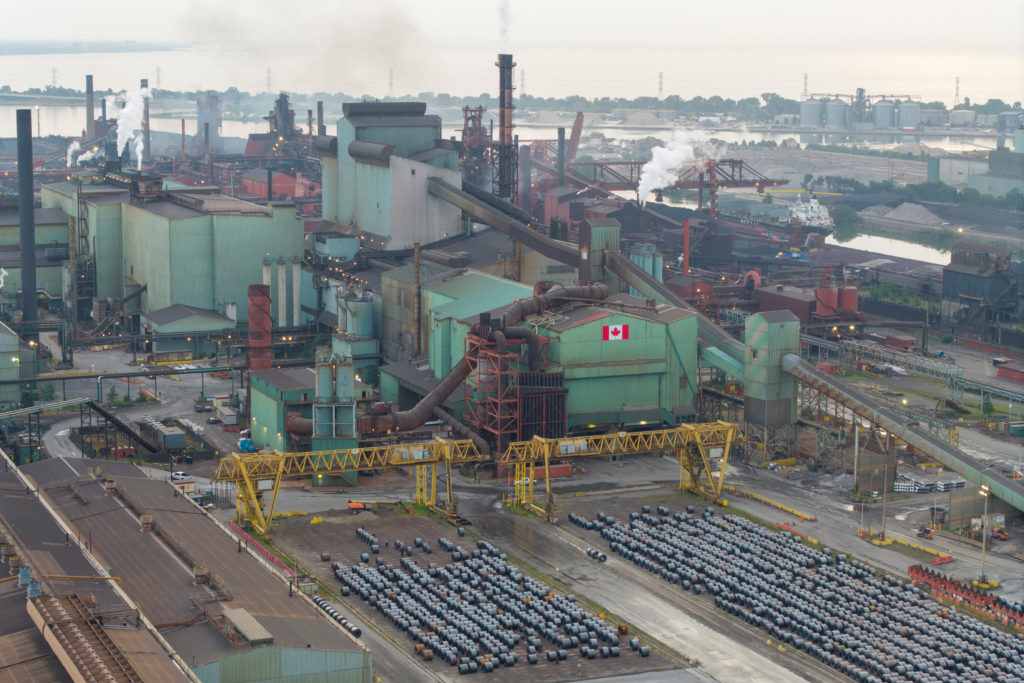
A law nearly a century old just got a second life.
Section 338 of the Tariff Act of 1930 sits in the U.S. code alongside provisions that have shaped American trade for decades. It authorizes the president to impose import taxes of up to 50% on countries that “discriminate” against U.S. businesses. The catch: it has never been used for that purpose. No administration has ever tapped it to levy tariffs. Until Saturday, when Trump’s 50% charges on roughly $20 billion of Canadian goods kicked in.
That detail matters more than the tariff rate itself. The legal novelty means there is no precedent for how courts will treat these levies, no administrative framework to guide how long they last, and no requirement that the U.S. conduct an investigation into whether Canada is actually discriminating. A challenge is all but certain.
What the tariffs cover goes beyond the headlines.
The White House documents list hockey sticks, wine, cement, honey, seeds, agricultural products, perfumes, clothing, jewelry, furniture, cameras and fabric. But the most consequential items are not the ones making news. They are the inputs that flow through integrated North American supply chains—auto parts, aluminum, lumber, pharmaceuticals, and refined petroleum products that cross the border multiple times before a finished good ever reaches a dealership or a gas station.
About 72% of Canada’s goods exports go to the United States. The 50% rate applies to roughly 5% of that total export stream, but the hit is concentrated in sectors where margins are already thin and supply routes are deeply entangled. The automotive industry, which relies on parts moving across the border an average of seven times during production, is the clearest example. A 50% tariff on Canadian-origin components effectively doubles the landed cost of those parts overnight.
The USMCA is being rewritten in real time.
Several of the newly taxed products were previously shielded under the United States-Mexico-Canada Agreement, the trade pact Trump himself negotiated during his first term. The White House acknowledged the shift. Canada’s Prime Minister Mark Carney called it economic integration being used as a weapon.
That framing is precise. USMCA was designed to lock in predictable rules for North American manufacturing. By imposing tariffs on goods that the agreement was supposed to protect, the administration is signaling that the pact’s guarantees are conditional on political compliance, not legal obligation. The result is a trade environment where businesses can no longer rely on the text of a treaty—they have to forecast the temperament of a negotiation that has no scheduled next round.
Canada is matching the escalation.
Carney announced that “dollar for dollar” retaliatory tariffs will begin September 8. Canada’s list targets steel, dairy, appliances, agricultural equipment, pulp and paper and electronics. He also signaled willingness to drop remaining tariffs on steel, aluminum and autos if the U.S. substantially lowers its own, and to push provinces to restore U.S. alcohol sales. The offer was rejected. Trump’s top trade negotiator, Jamieson Greer, said the administration had offered to cut tariffs on steel, autos and lumber and that Canada “didn’t want” the deal.
The reciprocal structure guarantees that both sides will absorb costs. Tariffs are paid by importers, not by the exporting country. A 50% levy on Canadian goods means U.S. buyers—manufacturers, retailers, consumers—pay the tax. Canadian buyers face the same dynamic on American exports. The stoking of retaliatory duties is not a signal of strength. It is a mutual hostage situation.
The precedent is the dangerous part.
Section 338 was drafted during the Smoot-Hawley era, a period economists widely blame for deepening the Great Depression by collapsing global trade volumes. The statute’s existence has been noted by scholars and trade lawyers for decades. Its use now normalizes a legal pathway that requires no investigation, no congressional authorization and no judicial review before tariffs are imposed.
If Section 338 can be deployed against a close ally with whom the U.S. shares a free trade agreement, the constraint it places on future presidential tariff power is effectively zero. Trade law experts at Dorsey & Whitney have noted that nearly all industries will feel downstream effects. That assessment is conservative. The effect is not limited to industries with direct cross-border exposure. Companies that source Canadian raw materials, even indirectly, will face input cost increases that cascade through pricing.
What happens next depends on three variables.
First, how courts treat a challenge to Section 338. If a federal court blocks the tariffs, the question becomes whether the administration will comply or pivot to another statute. Second, how long Canada’s retaliation holds. Retaliatory tariffs are politically costly for the targeting country’s exporters. If U.S. agricultural producers feel the pain of Canadian duties on dairy and equipment, political pressure to negotiate could intensify from unexpected directions. Third, how the broader tariff landscape interacts with this escalation. The 50% charges sit on top of a 10% rate Trump imposed last month over forced-labor concerns and a suite of global sectoral levies. The cumulative effect on U.S. import prices is compounding, not additive.
The Federal Reserve Bank of St. Louis has documented that tariffs contributed to higher inflation in recent years, with some leveling off after the Supreme Court struck down portions of the administration’s sweeping levies in February. Saturday’s action adds a fresh layer to an already elevated price environment, one that coincides with a midterm election year and rising gasoline costs linked to broader geopolitical tensions with Iran.
The auto industry is the canary.
North American vehicle production depends on parts crossing the border between the U.S. and Canada at least six or seven times per vehicle. A 50% tariff on Canadian-origin components does not merely raise the price of finished cars. It distorts the calculus of where to manufacture, where to warehouse and where to source. Some production may shift south of the border or back to the U.S. That shift takes years. In the interim, margins compress and prices rise.
American automakers have lobbied heavily for automotive supply-chain stability. The new tariffs upend that stability without a transition period. There is no grace window. The levies took effect immediately.
Canada’s position is stronger than it looks—but fragile in the right ways.
Carney has emphasized Canada’s reserves and resilience. The country runs a trade surplus with the U.S. and its energy sector supplies a significant share of American crude oil, much of it through pipelines that cannot easily be rerouted. A tariff on Canadian energy would raise refiner costs across the Midwest and Gulf Coast. That is a lever the U.S. is presumably aware of, which makes the decision to tax those products even more significant.
Canada’s willingness to match the U.S. tariff-for-tariff suggests it is prepared to absorb short-term pain for longer-term strategic positioning. The alternative—accepting terms that weaken the USMCA without compensation—would set a precedent that benefits the U.S. today and invites the same treatment tomorrow if the political winds shift in Ottawa.
The deeper story is not the tariff rate. It is the legal pathway.
A 25% tariff on Mexico and Canada, imposed earlier in Trump’s second term, drew challenges but rested on statutes with clearer interpretive histories. Section 338 is a blank check written in 1930 language. Its activation removes a constraint that trade lawyers assumed still existed: that the president would need a statutory hook with some evidentiary basis before raising tariffs on a partner with whom the U.S. shares a comprehensive trade agreement.
The question now is whether the courts will treat this as an extraordinary exercise of authority or normalize it. The answer will shape how much predictability remains in North American trade for the rest of the decade—or whether the USMCA becomes a document that describes what was, not what is.