Why the UNC Football Probe Is Bigger Than Belichick
Michael Lombardi's resignation and a widening NCAA-style investigation threaten to unravel Bill Belichick's first college head coaching job before it truly begins. The questions aren't just about compliance — they're about control.
The Whimper Before the Storm
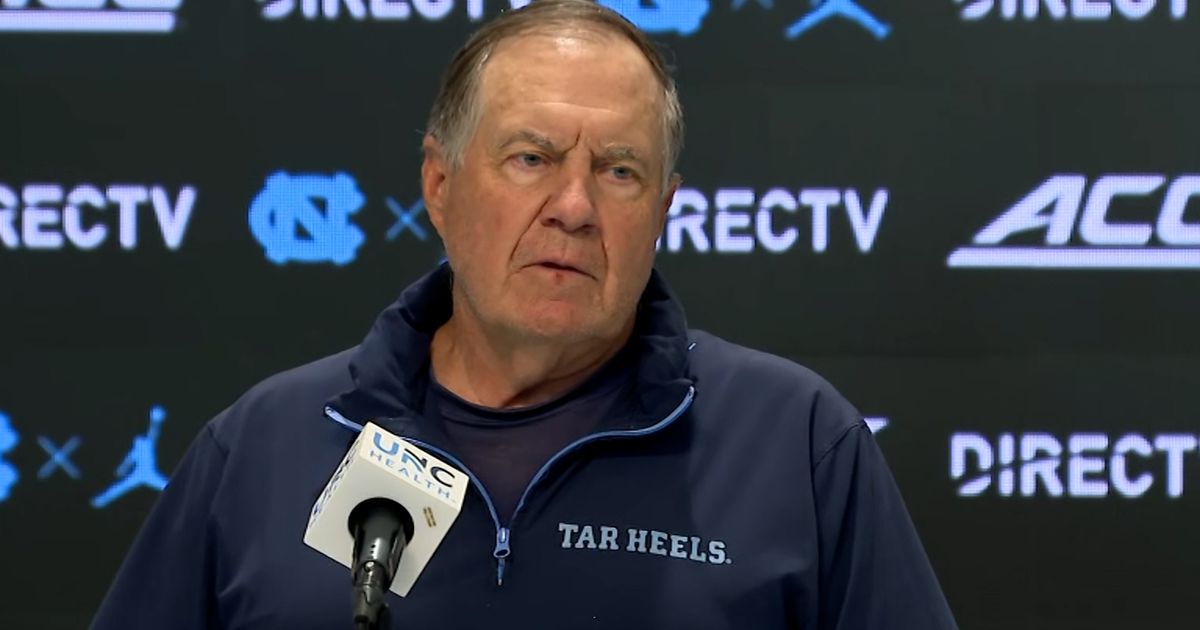
Bill Belichick stood at the podium Monday and said exactly what he was allowed to say, which was almost nothing at all. His program had an environment of compliance. His standard was high. He understood the importance of the investigation. He would not discuss the investigation.
Thirteen minutes of a scheduled news conference dedicated to the season opener against East Tennessee State were consumed by questions about an inquiry that has already toppled his general manager and placed his son on medical leave. The man who built a NFL dynasty on the principle that details are dangerous gave reporters precisely zero details and called it devotion to process.
That is the Belichick brand. It is also a brand that may not survive contact with the realities of college athletics.
Who Falls When the Floor Drops
Michael Lombardi resigned Thursday — abruptly, without elaboration, and in the hours immediately before WRAL reported new scope to the investigation. His lawyer called it a witch hunt. His departure agreement absolved him of any buyout obligation, which tells you something about how this institution wants the story to end: quietly, with the highest-paid general manager in college football walking out the door.
Lombardi was the one who recruited Belichick to Chapel Hill. He was the architect of a roster that went 4-8 in the program’s first season under the legend. He was also the person most exposed to criticism for that record, and apparently the first person asked to leave.
Then came the details that came out through people familiar with the probe — details Belichick himself would not confirm or deny. Investigators are asking whether Steve Belichick, the defensive coordinator and Bill’s son, used drugs at university facilities. They are asking whether he provided drugs to at least one player. They are asking whether members of the recruiting staff have sexual relationships with players. They are asking about the culture itself — what kind of organism Bill Belichick built when he arrived in December 2024.
Steve Belichick has not responded to requests for comment. He has been on medical leave since early August. When asked about his son, Bill Belichick said only that he loved all his kids and would not discuss a medical situation.
The Contract Trap
Here is what makes this story structurally interesting rather than merely scandalous: Belichick signed a five-year, $50 million contract with the first three years and $30 million guaranteed. If UNC fires him without cause, the university owes him everything through December 31, 2027. If it finds cause, it owes nothing.
That binary creates a perverse incentive. The university needs cause. The investigators are looking for it. And the deeper they dig, the more likely they are to find something — or at least enough ambiguity to make a cause determination politically painful either way.
Legal analysts have already begun speculating about exit strategies. But the real question is whether Belichick’s contract, written for an NFL coach accustomed to unilateral control over personnel, even fits the constraints of an SEC-adjacent program that answers to an athletic department, an ACC, an NCAA, and a state legislature that watches college football like a hawk.
What Nobody Is Asking Out Loud
Belichick won at the highest level in the NFL because he controlled information. Players knew what they needed to know. The media got carefully curated soundbites. Opponents faced a team that seemed to anticipate everything except the one thing that would break them.
College athletics operates on a different axis. Title IX. Amateurism rules. Recruiting restrictions. State open-records laws. A fan base that treats UNC football as a second religion and demands accountability the way Boston demanded Super Bowls. None of that plays well with a coach whose instinct is to say nothing until something is officially confirmed — or until it is too late to confirm anything useful.
The fact that his own staff is fracturing before the season has properly begun suggests the model is already stressed. Two of his three sons are connected to this program. One is medically absent. The general manager who hired him has resigned. The investigation is probing the very culture he was brought in to elevate.
What Happens Next
UNC beat TCU 15-10 in Dublin, Ireland — the biggest win of Belichick’s tenure and the only victory by an ACC team against a power-conference opponent so far this season. The Tar Heels are 1-0. The home opener at Kenan Stadium marks the program’s 100th season, and the stands will be full.
But the scoreboard is already secondary. The investigation will continue regardless of whether UNC wins nine games or zero. The question is whether Belichick’s contract provides him enough insulation to survive a scandal the way his Patriots tenure survived every crisis New England threw at it — and whether the university has the political will to cut him loose if the findings become inconvenient.
The buyout clause is both armor and trap. It makes termination expensive. It also makes termination a statement — one that says UNC chose to spend $20 million or more to admit it lost control of its own program.
Belichick called his team’s behavior in Ireland a good example of representing the school. He is now asking the same of everyone inside the program: comply, stay silent, and let the process work. The question is whether compliance is enough when the process keeps finding new things to investigate.