Why Victims Are Disappointed by Johnny's Scandal Executive's Resignation
SMILE-UP president Noriyuki Higashiyama's departure has left survivors of Johnny's sexual abuse feeling let down rather than vindicated — and it reveals how deeply power was shielded inside Japan's biggest entertainment empire.
A Resignation That Feels Like a Deflection
When SMILE-UP announced on the 28th that president Noriyuki Higashiyama would step down, the immediate expectation from outside Japan’s entertainment press was simple: accountability. The former Johnny’s agency — rebranded as SMILE-UP after the sexual abuse scandal forced its leadership out — had been struggling for months to appear responsive to survivors. Higashiyama, a former Johnny’s performer turned executive, was the public face of that effort. His exit should have read as consequence.
Instead, survivors described surprise and disappointment.
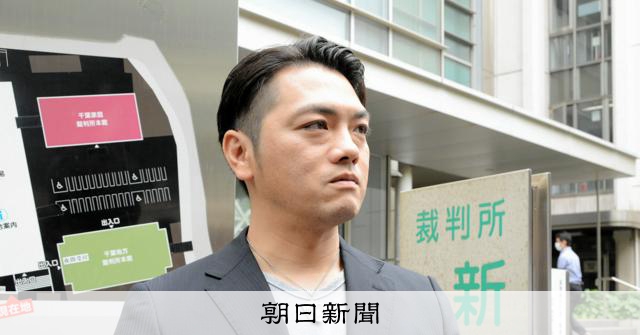
“I can’t hide my shock,” said Shimon Ishimaru, 59, former deputy director of the now-dissolved victims’ group known as the Johnny’s Sexual Abuse Problem Victims Association. “I felt it was just proof that he was serving as a scapegoat — someone with no real authority over compensation.”
That single sentence captures the central tension in Japan’s most consequential entertainment reckoning: the people at the top of the Johnny’s system are only ever temporarily accountable. When pressure mounts, a name changes. The machinery keeps running.
The Compensation Trap
Ishimaru’s own case illustrates the structural problem. SMILE-UP’s victim relief committee offered him 18 million yen — roughly $120,000 — in compensation. He rejected it as insufficient relative to the harm suffered. The company then countersued in 2024, filing a civil suit in the Saitama District Court seeking a judicial confirmation that its liability would not exceed 18 million yen.
This is not a marginal case. It is the architecture of the company’s strategy: contain payouts, litigate outliers, move on.
Another survivor, 41-year-old former Johnny’s Jr. Yukihiro Oshima, declined the compensation framework entirely. His reason was sharper than a simple disagreement over amount. The victim interviews conducted during the process were designed solely to calculate payout figures — not to document patterns of abuse or build safeguards against recurrence. Oshima saw the process as extraction without transformation.
“If the compensation matter settles, we should be focusing on preventing this from happening again,” Oshima told Asahi. “Full disclosure is essential to prevention. I wanted Higashiyama to lead that.”
He added something quietly devastating: “He said he’d bet his life on this. Now he’s saying it’s just term expiration?”
Who Wins, Who Loses
The immediate winner of Higashiyama’s departure is not transparency — it is institutional continuity. SMILE-UP has replaced him with a lawyer, signaling a shift from personality-driven crisis management toward legalistic containment. That is a rational corporate move. It is also a retreat from the very accountability survivors have demanded.
The losers are the survivors, who now face a process that looks structurally identical to the one they objected to before. A new president will inherit the same litigation strategy, the same compensation caps, the same reluctance to publish a full accounting of what Johnny’s Kitachawa — the late founder whose decades of sexual abuse of minors became public in 2023 — orchestrated.
There is also a broader loser: the Japanese entertainment industry itself, which continues to operate with one of its most powerful talent machines fundamentally unreconstructed. Johnny’s acts — Arashi, Kanjani8, NEWS, and dozens of groups still active or recently disbanded — generated an estimated ¥1 trillion in annual revenue at the company’s peak. The industry built its golden age on that revenue. No one who profited has been held financially accountable. The scandal has reshuffled executives; it has not redistributed power.
What English-Language Coverage Misses
International reporting on the Johnny’s scandal has focused almost exclusively on the abuse allegations themselves and the initial corporate response. What gets underreported is the ongoing legal architecture that now determines whether survivors receive meaningful relief or merely symbolic gestures.
SMILE-UP is simultaneously facing multiple civil suits in at least two districts — Saitama and Chiba — from survivors who rejected the company’s compensation framework. These cases are not settlements in progress; they are tests of whether the courts will enforce the company’s self-defined liability ceiling. The outcomes will set precedents that apply to every other survivor who has not yet come forward.
The timing of Higashiyama’s resignation matters because it coincides with this litigation phase. A leadership change during active lawsuits creates uncertainty about representation, strategy, and willingness to negotiate. For survivors already litigating against a corporation with deep legal resources, that uncertainty is not abstract — it is tactical.
What Happens Next
Several things are likely. First, the new president — a lawyer with no public profile in the scandal — will inherit both the lawsuits and the corporate mandate to minimize liability. Second, the victim relief committee’s compensation framework will remain the default, meaning most survivors who do not litigate will accept amounts the company has already capped. Third, the push for full disclosure of Johnny’s abuse records — what the company knew, when it knew it, and who benefited — will stall without a leader willing to treat transparency as a priority rather than a cost.
Higashiyama’s departure does not end the reckoning. But it does delay the part of it that survivors consider most important: the complete public accounting of the system that enabled abuse across decades.
The disappointed reactions from Ishimaru and Oshima are not complaints about a single person. They are diagnoses of a structure that keeps producing the same outcome under a different name.
Until that structure changes, resignations will look like resolution — and that is precisely what the system was designed to make them look like.