Why Washington Wants Seoul to Patrol the Strait of Hormuz
The US is asking South Korea to send military assets to the Strait of Hormuz—a demand that would upend Seoul's traditional defense posture and mark the first time Washington expects an Asian ally to share Middle East burden-shaping responsibilities.
The Strait Is No Longer Just a Middle East Problem
Chris Wright, the US Energy Secretary, did not mince words on television last week. The Strait of Hormuz—the narrow chokepoint through which roughly one-fifth of global oil passes each day—is no longer America’s chore to keep clear. “This shouldn’t be our responsibility alone,” he said, in an interview that carried the weight of a policy turn.
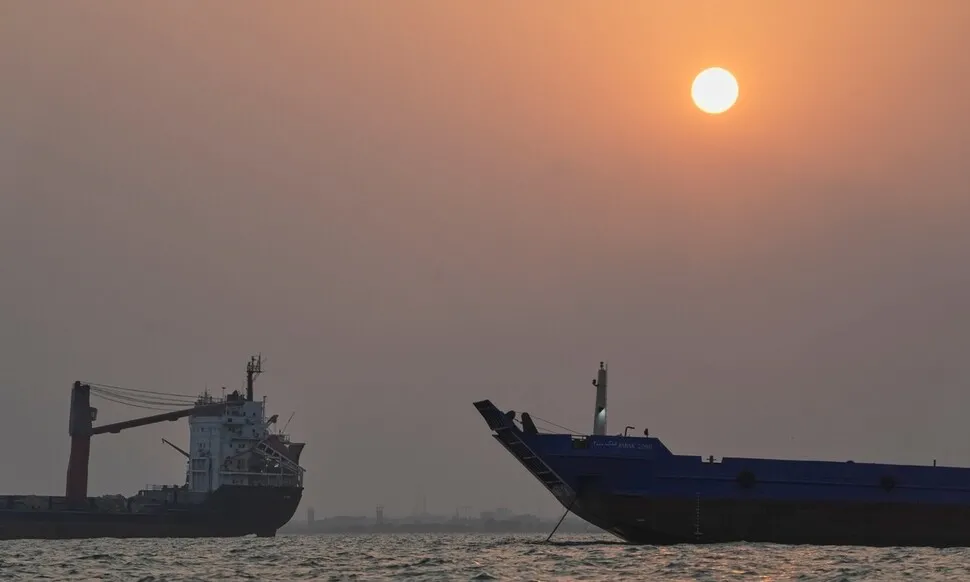
Wright was speaking in front of anchored tankers off Bandar Abbas, Iran, where the sun was setting over one of the most strategically contested waterways on Earth. What he was really saying is that the United States can no longer afford to stand almost entirely alone in securing the flow of energy that powers everything from German factories to South Korean chip fabs. And among the countries he is now quietly looking toward is South Korea.
Why Seoul, Specifically
Wright did not name South Korea. But the signal was unmistakable. Seoul’s government is already reviewing how to expand its military footprint in the Strait of Hormuz, according to the report, and Washington’s public push makes that review feel less like initiative and more like anticipation.
South Korea is the world’s fourth-largest importer of crude oil. Nearly all of it transits Hormuz. That means Seoul’s economic survival is directly tied to the same waters the US Navy has guarded for decades with a frequency few Asian capitals previously felt responsible for. The calculus is brutal but simple: if the Strait closes, Busan’s refineries idle, Seoul’s trade surplus evaporates, and the country faces an energy crisis it has never prepared for politically.
Yet sending warships to the Persian Gulf would represent the most significant outbound military deployment in South Korea’s modern history. It would break with a defensive posture that has, since the Korean War, focused almost exclusively on the peninsula and its near seas. For Seoul, the decision is not merely logistical. It is existential in how it reframes what “national security” means.
A New Kind of Alliance Demand
The United States has long asked European allies to contribute to Middle East operations—Britain, France, and others have deployed vessels to the region periodically. What makes the South Korean angle different is geography. South Korea is not a Middle Eastern ally. It is a Northeast Asian power with its own existential security dilemma staring across a demilitarized zone from North Korea’s troops.
Asking Seoul to pivot even partially toward the Gulf means Washington is stretching the alliance model beyond its NATO-like comfort zone. It is asking a country that has traditionally viewed its military contributions through the lens of deterrence on the Korean Peninsula to now also think about power projection across thousands of miles of open ocean. The administrative friction alone is enormous. The South Korean navy’s Blue-water capabilities exist on paper, but operational experience in a contested Middle Eastern maritime environment is close to zero.
For the US, however, the logic is straightforward. Every naval asset Washington can free up from the Strait is one it can redirect elsewhere—whether to the South China Sea, where Chinese anti-ship missile deployments continue to expand, or to other flashpoints. Ally burden-sharing is not new; the novelty is that the ally in question sits ten thousand kilometers from the problem.
What Would Seoul Actually Send?
No details have been announced, and none should be invented. But options exist. South Korea operates destroyers equipped with Aegis combat systems, submarine-hunting helicopters, and modern electronic warfare suites. It has a growing domestic defense industry capable of producing its own vessels. The question is not capability but political will—and whether Seoul can afford to appear reluctant at a moment when Washington is explicitly signaling frustration with allies who do less.
A token deployment—a single destroyer or a logistics support ship—would be easy to justify as a goodwill gesture. A sustained rotational presence would require congressional approval, budget reallocation, and a public narrative that links Gulf security to Korean survival. That narrative is plausible but not yet politically constructed.
The Nuclear Shadow Looms
Complicating everything is Wright’s broader commentary on Iran. He suggested the US may not reach a new nuclear agreement with Tehran, that the goal might simply be destroying Iran’s nuclear capacity rather than constraining it diplomatically. When pressed whether the US would keep striking Iranian facilities if they were rebuilt, he said: “We need to destroy their capabilities.”
Those words matter for South Korea’s decision. If the US moves toward military action against Iran’s nuclear infrastructure, the Strait could become a combat zone rather than a patrol route. South Korean vessels sent in peacetime could find themselves in an active conflict. The alliance bond would then be tested in the most dangerous way possible.
Conversely, a South Korean military presence in the Strait could serve as a deterrent signal to Tehran—not just from Washington, but from a major Asian economy with its own energy stake. That geopolitical message is one Beijing would notice intimately.
What Happens Next
The immediate next step is likely quiet diplomatic backchanneling between Seoul and Washington, followed by a formal request that Seoul will either accept partially or decline publicly. Either outcome carries costs. Acceptance strains a military already stretched thin on the peninsula. Refusal risks irritating an ally that controls the seas South Korea depends on for fuel.
What is clear is that the era of South Korea treating the Strait of Hormuz as someone else’s problem is ending. The question now is whether Seoul chooses to shape that reality or simply react to it.
For Washington, the push is part of a wider strategy: keep global energy flowing without bearing the full cost, and stretch allied commitments to their logical limits. For Seoul, it is the beginning of a conversation it may not have wanted to have—about how far its security responsibilities should extend, and whether economic dependence on Middle Eastern oil demands military presence in a region it has spent seventy years avoiding.