Why the Yen's 155 Battle Is a Global Wake-Up Call
The yen's sharp recovery against the dollar isn't driven by intervention anymore — it's BOJ rate-hike expectations. That shift has implications far beyond Tokyo for carry trades, emerging-market debt, and American monetary policy.
The 155 Line in the Sand
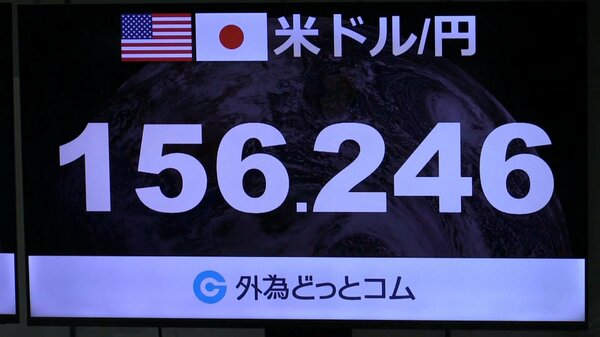
The yen is fighting for its life at 155 to the dollar, and the battlefield has shifted. Two weeks ago, the Bank of Japan would pour ¥15 trillion into currency intervention and watch the dollar claw back to 160 within days. Now, a two-day move of roughly 5 yen in the yen’s direction arrived without a single declared operation. The market is pricing something far more durable than central-bank theatrics: the likelihood that the BOJ will accelerate rate hikes starting next week.
This matters because 155 is not an arbitrary number. It is the floor below which Japanese import costs, corporate hedging books, and cross-border borrowing arrangements begin to fracture. It is also the level at which the last round of coordinated intervention — with the United States — failed to hold. When the yen bounced off that stratum on August 30 and then stalled, traders assumed the worst: that Tokyo was behind the curve, that the BOJ would fumble again. The past week has quietly overturned that assumption.
The Employment Data That Rewrote the Board
The catalyst arrived in a US jobs report that came in at 162,000新增 workers in August, roughly triple the 53,000 forecast. Manufacturing added 16,000 — the strongest pace in nearly three years. July was revised from a headline loss of 23,000 to a gain of 21,000. The unemployment rate held steady at 4.1 percent. It is a labor market that refuses to crack.
Bond markets reacted immediately. The 10-year Treasury yield touched 4.81 percent, matching the highest level since November 2023. The Chicago Mercantile Exchange Fed Watch tool lifted the probability of a September rate increase from just under 50 percent to nearly 60 percent. Cleveland Fed President Lorie Logan publicly argued that inflation remains too high and that letting it persist only makes the eventual correction harder. The message was unambiguous: the Federal Reserve is not done.
Donald Trump responded in character. He called the employment figures brilliant, then immediately demanded that the Fed cut rates. He accused central bankers of placing American industry at an unfair disadvantage and urged them to be patriots. The contradiction — praise for the data, fury at what the data implies for policy — is exactly the pressure the Fed now faces as it weighs its September decision.
The BOJ Breaks From Its Own Script
What caught global attention was not Washington but Tokyo. Governor Kazushige Ueda told reporters on September 1 that the BOJ would discuss rate hikes at every policy meeting, including the one on September 17–18. That sentence alone was enough to unseat the yen. But the real signal came from board member Takatoshi Koda.
Koda stated plainly that the era of meeting-to-meeting deliberation every six months was over. He said the BOJ must respond flexibly to new conditions, and that consecutive rate hikes — something the bank has rarely contemplated — should no longer be ruled out. The phrasing was deliberate. It moved the market from asking whether the BOJ would raise rates to asking how fast it would do so.
For years, traders have worried that the BOJ would be trapped behind the curve: too slow to tighten, forcing the yen to depreciate further before the central bank could catch up. That fear has receded. If the BOJ hikes at the September meeting and then again in October or November, the dollar-yen spread narrows structurally rather than through temporary intervention. The 155 level stops being a price target and starts becoming a ceiling.
Who Wins, Who Loses
The winners are straightforward. Japanese exporters that hedged dollar receivables at rates above 155 are suddenly realizing unexpected gains. Japanese investors holding foreign bonds see their dollar-denominated returns convert into more yen. Foreign portfolio managers who shorted the yen during the summer retreat are covering at a loss. The Government Pension Investment Fund, which controls the world’s largest pension portfolio, may already be rotating back into yen assets after a closed session on August 21; analysts flagged the possibility as a factor in the recent JGB yield decline from above 3 percent back toward 2.8 percent.
The losers are anyone running a yen-funded carry trade. The yen carry trade has been the defining strategy of global fixed-income markets for three years: borrow cheaply in yen, invest in higher-yielding assets in Latin America, Southeast Asia, and elsewhere. As the BOJ tightens and the dollar resists cutting, that trade becomes more expensive on both wings. Emerging-market central banks that have been quietly benefiting from yen liquidity will feel it first. Their currencies, which appreciated against the dollar partly because of yen rollover demand, will face fresh selling pressure.
American borrowers feel the squeeze too. The 2-year Treasury yield finished at 4.36 percent, up 0.02 percentage points on the day. Mortgage rates, corporate debt issuance costs, and even consumer credit are all priced off that curve. If September brings a rate increase, the Federal Reserve sends a signal that it is willing to tolerate slower growth over higher inflation — a stance that could ripple through equity valuations globally.
The 155 Battleground and What Comes Next
Intervention remains a tool, but it is now widely seen as a delaying action rather than a solution. The August round of coordinated buying did not prevent the yen from drifting back toward 160. The current move higher is being driven by policy expectations, not by FX desk operations. Some traders have whispered that a rate-check exercise was conducted with major financial institutions before the recent moves — a common precursor to intervention — but the consensus in Tokyo is that the BOJ’s rate path is the dominant force.
The immediate focus is now American data. On September 10, the Bureau of Labor Statistics releases the August wholesale price index. On September 11, the consumer price index follows. These are the final major indicators before the FOMC meets and set the tone for September. If inflation comes in hotter than expected, the case for a Fed hike strengthens and the yen gains further. If it cools, the dollar may soften and the 155 line becomes easier to defend.
Whatever the American numbers show, the yen’s fight at 155 is now a proxy for a larger question: can the BOJ and the Federal Reserve navigate opposite policy directions without breaking something in between? The answer will determine whether the carry trade survives this cycle intact, whether emerging-market debts held by Japanese investors remain attractive, and whether 155 becomes a permanent ceiling or merely a waypoint on the way lower.
Market participants who assumed intervention was the only lever left have been forced to recalculate. The yen is no longer a passive beneficiary of Tokyo’s patience. It is beginning to reflect Tokyo’s ambition — and that changes everything.