The Yen Carry Trade Is Flashing Red Again — and the World Is Unprepared
The yen surged past 156 against the dollar as markets price in aggressive BoJ rate hikes, triggering a rapid unwind of carry trades that could send shockwaves through emerging markets and global liquidity.
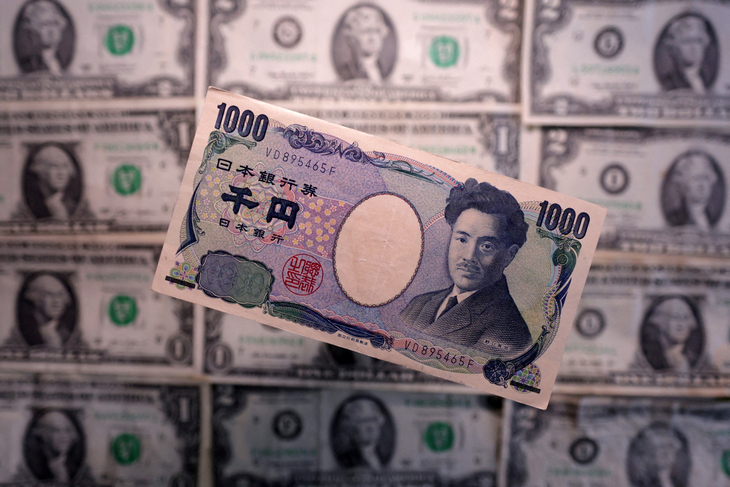
The Yen Just Pulled a Fast One on the World
The yen hit 156.38 against the dollar on September 4 — a number that should trigger mild panic among anyone who has watched what happens when the yen moves that fast, in that direction.
In just days, the currency erased nearly all of its month-long slide back toward 160, reversing a rally that had briefly pushed it past 155 in August before Washington and Tokyo jointly intervened to let it retreat again. This time, there was no intervention to blame. The market is simply repricing the likelihood that the Bank of Japan stops dancing around and starts raising rates for real.
And the consequences will not stop at the yen-dollar pair.
Carry Trade Under Pressure
The carry trade has been one of the quiet engines of global liquidity since the 2010s: borrow cheap yen, invest in higher-yielding assets from Brazil to the United States. It works beautifully while the yen stays weak. It works catastrophically when it doesn’t.
When the yen strengthens, the trade unwinds in one direction only. Investors sell risk assets to cover their yen borrowings. Prices drop. Volatility spikes. The feedback loop accelerates. In August 2024, a surprise BOJ tightening combined with recession fears sent the dollar-yen from roughly 152 to 141 in weeks, triggering a global sell-off that took the Nikkei down over 12 percent in a single day and dragged South Korea’s KOSPI down 8.77 percent — the worst single-day decline since 1997.
Right now, the same mechanics are activating. The CME data shows dollar-yen call option volume hitting 2.5 times put volume on September 3, a clear signal that traders are rushing to buy yen protection. Nomura’s London FX options desk noted that “the era of the yen carry trade as an easy profit machine is effectively over,” and that the fundamental flow of capital from Japan to the United States has likely shifted in a way the market hasn’t fully priced in yet.
The Trigger: September’s BOJ Meeting
All eyes are on the Bank of Japan’s policy meeting on September 17–18. Bloomberg reports that markets have largely accepted a 0.25 percentage point rate hike as a near certainty. Pricing also reflects roughly three more quarter-point increases through July 2025 — a pace that would be dramatically faster than the two increases per year the BOJ delivered on average since 2024.
Governor Kazuo Ueda told G20 finance ministers that “upside risks to prices require greater attention” than before. Boilerplate inflation talk? Not quite. Ueda is widely seen as a dove, and when the dove sounds hawkish, take notice.
Even more alarming to carry trade portfolios: BOJ Policy Committee member Hajime Takata said on September 2 that a back-to-back rate hike — raising rates immediately after a first increase — is “possible.” He refused to rule out a 0.5 or 0.75 percentage point move. The language is uncharacteristically forward-leaning for a central banker who has spent years avoiding exactly this kind of preview.
Then there’s the external pressure. US Treasury Secretary Scott Bessent has been publicly urging Japan to raise rates, shifting the narrative from a domestic Japanese monetary question to something with geopolitical overtones. When the United States — the primary beneficiary of the carry trade — is openly pushing Japan to tighten, the political dimension matters for how aggressively the BOJ can move without causing diplomatic friction.
What’s Still Left to Unwind
The September 3 options spike probably marks only the beginning. CFTC data as of September 25 shows leveraged funds still holding 81,619 contracts of net yen selling — and asset managers another 18,284 contracts. JP Morgan estimates total remaining yen short exposure at up to 17 trillion yen (roughly 147 trillion Korean won).
JP Morgan’s own strategists warn that if the dollar-yen drops below 155, those remaining shorts could be forced to cover aggressively, potentially driving the pair toward 142–146. That would be a move of 10 to 14 percent from current levels — a magnitude not seen since the August 2024 crash.
Societe Generale’s Galvin Chia offered a more measured view, suggesting some carry positions have already been liquidated and that the BOJ would need to send “very hawkish signals” to sustain yen strength. But even his framing acknowledges the risk is real and non-trivial.
The Ripple Effect — and Why It Spreads Fast
The damage from carry trade unwinding rarely stays contained in yen pairs. On September 3, the Brazilian real, South African rand, and Mexican peso all fell more than 1 percent against the yen — each one a classic high-yield funding currency for carry trades. When yen borrowing costs rise, the math changes overnight across every asset class that depended on cheap funding.
For emerging markets in particular, this is the nightmare scenario. These economies benefited enormously from the yen carry trade’s inflows over the past decade. A sudden reversal means capital flight, currency depreciation, and rising borrowing costs at roughly the same time — a triple hit that no emerging market central bank wants to face.
The fact that Western economists have been slow to price this risk is itself a risk. Most models assume gradual BOJ normalization. The current pace of yen appreciation — 158 to 156 in days, not months — suggests the market is moving faster than the consensus forecasts. When the gap between model and reality widens, positions adjust violently rather than gracefully.
Who Wins, Who Loses
Winners: Japanese exporters facing a stronger yen will feel the pain, but Japanese importers and consumers benefit from cheaper energy and food. Domestic borrowers with yen-linked debt see their obligations shrink in real terms. Investors who correctly timed the unwind — a small but growing group — pocket gains.
Losers: Carry trade portfolios globally. Emerging market equities and currencies that depended on yen-funded inflows. Japanese companies with significant overseas earnings that lose value when translated back to a stronger yen. And anyone holding yen-denominated debt who suddenly faces refinancing at higher rates.
What happens next depends on the BOJ. If the September 17–18 meeting delivers a modest 0.25 percentage point hike with dovish forward guidance, the worst of the unwinding may already be behind us. If Takata’s back-to-back language proves prescient and the BOJ signals a faster pace, expect volatility to escalate — and for markets that have ignored the yen’s strength to discover how exposed they really are.
The question isn’t whether the carry trade will unwind further. It’s how fast and how far — and whether the people who still have yen shorts are ready for the answer.