YMTC's NAND Bet Could Reshape the Memory Chip World Order
Chinese memory chipmaker YMTC is targeting the #1 NAND flash spot by end of next year, using a massive IPO to fund expansion. The move threatens the Korean duopoly and risks flooding a market already riding the AI boom.
The Unignorable Claim
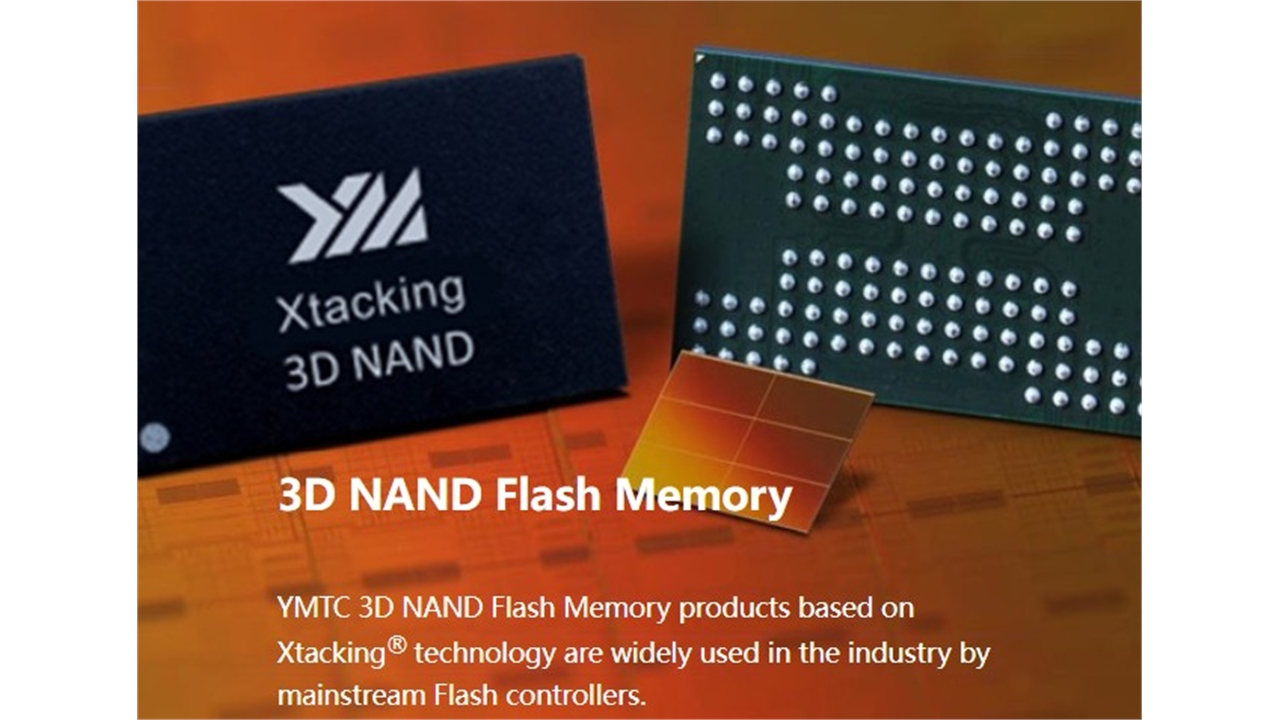
Yangtze Memory Technologies Corp, or YMTC, has publicly declared its intention to seize the top spot in the global NAND flash market by the end of 2027. That is not a vague long-term vision. It is a deadline, and it is aimed squarely at two companies — Samsung Electronics and SK Hynix — that have dominated the sector for well over a decade.
The announcement came during YMTC’s IPO preparation phase, according to the Financial Times. The Chinese memory chipmaker, currently ranked third globally in NAND flash, laid out the ambition to investors as part of its pitch. That timing matters: this is not a casual remark at a conference. It is a deliberate signal to the capital markets and to everyone else watching who controls the memory chip trade.
What makes the claim especially striking is the gap between current reality and the stated goal. YMTC’s market share sits in the vicinity of 8 to 10 percent, while Samsung and SK Hynix together command well over 70 percent. Closing that distance in under two years would require not merely steady growth but a step-change in production volume, yield rates, and product competitiveness — none of which come cheap or easily in an industry defined by razor-thin margins and brutal capital intensity.
Why Now Matters
The context is critical. US export controls on Chinese semiconductor access have concentrated heavily on advanced logic chips — the kind used in high-performance computing and AI training. But memory chips, particularly NAND flash, rely more on process optimization and fabrication refinement than on the most cutting-edge lithography tools currently restricted. That distinction has given Chinese firms a wider runway than the sanctions regime intended.
YMTC has exploited that gap aggressively. Its first-quarter earnings already exceeded double its full-year 2024 results, a growth trajectory that analysts say signals both operational momentum and an industrial policy machine functioning as designed. The company plans to channel approximately 6.9 trillion KRW — roughly $5 billion — from its upcoming listing directly into production upgrades and research and development.
Post-IPO, YMTC’s valuation is expected to surpass 200 trillion KRW, making it one of the most valuable technology listings in the region.
The Chinese government’s involvement is not implicit; it is structural. Beijing has long treated semiconductor self-sufficiency as a matter of economic sovereignty, and the Made in China 2025 framework explicitly targets memory chip independence. YMTC’s IPO does not exist in a vacuum — it is a node in a broader network of state-backed capital, subsidized fabrication facilities, and preferential procurement policies that insulate the company from the market discipline that governs its Korean rivals.
Who Wins, Who Loses
For Chinese AI infrastructure builders, this is a strategic win. Domestic access to NAND flash at scale reduces dependency on Samsung and SK Hynix supply, a vulnerability Beijing has long sought to close. Companies like Huawei, Alibaba, and Baidu — all of which have been quietly building their own NAND capabilities — stand to gain from a credible domestic supplier that can meet enterprise-grade demand.
For YMTC’s investors, the upside is enormous — if the timeline holds. The listing would provide an exit vehicle for private equity firms and state investment funds that have poured capital into the company over the past decade, many of whom are looking to monetize before geopolitical tensions escalate further.
For Samsung and SK Hynix, the threat is immediate and structural. Both companies have invested tens of billions in next-generation NAND capacity, betting on sustained demand from AI servers, data centers, and enterprise storage. YMTC’s entry with aggressively expanded output and state-backed financing changes the demand-supply calculus in a way that no Korean competitor anticipated this early in the cycle.
The second-order implications are where the real danger lies. Samsung and SK Hynix have historically used their scale advantages to outspend challengers through R&D and capital expenditure cycles. But YMTC is not a challenger playing by market rules — it is a state-directed enterprise with access to patient capital and a mandate that transcends quarterly profitability. That dynamic forces Korean executives into a calculation they have rarely faced: whether to prioritize market share defense or margin preservation when the competitor is not incentivized to behave like a normal firm.
Korean memory revenues, which have been buoyed by the AI boom, face a new variable: a low-cost, high-volume competitor with nothing to lose and a five-year government program behind it. Price pressure will follow if supply outpaces demand growth — and analysts are already warning of exactly that scenario.
The Supply-Overhang Risk
The most consequential ripple may not be about who wins market share, but about what happens to chip prices. The global memory market has enjoyed a prolonged upcycle driven by AI demand. That cycle was always vulnerable to a sudden supply inflection, and YMTC’s expansion represents precisely that inflection.
If Chinese NAND floods the market, even partially, it will compress margins across the board. Samsung and SK Hynix cannot afford to lose pricing power in their most profitable segment. Their response will likely involve either accelerating innovation cycles or absorbing short-term losses to protect share — both strategies are expensive.
The irony is thick: US restrictions on advanced chips have inadvertently created conditions where China’s memory chip sector can surge, exploiting a regulatory blind spot that was always there but never adequately addressed. The very framework designed to contain Chinese technological advancement has produced a feedback loop that strengthens the one area Beijing has prioritized most aggressively.
There is also a downstream risk to the global AI ecosystem. If NAND prices collapse due to oversupply, the incentive for memory manufacturers to invest in next-generation products diminishes — potentially slowing the pace of innovation at a time when AI workloads are becoming increasingly memory-hungry. The companies most affected would not just be Samsung and SK Hynix but every AI infrastructure provider that relies on a steady pipeline of high-performance storage solutions.
What Comes Next
Watch three things in the coming months.
First, whether YMTC’s IPO actually prices and closes on schedule. Chinese tech listings face their own regulatory hurdles, and the government’s appetite for high-profile offerings can shift quickly. The CSRC’s approval process has proven unpredictable in recent years, and any delay would undermine the company’s credibility and complicate its growth timeline.
Second, how Samsung and SK Hynix respond operationally. Expect announcements about capacity adjustments, new product timelines, or strategic partnerships. Both companies may also accelerate their own moves into higher-margin niches like high-bandwidth memory, where the competitive landscape is less vulnerable to YMTC’s current capabilities.
Third, whether Washington revisits its semiconductor export framework to include memory chip equipment — an area currently under less scrutiny but one that could become a priority if YMTC’s rise accelerates. The Biden administration has already begun tightening restrictions on legacy-node semiconductor manufacturing tools, and a similar move targeting memory chip production equipment would directly threaten YMTC’s expansion plans.
The NAND flash market is about to get a lot less predictable. YMTC has drawn a line in the sand, and whether it reaches the finish line by end of 2027, the attempt alone reshapes the board. The Korean duopoly has rested comfortably at the summit for more than a decade, but comfort is a luxury that markets like this rarely afford. The real question is not whether YMTC will challenge the hierarchy — it already has — but whether the existing order has the institutional agility to respond before the landscape shifts beyond recognition.