Zelenskyy's G20 gamble and what Moscow's refusal reveals
Zelenskyy offered to meet Putin at the Miami G20. Moscow said impossible — demanding Kyiv come to them instead. The diplomatic ping-pong reveals who controls the tempo of a war that refuses to end.
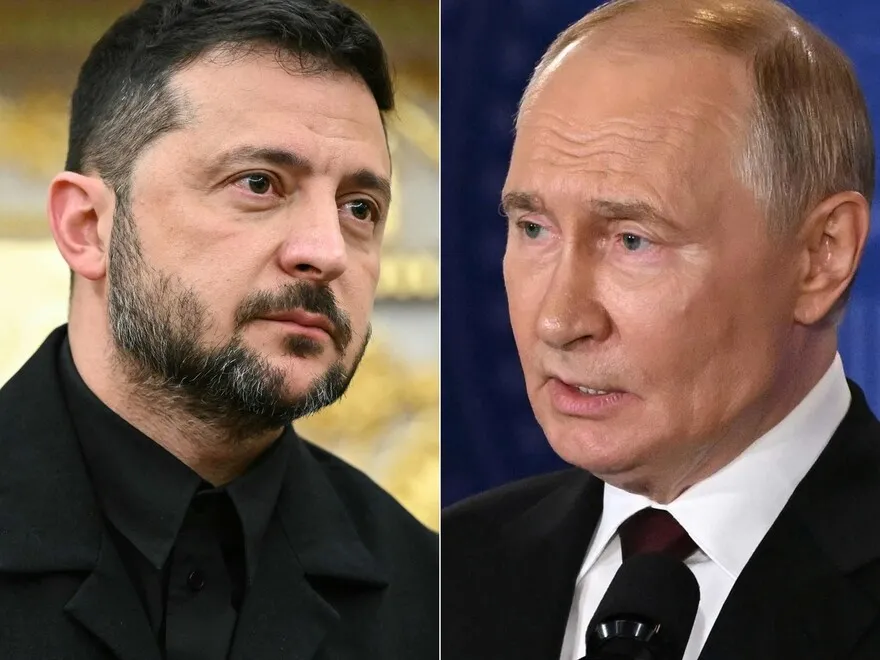
The offer that isn’t really about the venue
Volodymyr Zelenskyy didn’t frame his recent interview with Deutsche Welle as a breakthrough. He was answering a straightforward question — would he meet Vladimir Putin at the G20 summit in Miami this December, if both leaders were invited? His answer: of course. Not because he trusts the Russian president. Because he trusts the optics of being seen at the same table.
The Russian response came within hours. Kremlin spokesperson Dmitry Peskov called the idea “impossible.” Foreign Minister Sergei Lavrov, speaking from New Delhi where he was attending a BRICS gathering, was even more blunt: if Zelenskyy wants to meet, he should come to Moscow. That, Lavrov said, would already be a gesture of goodwill from Russia’s side.
What sounds like petty territorial posturing about where two men sit down is actually a contest over who sets the terms for whatever comes next.
Moscow wins by making the door stay closed
Putin has refused direct talks with Zelenskyy repeatedly since the full-scale invasion began in February 2022. Every time Ukraine or its Western allies floated the idea of a summit, Russia insisted on conditions that made acceptance politically toxic for Kyiv — recognition of annexed territories, neutral status, demilitarization. None of those have changed.
The insistence that any meeting happen in Moscow serves a clear purpose: it makes the encounter look like a surrender rather than diplomacy. Zelenskyy walking into the Kremlin would be imagery Putin knows carries enormous weight in Russian domestic politics, where the war is still framed as a special military operation against a hostile West. It would also be poison for Zelenskyy in Ukraine, where any appearance of capitulation at Russia’s doorstep could fracture the fragile consensus holding his government together.
By demanding Moscow, Russia isn’t trying to arrange a meeting. It’s trying to make the very idea of one look illegitimate before it even gets discussed.
Zelenskyy flips the script
Zelenskyy’s Miami overture is clever precisely because it sidesteps every trap Moscow has laid. The G20 is a multilateral forum. A meeting there wouldn’t be a bilateral summit arranged in the Russian capital — it would be a collision of leaders in neutral territory, surrounded by photographers from every major outlet on the planet. That changes the geometry entirely.
He also framed it correctly: “What I would say to him, what he would say to me — that’s not important. What matters is the result.”
This is a leader speaking not about ceremony but about signal. The Ukrainian president knows the battlefield has shifted. He told DW that Ukraine is in a stronger position militarily than last year, which gives him leverage at any negotiating table. More importantly, he seems to be positioning himself for a post-Trump diplomatic architecture before the American transition hardens into policy.
The Trump variable nobody’s accounting for properly
Donald Trump spoke with Putin by phone on December 8. Trump’s envoys Jared Kushner and Steve Witkoff visited both Moscow and Kyiv earlier this month. Zelenskyy called the dual visits a “good sign” — precisely because they included Ukraine’s capital, not just Russia’s.
Here’s what English-language coverage has largely missed: the Kushner-Witkoff trips weren’t routine. They were reconnaissance missions. Neither man is a career diplomat, and neither holds an official negotiating mandate. What they’re doing is mapping the parameters of a potential deal before anyone sits down at a formal table.
Trump’s interest in a quick settlement is well documented. But quick settlements favor the side that controls the most territory — which is Russia. Zelenskyy’s strategy appears to be forcing the conversation into the open, into multilateral venues, where American and European pressure can be applied simultaneously rather than in secret backchannels where Ukraine has no seat.
The December meeting with Trump that Zelenskyy announced is the next piece. If the Ukrainian president can secure a framework from Washington that ties aid to a concrete diplomatic timeline, Moscow’s demand for Moscow loses its power. The ball moves to Zelenskyy’s court, and suddenly Putin has to respond publicly to a specific proposal rather than hiding behind procedural objections.
The battlefield tells a different story
While diplomats trade pleasantries and conditions, the war is escalating, not de-escalating. Russia and Ukraine have both expanded long-range strikes in recent weeks. Civilian casualties have risen to levels not seen since the opening months of the invasion — four more killed overnight in southern and central Ukrainian cities on the day of this reporting alone.
This contradiction is the defining feature of the current moment: diplomacy is intensifying at the same time violence is intensifying. That pattern usually signals one of two things. Either both sides believe they can improve their position before negotiations begin, or both sides know a deal is coming and are racing to shape the terms.
Russia’s dismissal of December 8’s preliminary discussions — calling it “too early” to talk venue and dates — suggests Moscow still doesn’t believe it needs to compromise. But Lavrov’s BRICS appearance and the Kushner visits suggest the Russian leadership is simultaneously preparing for a diplomatic track it publicly denies wanting. That tension can’t last.
What happens next
The G20 in Miami is December 13–14. Putin’s attendance remains unconfirmed. If he doesn’t go, Zelenskyy’s offer evaporates theatrically but gains nothing. If he does go and still refuses to meet, the imagery is damning in a way that decades of propaganda can’t fully repair — especially with Trump watching and recording.
If Putin shows up and Zelenskyy is there too, even without a bilateral session, the shared airspace becomes a story. And stories matter more than treaties in the early stages of any peace process.
The more likely outcome is something messier: continued public refusal from Moscow, private contact through intermediaries, and a gradual narrowing of positions that neither leader can claim credit for. That’s how wars end when neither side can win them — not with a handshake on a stage, but with exhaustion masquerading as diplomacy.
Zelenskyy’s Miami gambit doesn’t change that trajectory. But it does expose it. And in a conflict where Russia has spent three years controlling the narrative, exposure is itself a form of resistance.