Zelenskyy's Blunt Warning: Why US-Russia Rapprochement Could Break
Zelenskyy has publicly confronted Trump over sanction waivers and Starlink restrictions — a diplomatic pivot that signals Kyiv's fear of American abandonment. Here's what's really driving the escalation and what it means for the war.
The Public Break
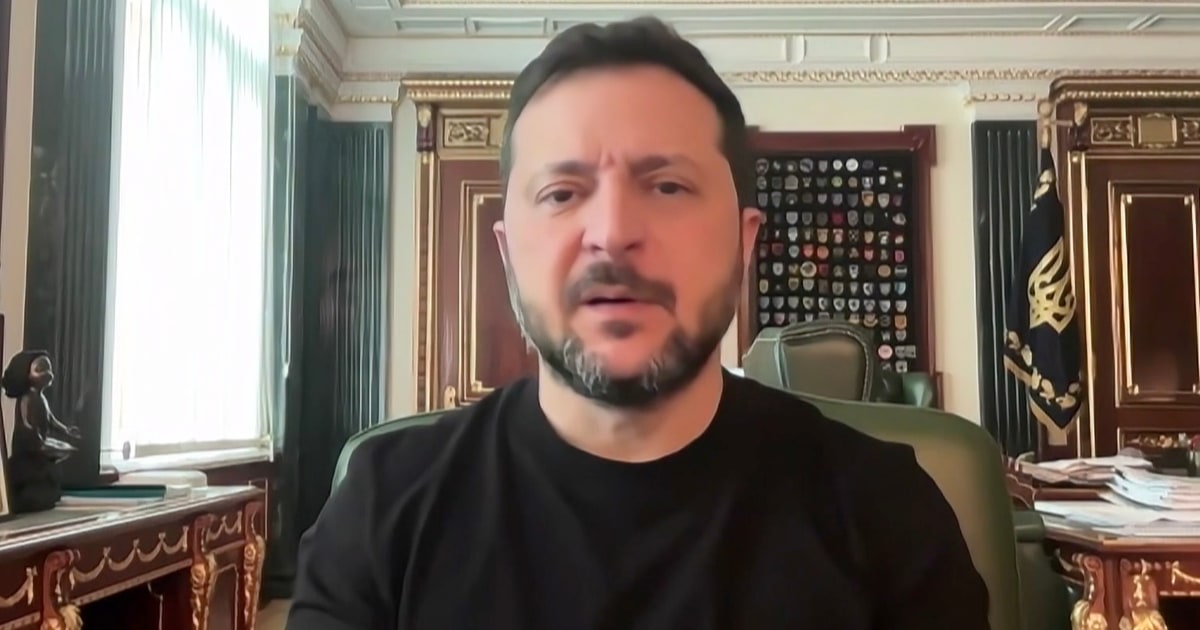
Volodymyr Zelenskyy did not spend four and a half years teaching the world how to look gentle on camera just to stay quiet now. On NBC’s Meet the Press, the Ukrainian president delivered a message that broke with the careful diplomacy Kyiv has relied on since 2022: the United States, under Donald Trump, is drifting toward a deal with Vladimir Putin that could abandon Ukraine entirely. And Zelenskyy was tired of saying it in private.
“If these two countries will be together,” Zelenskyy said, referring to Washington and Moscow, “we will not prevail, and we will not be able to stand.”
It was the clearest signal yet that Kyiv’s patience with the Trump administration’s overtures to Russia has run out. What followed was a litany of grievances that read less like a request for aid and more like an indictment of American policy.
The Sanction Waiver
The immediate trigger was Executive Order 14187, issued Friday, which waived sweeping new Russia sanctions that Congress had passed with bipartisan support just last month. The bill, named for the late Sen. Lindsey Graham of South Carolina — a man Zelenskyy praised as “a great supporter of peace and of Ukraine” — was designed to choke Russia’s energy revenue by penalizing global buyers of Russian oil and gas.
Trump called the waiver a matter of “national interest.” He framed it around domestic fuel costs, pointing to a separate deal with Putin to release hundreds of thousands of tons of Russian diesel onto the global market. Gas prices are climbing, and the political math in an election-year America is unforgiving.
Zelenskyy saw it differently. The Russian diesel, he said, would have “no real influence” on US oil prices because the price spike was driven by the blockage of the Strait of Hormuz — a completely separate crisis in the Middle East. The sanction waiver, he argued, would only “strengthen Putin in his will to occupy us.”
The message from Kyiv is blunt: Washington is rewarding Moscow for aggression while leaving Ukraine exposed. That framing could prove politically toxic in Europe, where the Trump pivot is already generating alarm.
The Infrastructure Strangulation
The sanctions dispute is only the surface story. Beneath it runs a deeper, more unsettling pattern — the systematic constriction of the tools Ukraine needs to fight.
US intelligence sharing on incoming Russian ballistic missiles was “blocked” for a period, leaving Ukrainian air defenses flying blind. Zelenskyy confirmed Sunday that the sharing has since been “deblocked” and is working again. But the interruption was long enough to matter, and it came days after the sanction waiver, leading European and Ukrainian officials to conclude it was deliberate pressure.
Starlink is in the same boat. SpaceX, under Elon Musk, has imposed limits on the technology Ukraine depends on to intercept jet-powered drones. Zelenskyy told Kristen Welker that Ukrainian officials believe the restriction came in response to a “message from the American government.” He declined to say whether Trump or Musk was directly responsible, but added that if the president lifted the restriction tomorrow, “it will immediately work as it was before.”
The Starshield military tier remains under speed restrictions as well. Ukraine is being asked to fight a modern war with one hand tied — and the timing suggests the tie is intentional.
The Personal Fracture
What makes this moment different from earlier strains in US-Ukraine relations is how public it has become. Trump called Zelenskyy “more difficult to deal with than Putin” this week. Zelenskyy did not flinch.
“Maybe it’s not very polite,” he said, “but it is better to have partners who are very open and clear than to have those who are killers, even with a smile on their face.”
It was a direct, unambiguous rebuttal aimed squarely at Trump. The line between diplomacy and confrontation has always been thin in Kyiv’s relationship with Washington, but it has now crossed.
Zelenskyy also accused the US of “betraying” Kyiv last week — language that would have been unthinkable in earlier years of the war. He said his feelings had not changed.
The Stalemate
The frontline has barely moved. Russia continues to hold roughly a fifth of Ukraine. Trump promised to end the conflict within days of taking office; peace talks have stalled. Ukraine says Russia rejected a short-term ceasefire. Putin’s terms amount to full surrender on Kyiv’s part. Neither side is moving, and the Americans seem to be pushing Ukraine toward concessions it cannot afford to make.
Sen. James Lankford of Oklahoma defended the sanction waiver on Meet the Press, saying Trump is “siding with the free people of Ukraine” by pushing for negotiations. The logic is that pressure brings Putin to the table. But the table is currently being pulled out from under Kyiv.
What Comes Next
Zelenskyy said he expects to speak with US negotiators by phone and remains “very open” for a meeting despite the difficulties. That is the language of a leader who still believes there is a path forward — but one who has decided the American public needs to hear the warning.
The stakes are real. If Washington formalizes a tilt toward Moscow, Ukraine loses its most critical patron. If the sanctions collapse, Russia regains revenue streams that fund its war machine. If Starlink and intelligence sharing remain constrained, Ukrainian infrastructure stays vulnerable through a winter that could be fatal for civilians already enduring relentless strikes.
Zelenskyy’s pivot from quiet diplomacy to public confrontation is not just rhetoric. It is a gamble that transparency will force Washington to reconsider — or at least make the costs of abandonment visible to voters who have so far accepted the narrative that Trump is brokering peace.
Whether that gamble pays off depends on whether the American public believes Zelenskyy’s warning or Trump’s promise. The war in Ukraine has always been fought on Ukrainian soil, but the ammunition, the intelligence, and the political will have come from abroad. This week, Zelenskyy made it clear: the ammunition is running out, and the political will is shifting. The question now is whether Washington will listen before the window closes entirely.