中国刚刚证明火箭回收能力,SpaceX应该警醒
蓝箭航天在近一个月内第二次成功回收火箭一级,标志着中国商业航天正在快速追赶SpaceX。这场技术竞赛对全球发射定价和卫星星座之争的影响已然展开。
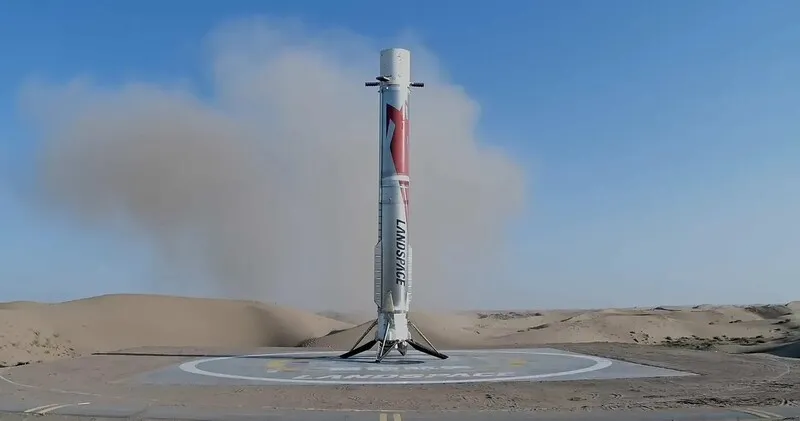
中国不再是可回收火箭的追随者
在首次尝试以惨烈方式失败八个月后,中国民营航天公司蓝箭航天于7月19日完成了一项或许应让埃隆·马斯克暗自警醒的壮举:朱雀三号火箭的一级助推器在从甘肃省酒泉卫星发射中心起飞不到八分钟后,成功着陆于固体地面。
这是中国第二次成功实现火箭一级回收——第一次是8月10日国营航天科技集团(CASC)通过长征十号B型火箭完成的,该火箭使用海上平台上的网具进行回收。蓝箭航天选择了完全不同的技术路线:采用网格舵进行空中制导、下降中途发动机二次点火,以及四条着陆腿实现距发射场390公里外的轻柔着陆。在几乎每一个机械细节上,这都是一枚中国的猎鹰9号火箭。
两项里程碑在一周内相继实现的速度,才是这里真正值得关注的故事。航天科技集团在7月实现了回收,随后蓝箭航天在下个月中旬再次达成这一目标。两家不同的机构、两种不同的回收架构、两种不同的体制文化,却在短短数日内双双成功。这不是渐进式进步,这是加速。
这一系列进展尤为引人注目的地方在于其所克服的体制摩擦。航天科技集团是拥有数十年弹道导弹和卫星经验的国有巨头,而蓝箭航天是一家私营资助的初创企业,直到2022年仍处于低调运营状态。两家机构在同一狭窄时间窗口内均取得回收成功,这表明中国航天领导层已刻意在整体上加速可回收火箭的研发——并非作为单一项目,而是作为协调国家力量与商业部门共同推进的协同行动。这是一个结构性信号,而非偶然巧合。
西方无人谈及的经济账
朱雀三号由不锈钢制成,而非碳纤维复合材料。其一级使用九台甲烷燃料发动机——比猎鹰9号更多,燃烧的推进剂组合比RP-1煤油更清洁、更易重新点火。蓝箭航天公开宣布的目标是将一级复用20次。二十次。
作为参考,猎鹰9号一级在目前的实际运营中,在退役前可实现15至20次飞行,每次复用可将边际发射成本降低约1000万至1500万美元,具体取决于合同条款。如果蓝箭航天能达到SpaceX利用率的一半,那么对于任何在国际市场上销售发射服务的人来说,数学模型都将改变。
大多数英文报道忽略了一个关键点:朱雀三号在不进行一级回收的情况下,进入低地球的原始有效载荷能力为14.2吨。猎鹰9号为22.8吨。这一差距显著但并非不可逾越——而且随着蓝箭航天增加发动机、扩大燃料箱或优化着陆程序,这一差距会不断缩小。这枚火箭依然年轻。仅凭当前的规格表来评判其潜力是错误的方法。
更具参考价值的是发展轨迹。蓝箭航天成立于2015年。其首次试飞为亚轨道飞行。首次轨道尝试随后到来。首次一级回收尝试失败。八个月后,成功了。航天科技集团的回收发生在不到两周前,而一家私营竞争对手就已追赶上。多家其他中国私营公司——银河航天、Orienspace、原语星空间——均在运行平行的可回收项目。这不是单家公司的故事。
推进剂的选择值得更细致审视。甲烷——具体指液态甲烷(LCH4)——已成为新一代可回收火箭的首选推进剂, precisely因为它比煤油燃烧更清洁,在发动机涡轮泵和燃烧室中留下更少的积碳。这直接转化为飞行间更快的周转时间。SpaceX自己的星舰猛禽发动机就因这一原因使用甲烷。蓝箭航天在此并非重新发明轮子;它采用的正是SpaceX自己在多年使用煤油燃料的梅林发动机后所采纳的相同逻辑。
谁胜谁负
immediate winners are Chinese satellite operators. LandSpace’s second stage placed the Honghu-3 demonstration satellite into its target orbit on this flight — a test payload for a low-Earth-orbit internet constellation called Qianfan. That constellation is China’s direct answer to Starlink, and it needs hundreds, eventually thousands, of launches. Reusable rockets are the only way that math works.
Qianfan, also known as Guowang when viewed through the lens of state planning, has received explicit backing from China’s central government as a strategic infrastructure project. The constellation is projected to field over 13,000 satellites across multiple orbital shells. At current unrecovered launch costs, that deployment is economically unfeasible. Every successful reuse multiplies the number of satellites that can be launched within a given budget window. That is why recovery is not a nice-to-have for Qianfan — it is the single most important technical requirement for the entire project.
The losers are launch providers who have not yet figured out reusability at scale. Axiom Space, Astra, and smaller providers in Europe and India are already under pressure from Falcon 9 pricing. If China enters that fight with a functional recovery fleet, pricing drops further and faster — and western firms that charge premium rates for unrecovered launches will struggle to justify their margins.
SpaceX itself is not threatened today. The Falcon 9 flies roughly once a week globally. LandSpace is not anywhere near that cadence. But SpaceX’s moat has always been speed of iteration. The question is whether China’s parallel development model — multiple companies, multiple architectures, state support — accumulates data faster than any single western company can respond.
There is also a geopolitical dimension that gets underrepresented in launch cost analyses. China’s space sector operates under a different subsidy regime, different procurement rules, and different export controls than its western counterparts. Western analysts tend to compare costs dollar-for-dollar without fully accounting for the degree of state capital infusion that Chinese firms receive. That does not mean Chinese launches are artificially cheap — it means the competitive landscape is not a level playing field, and western providers should not assume they can win on price alone.