27 New Objects Beyond Neptune Are Breaking Our Solar System Models
Hubble and Webb just found 27 tiny worlds past Neptune that shouldn't look the way they do. The discoveries are forcing astronomers to rethink how the solar system's outer edge formed — and why two telescopes were both necessary to see them.
The Smallest Worlds Remember Everything
Astronomers expected the tiniest objects in the solar system’s outskirts to bear the scars of constant collisions. They do not. That is the headline from two papers published in The Astronomical Journal on September 8, and it is a problem for everyone who has ever modeled how the Kuiper Belt and scattered disk came to be.
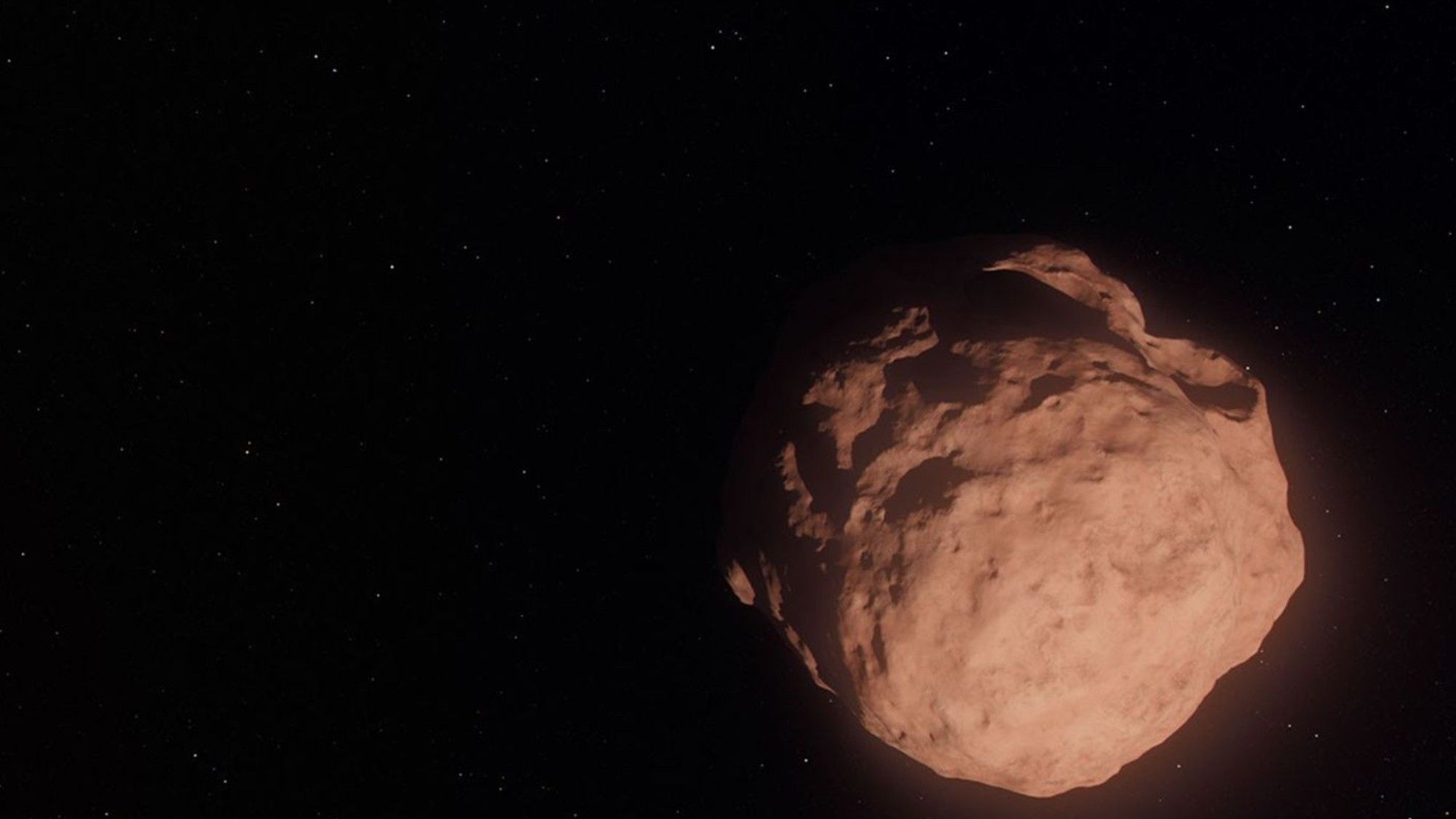
Anastasia Morgan of Northern Arizona University and Marielle Eduardo of the University of Victoria led separate but complementary analyses of 27 newly discovered trans-Neptunian objects, all smaller than 25 miles across. The smallest measured just 6 miles in diameter. Both teams found that these little worlds look almost exactly like their larger neighbors — chemically pristine, color-matched, and remarkably untouched despite billions of years of orbital chaos.
“You could imagine a scenario where getting knocked around and fragmented would change the surface composition,” Morgan said. “So it’s really fascinating to see that the smallest objects are somehow remembering and preserving the history of how they were made.”
Hot and Cold, Same Story
The puzzle cuts deeper when you separate the objects by their orbital ancestry. Dynamically “cold” TNOs orbit near the ecliptic plane in gentle circles, believed to have formed in situ from the dawn of the solar system. Dynamically “hot” TNOs rode highly elongated, tilted paths — likely ejected from between Uranus and Neptune before those giant planets finished growing, then scattered into the outer dark.
The hot population should have suffered far more gravitational jostling and surface disruption than the cold. Instead, both groups share nearly identical surface colors and compositions. David Trilling put it bluntly: the hot TNOs “retain a signature of where they were born, even though they’ve been orbitally scrambled since then.”
That finding narrows the possible explanations to two uncomfortable options. Either the outer solar system has far fewer collisions than current models predict — which contradicts what we know about object density in that region — or impacts happen frequently but fail to remix the surfaces of small bodies the way everyone assumed they would. Neither scenario fits neatly into existing formation frameworks.
Eduardo’s size-distribution work added another twist. Despite forming in different regions under different disk conditions, both the cold and hot populations ended up with the same range of object sizes. “The process seems to be insensitive to disk conditions,” she said, producing similar planetesimal sizes whether the early disk was hot or cold, dense or fluffy.
Why You Need Two Telescopes
Here is what most reports about this discovery leave out: neither Hubble nor Webb could have pulled this off alone. The combination is what makes the result possible, and it reveals something important about how modern astronomy actually works at the edge of its reach.
Visible-light brightness depends on two things at once — an object’s size and its reflectivity, or albedo. A large, dark TNO can look fainter than a small, icy one at the same distance. That ambiguity makes it nearly impossible to determine true size distributions from Hubble-visible data alone. Webb’s infrared vision breaks that degeneracy. At infrared wavelengths, brightness tracks size far more directly, letting Eduardo pin down diameters with confidence.
But Webb alone would not have found all 27 objects. They shine at magnitudes between 24.1 and 29.3 — roughly the brightness of a swarm of fireflies on the moon as seen from Earth. Hubble’s deep-field staring power and orbital stability provided the detection sensitivity; Webb’s infrared spectroscopy provided the compositional and sizing data. Splitting the work between them is what turned a list of faint smudges into a scientific result.
This is the deepest survey yet into the region beyond Neptune, and it was only possible because the two telescopes are doing different jobs on the same targets. That partnership model — combining the strengths of legacy and next-generation instruments — is likely to become the standard for frontier observations.
What This Means for the Edge of Everything
The immediate implication is that our models of planetesimal formation and collisional evolution in the outer solar system are missing a key variable. If small TNOs resist surface disruption, whatever mechanism is responsible — perhaps cohesive forces at small scales, regolith properties, or something else entirely — needs to be built into simulations of how planetary systems assemble and evolve.
The broader implication reaches past our own neighborhood. Any system with a Kuiper-Belt analog will produce small, distant worlds, and the question of whether those worlds preserve or erase their formation signatures will shape how we interpret future observations of exoplanetary disks and scattered planetesimals around other stars.
The two papers — one on color and composition led by Morgan, the other on size distribution led by Eduardo — are co-authored by the same team and published back-to-back for a reason. They are two sides of the same contradiction: the smallest objects at the solar system’s edge look too much like the biggest, and they formed too similarly in too-different places. The outer solar system just got a lot more interesting, and a lot less predictable.
The Numbers Behind the Discovery
To ground this in concrete terms: 27 new TNOs, all under 40 kilometers across, with the smallest at roughly 10 kilometers. Orbital magnitudes spanning 24.1 to 29.3. Published September 8 in The Astronomical Journal as two separate papers. Teams based at Northern Arizona University and the University of Victoria, with contributions from the Harvard-Smithsonian Center for Astrophysics. Data drawn from both the Hubble Space Telescope and the James Webb Space Telescope, observationally pushing both instruments to their limits.
The firefly-on-the-moon analogy is not just color — it is a measure of how far these telescopes can now see, and how much of the solar system’s outer architecture was simply invisible until now.