How AI Is Driving a Copper, Indium and Gallium Supercycle
AI data-center build-outs are pulling copper, indium and gallium prices to unprecedented levels — and the ripple effects stretch far beyond chipmakers into construction, energy and US-China geopolitical strategy.
The AI Boom Is Pulling Up More Than GPU Prices
The headline story around artificial intelligence has been chips — NVIDIA earnings, H100 shortages, TSMC capacity crunches. But behind that visible layer sits a slower-moving, less-dramatic crisis in the base and rare metals that hold AI infrastructure together. Copper, indium and gallium prices have surged to levels that analysts are now calling a structural supercycle. This is not a temporary squeeze. It is a new demand curve written by data-center blueprints.
London Metal Exchange copper hit an all-time high of $14,455 per ton in early August 2026, after briefly breaking $14,000 in May. The price was once a clean proxy for global industrial health. It no longer is. Supply disruptions at mines, electric-vehicle demand, US tariff uncertainty and — increasingly — AI-driven power-grid investment are all pulling in the same direction. Williams Osnato at Chart Commodities told CNBC directly: the core support behind elevated copper prices is the data-center and power-grid demand that accompanies AI expansion.
That matters because it reframes who pays and who feels the pain. Construction costs are rising before the foundation is even poured. Utility developers are bidding against hyperscalers for transformer copper. And the metal is now a bottleneck for the very grid extensions that enable AI in the first place.
Korea Zinc Is Sitting on a Rare Portfolio
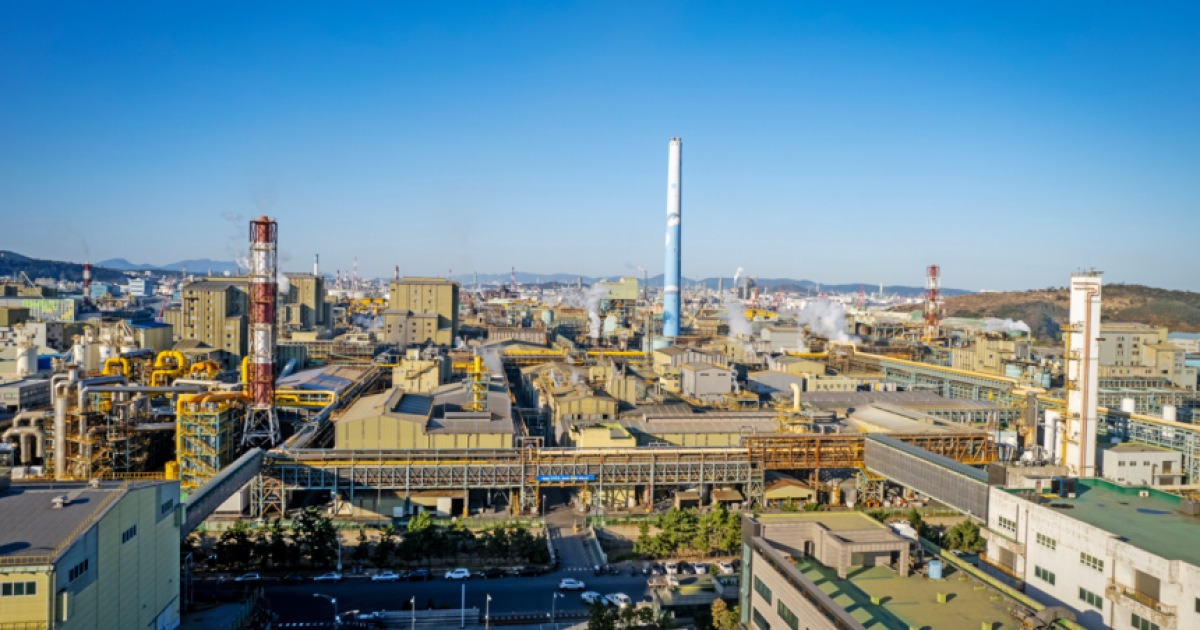
Korea Zinc has been quietly assembling what its chairman Choi Yoon-beom calls an “AI metals trio.” The company already produces copper and zinc through its Onsan smelter. As AI demand grew, its raffinate streams — the byproducts of zinc refining — became something more valuable. Indium and gallium, which had been niche outputs, are now strategic assets.
The numbers are striking. Copper sales volume rose 23.5 percent quarter-on-quarter and 15.9 percent year-on-year in Q2, with revenue jumping 75.5 percent to 190 billion won. Indium sales volume surged 51 percent in the same period as the company ran proactive inventory positions ahead of rising demand. Gallium tells the steepest story: from $625 per kilogram in Q1 2025 to roughly $2,140 by Q2, and pushing toward $3,075 in recent weeks — more than a threefold increase in roughly 18 months.
Korea Zinc plans to invest 55.7 billion won to bring on a 15-ton-per-year gallium capacity by 2028, using existing smelter byproducts rather than developing new mines. That model — extracting strategic metals from refining waste — is exactly why the company matters. It turns a traditional smelting business into a rare-metals player without the capital intensity of greenfield mining.
Why Indium and Gallium Are Different From Copper
Copper is a global commodity with scattered supply. Indium and gallium are concentrated almost entirely in one country. China controls roughly 99 percent of global gallium production and more than 90 percent of germanium. Indium supply is more diversified, but Chinese export controls tightened in recent years, and the company notes that those controls combined with AI-driven optical-communication demand pushed indium prices from $355 per kilogram to around $800 in Q2.
This concentration is the real story. US policy makers have spent two years warning about critical-mineral dependencies on China. Gallium and germanium export restrictions began in 2023. Yet the United States still lacks meaningful refining capacity for these metals. Kim Jin-beom at Sangsang Investment Securities noted the direct collision: American AI, defense and semiconductor growth runs up against an absolute absence of refining infrastructure for gallium, indium and germanium.
That gap is what makes a Korean producer strategically relevant to Washington. Korea Zinc does not have the political pull of a TSMC or a Samsung, but it does have a technical model — recovering rare metals from existing smelter output at scale — that aligns with US efforts to diversify supply chains away from Chinese control.
The Demand Curve Is Steeper Than Most Count
The long-term projections are stark. Global copper demand is expected to grow 48 percent between now and 2040, according to Bloomberg and IEA figures cited by Korea Zinc. Gallium demand is projected to increase roughly sixfold by 2040, at a compound annual growth rate of 12.7 percent. Indium demand is expanding through a different channel — not just displays, where it has long been used in ITO electrodes, but optical-communication lasers based on indium phosphide that carry data between GPU racks inside data centers.
Each of these metals follows a different demand arc, but they all converge on the same constraint: building AI infrastructure requires physical materials, and those materials cannot be fabricated out of code. A single AI data center draws tens of megawatts of power. That power must travel through copper-heavy transmission and distribution networks. The servers inside use gallium-based power semiconductors for efficiency. The interconnects between them rely on indium-phosphide lasers. The metal is invisible until the project stalls waiting for it.
Who Wins, Who Loses
The winners are clear. Korea Zinc’s portfolio has shifted from a cyclical base-metals play to a structural-demand story. Any producer with non-Chinese gallium or indium capacity gains optionality in a world where export controls are likely to tighten further, not relax. Companies positioned along the US supply-chain diversification agenda — whether in Korea, Japan or elsewhere — stand to benefit from policy tailwinds that are unlikely to reverse.
The losers are less glamorous. Contractors bidding on data-center projects will face higher copper costs that compress margins. Utilities competing with hyperscalers for transformer supply will see delay risk increase. Smaller AI companies that assumed chip access was the only bottleneck may discover that their power and metal procurement timelines are equally constrained.
What Comes Next
The most important question is not whether prices will stay elevated, but whether new supply will emerge fast enough. Korea Zinc’s 15-ton gallium capacity by 2028 is meaningful but small relative to global demand growth. The company is also advancing germanium production to reduce Chinese dependency. But building refining capacity outside China takes years, not quarters, and the geopolitical environment is making that timeline riskier, not easier.
If China tightens gallium or indium exports further — a realistic scenario given the current trajectory — the price shock will accelerate. If it does not, the demand curve alone is sufficient to keep pressure on supply. Either way, the metals underpinning AI infrastructure are entering a phase where they will behave less like commodities and more like strategic assets.
The AI narrative has been dominated by models and chips. The next chapter will be written in copper, indium and gallium — and the companies, nations and contracts that secure them.