Japan's BOJ Tightening Stance Reshapes Asian Capital Flows
BOJ Governor Ueda signals continued rate hikes to curb inflation, reshaping the yen carry trade and drawing US attention to Tokyo's monetary path. The implications ripple across Asian markets.
A Tightening Bias Takes Shape
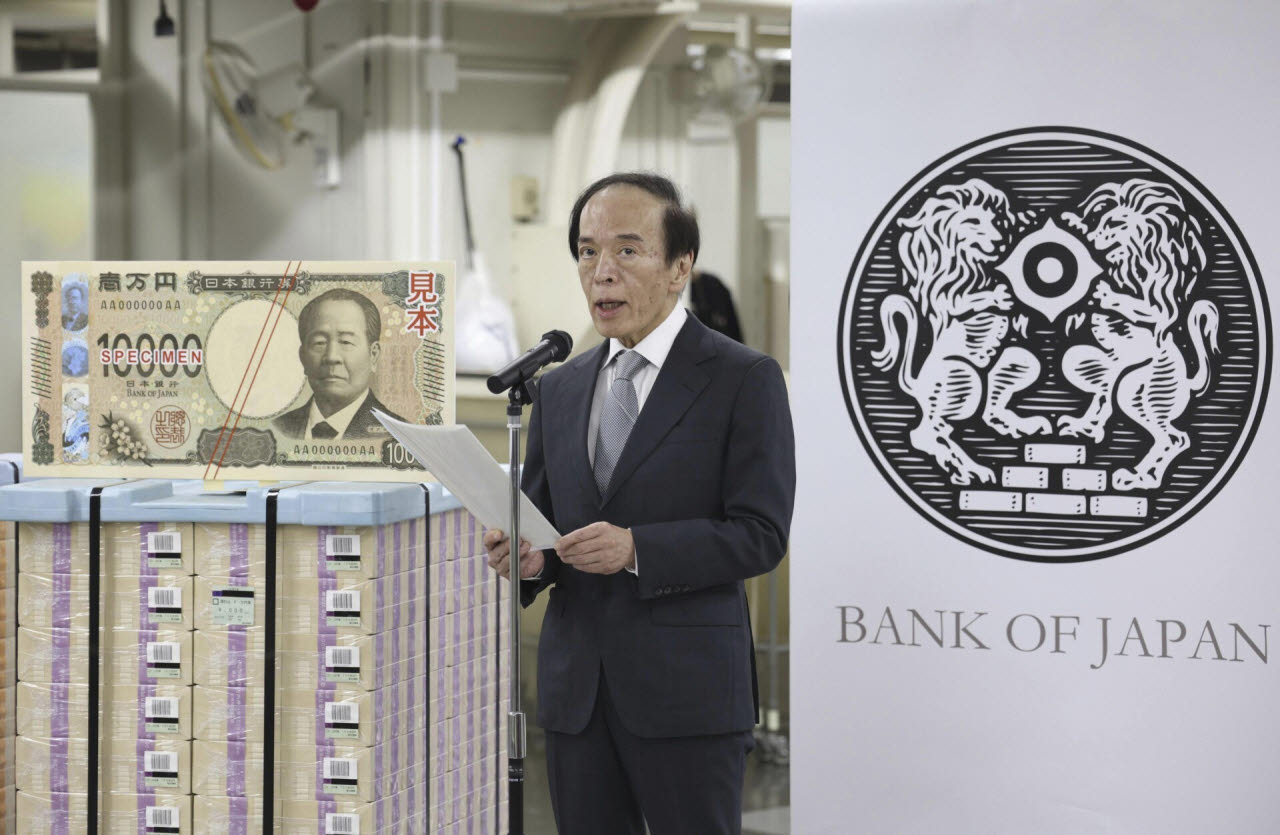
Japan’s central bank has signaled a sustained move toward tighter monetary policy, and the implications extend well beyond Tokyo’s borders. Governor Kazuo Ueda stated during a press conference at the G20 finance ministers meeting in Bangkok that the bank cannot tolerate further price increases, marking a clear hawkish pivot.
The Bank of Japan raised its benchmark rate to 1.25% last month, and markets now expect the next policy decision on October 29-30 to hold rates steady. However, the real focus falls on December, when another rate hike looks increasingly likely.
Ueda emphasized that while inflation has reached approximately 2%, the threshold for acceptance has shifted. “Anything above that I cannot tolerate,” he said, according to Nikkei reports. This represents a significant departure from the accommodative stance that characterized Japanese monetary policy for decades.
What makes Ueda’s language notable is its precision. Previous BOJ governors — Haruhiko Kuroda before him, and even predecessor Takehiko Nakagawa in the early 2000s — framed inflation tolerance in softer, more conditional terms. Ueda’s phrasing carries the weight of a man who has watched Japan’s cost structure shift irreversibly and decided that the old rules no longer apply. The market reaction was immediate: the yen strengthened roughly 0.8% against the dollar following his remarks, while Japanese government bond yields climbed another 6 basis points on the long end.
The Yen Factor
Perhaps more consequential than the rate trajectory itself is what Ueda chose to monitor: crude oil prices, yen depreciation, and artificial intelligence demand. These three factors represent both domestic inflation risks and external pressures that could force the BOJ’s hand faster than anticipated.
Oil prices remain the most direct channel. Japan imports nearly all of its energy, and any spike in crude translates almost instantly into higher input costs for industry and consumers alike. With global supply still fragile — OPEC+ production cuts holding through 2025, Red Sea shipping disruptions adding premiums, and demand from India and China keeping a floor under prices — the BOJ cannot afford to be complacent about the import-inflation channel.
The AI angle is less obvious but potentially more structural. Data center construction across Japan and Southeast Asia is driving electricity demand to multi-year highs. Utilities in Kansai and Kyushu have already begun adjusting their pricing models. If AI-driven power demand pushes Japanese industrial costs higher over the next two years, Ueda’s inflation target becomes harder to hit without rate pressure — creating a feedback loop that few in the market are fully pricing in.
The yen’s weakness has drawn American attention. US Treasury Secretary Scott Bessent publicly urged Japan to end its reflation policy during the same G20 gathering. President Trump also raised concerns about the yen’s declining value during bilateral talks. Erin Brown, the US Treasury’s undersecretary for international affairs, clarified that Washington was not dictating Japanese policy but noted Tokyo’s role as the largest holder of US Treasuries gives the yen stability “close watch” status.
Brown’s comments carried an implicit warning. All options remain on the table for coordinated intervention if the yen weakens further. This represents a new dynamic in US-Japan economic relations — direct pressure on a key ally’s monetary independence. Historically, the US preferred to work through multilateral channels or market signals. The current administration’s willingness to name the BOJ directly signals a more transactional approach to alliance economics.
Who Wins and Loses
The carry trade faces headwinds. For years, investors have borrowed cheap yen to fund higher-yielding assets across Asia and emerging markets. As Japan’s rates climb, that arbitrage narrows. The math becomes less favorable each time the BOJ raises rates, and the psychological threshold of 1.5% or 2% triggers positioning shifts.
But the second-order effects are where the real story lives. When carry trades unwind, they don’t do it linearly. Institutional investors selling Asian assets to cover yen borrowing creates liquidity gaps in smaller-market bonds and equities — Indonesia, Thailand, and the Philippines feel the pressure first. Their central banks then face a choice: raise rates to defend currency stability (risking growth) or let their currencies depreciate (importing inflation). It is a classic policy trilemma played out in real time across the region.
Korean exporters stand to benefit from a weaker yen in the short term, maintaining price competitiveness against Japanese goods in third markets. Samsung, LG, and Hyundai have quietly increased their overseas marketing spend in Southeastern Europe and Latin America precisely to capture share vacated by Japanese firms struggling with margin compression. But prolonged yen weakness invites intervention risk, and sudden sharp appreciations could erase those advantages overnight.
Japanese borrowers face the opposite pressure. Corporate debt servicing costs rise with each rate increase, squeezing margins in an economy where many companies still carry pandemic-era debt at near-zero rates. The Japan Corporate Research Association estimates that approximately 18 trillion yen ($120 billion) in corporate bonds will mature or refinance between 2025 and 2027 — a wave of refinancing that hits at exactly the wrong moment. Small and mid-cap firms without access to alternative funding are the most vulnerable segment.
The Neutral Rate Question
Ueda refused to pin down the neutral rate — the level where monetary policy neither stimulates nor constrains growth. “I cannot say with certainty that we are near that level,” he acknowledged. This ambiguity matters. Without a clear target, markets must guess the ceiling, and guesswork breeds volatility.
The BOJ’s own January 2025 projection had implied a neutral rate in the range of 0.5% to 1.0%, assuming a gradual recovery path. But that model assumed stable energy prices and no external policy shock — conditions that no longer obtain. Analysts at Nomura and Goldman Sachs have both revised their neutral rate estimates upward to 1.25%–1.5%, though neither firm would commit to a single figure in public commentary.
Some analysts project rates reaching 1.75% by mid-2027 if inflation holds. Others see a pause if growth data deteriorates. The lack of guidance leaves investors exposed to data-dependent surprises.
This uncertainty has already altered market behavior. The yen futures curve, which previously sloped gently upward, has steepened dramatically — indicating that traders are positioning for a wider range of possible outcomes than at any point since the 2008 financial crisis. Options markets show rising demand for yen call spreads above 155 against the dollar, suggesting hedging activity is accelerating even as spot prices remain depressed.
Regional Implications
Asian central banks now face a trilemma. Their own currency stability depends partly on Japanese monetary policy decisions made in Tokyo, far from their domestic political realities. Korea’s central bank, China’s, and others will adjust their own stances based partly on BOJ moves rather than purely on local conditions.
China’s situation is particularly delicate. The People’s Bank of China has kept its benchmark lending rate near historic lows to support a property sector in structural distress. A strengthening yen driven by BOJ tightening reduces the competitive advantage of Chinese exports without requiring any action from Beijing — a quiet benefit that China’s leadership is unlikely to celebrate publicly, given the US pressure on currency manipulation allegations. Meanwhile, the PBOC faces its own deflationary pressures, making it difficult to raise rates in sympathy with regional peers.
India’s Reserve Bank has already begun signaling a more hawkish stance, with Governor Shaktikanta Das referencing “external monetary spillovers” in recent public remarks. Australia’s RBA faces a similar dynamic, as the yen’s movements affect the AUD/JPY cross rate that underpins tourism and education flows — two sectors that account for roughly 4% of Australian GDP.
This external dependency creates policy friction. Countries that previously enjoyed independent monetary cycles now share a common variable: the yen. It is a structural shift, not a cyclical one.
What Comes Next
The October 29-30 meeting likely delivers a hold. Markets price this in already. The real test arrives in December, when Ueda must demonstrate whether his inflation commitment outweighs growth concerns in a Japanese economy still recovering from deflationary habits.
American pressure adds uncertainty. If Washington pushes harder for yen strength, the BOJ may accelerate hikes beyond what inflation alone justifies — creating a policy collision between domestic mandates and diplomatic expectations. This scenario is not hypothetical. Former Treasury Secretary Larry Summers has publicly argued that Japan’s monetary policy has “significant negative externalities” for global financial stability, giving diplomatic weight to the intervention-threat argument.
For Asian portfolio managers, the imperative is clear: position for a higher-volatility environment where yen direction is no longer a one-way bet. The carry trade is not dead — it has simply become more expensive to maintain. Investors who treated yen funding as free money for fifteen years will need to rebuild their frameworks around a yen that now carries a meaningful opportunity cost.
Japan’s era of ultra-loose money is ending. The question is whether the transition proceeds smoothly or triggers the kind of currency turbulence that reverberates through every portfolio holding yen-denominated exposure. December will tell.