Apple's Foldable iPhone Isn't a Gimmick — It's a Supply-Chain Earthquake
Apple's rumored foldable iPhone arriving alongside seven other products in September signals a market pivot that could upend Samsung's first-mover advantage and force a scramble across the display supply chain.
The Apple Foldable Is No Longer a Maybe
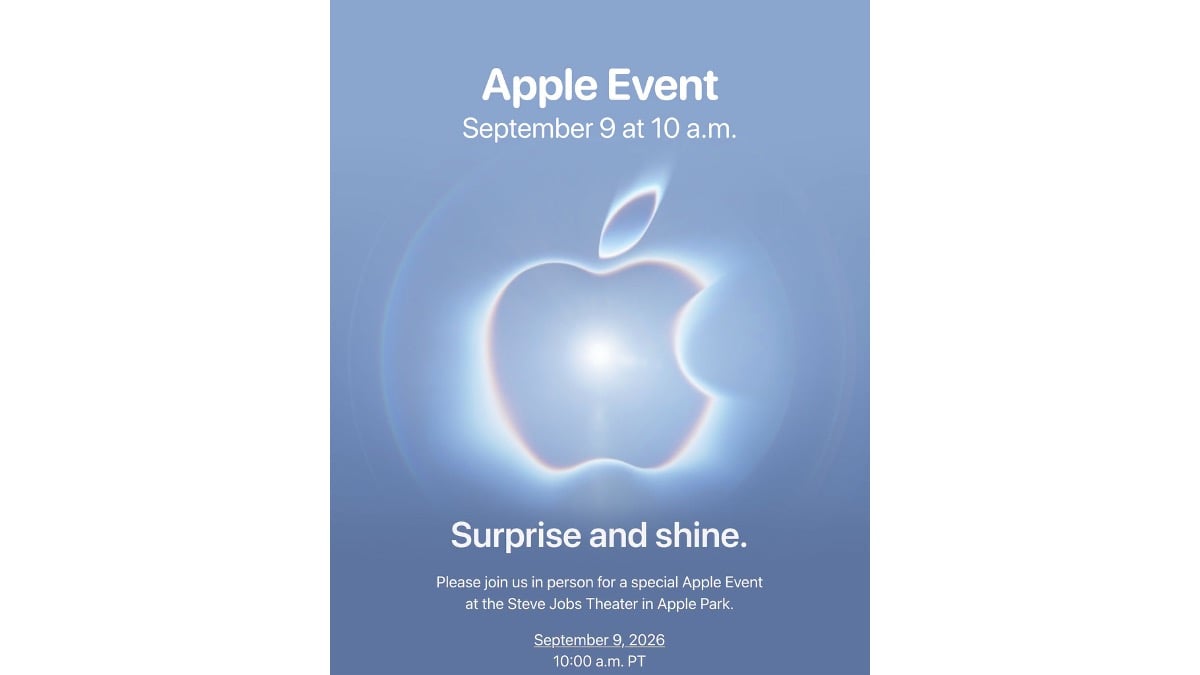
Apple is expected to unveil eight new products between now and late September, according to MacRumors. The lineup includes the already-announced Mac mini (M6/M5 Pro) and Mac Studio (M5 Max/M5 Ultra), both shipping September 22, plus the iPhone 18 Pro and Pro Max, a foldable iPhone — possibly called the iPhone Ultra — the Apple Watch Series 12, Apple Watch Ultra 4, and AirPods 5.
But the headline act is the foldable. Bloomberg’s Mark Gurman has downplayed fears of a major delay, saying it would be “very surprising” if Apple didn’t launch it alongside or very close to the Pro iPhones. That framing matters less than the implication: Apple is no longer testing the waters. It’s entering them.
Samsung’s Head Start Just Got Compressed
Samsung has been shipping foldable phones since 2019. The Galaxy Z Fold series alone has gone through five generations. By any rational metric, Samsung owns the category. Its first-mover advantage should translate into market dominance, deeper supply-chain relationships, and a commanding share of every conversation about what foldable displays will look like next.
That advantage is now at risk of being swallowed whole by Apple’s timing.
The foldable phone market is still a niche. IDC and Counterpoint both report that foldables account for roughly 5–7 percent of global smartphone shipments. But the moment Apple enters, that percentage doesn’t just grow — the ceiling rises. Apple’s installed base and brand loyalty don’t need to convince enthusiasts. They need to convince the massive middle-market segment that has never considered a foldable phone at all.
Samsung’s gap isn’t technology so much as credibility. The current generation of foldables still wrestle with crease visibility, durability concerns, and premium pricing that keeps most buyers on the sidelines. Apple’s rumored design — approximately 5.5 inches folded, 7.8 inches unfolded, with a thin-panel layout meant to minimize the crease — suggests the company is aware of these friction points and is engineering around them rather than ignoring them.
The Supply-Chain Play Matters More Than the Phone
Here is what English-language coverage rarely captures: the global flexible-OLED supply chain was already betting heavily on foldables before Apple showed up. Samsung Display, LG Display, and Chinese players like BOE and Visionox have been building out production capacity for years. BOE alone has invested billions in flexible-OLED lines aimed at smartphones, some of which are designated for Apple’s upcoming foldable.
Apple’s entry doesn’t just create demand — it reorders the priorities of every supplier in that chain. Samsung Display is the incumbent, but its capacity is partly tied to Samsung Electronics’ own foldable portfolio. LG Display has struggled to win major smartphone accounts in recent years. A confirmed Apple foldable contract would be a seismic event for LG’s strategy and for BOE, whose valuation has been increasingly tied to whether it can land a Tier-1 Western client on foldables.
The question isn’t whether these suppliers can make the panels. They already can — in low volumes. The question is whether Apple’s entry will trigger a capacity race that consolidates the field and leaves smaller players squeezed. That dynamic plays out over the next 18 to 24 months, not at a September launch event.
What This Signals About Apple’s Strategy
Apple has spent the last decade perfecting the slab phone. The iPhone 18 Pro’s rumored Dynamic Island miniaturization and A20 Pro chip point to an iterative refresh cycle — refinement, not revolution. The foldable is the counterweight. It is Apple’s acknowledgment that the form factor conversation has moved past speculation and into the realm of product decisions.
The rumored iPhone Ultra naming convention also suggests Apple is treating this as a distinct product tier, not a gimmicky variant. That positioning matters because it tells you where Apple intends to place the device in its lineup — likely above the Pro Max, not replacing it.
This is consistent with how Apple has approached other category entries historically. The Apple Watch didn’t arrive until four years after the smartwatch buzz peaked. AirPods didn’t appear until three years after Bluetooth earbuds were everywhere. In each case, Apple waited until the technology was reliable enough to meet its standards and the market was large enough to justify entry. The foldable is following that same pattern.
Who Wins and Who Loses
Apple wins on brand momentum. Samsung loses relative position if the foldable market was supposed to be its long-term differentiator against the iPhone.
Display suppliers who have already committed to flexible-OLED capacity win on volume. Those that haven’t — or that relied solely on Samsung Electronics as a customer — face pressure to reposition or consolidate.
Chinese OEMs like Huawei, Honor, and Xiaomi, which have been pushing foldable designs aggressively in the mid-tier price range, face the most uncomfortable scenario. Apple’s entry raises the premium expectation for the category. A foldable phone that cost $1,300 might start looking like the cheap option next to a $1,500 Apple device that folds better.
The Real Story Isn’t in September — It’s in the Capacity Reports
The eight-product announcement in September is the visible tip of a much larger restructuring. Apple’s foldable iPhone is a product launch. But for the global supply chain, it is a signal that the company is shifting capital, contracts, and engineering focus toward flexible displays at scale.
That shift will show up in quarterly earnings reports from Samsung Display, LG Display, BOE, and others. It will show up in orders for new equipment. It will show up in hiring patterns at companies that supply hinging mechanisms, ULP (ultra-thin glass), and flexible PCBs.
The iPhone Mania source confirms the September timeline and the product list but stops short of confirming the foldable’s exact launch date. That uncertainty is normal at this stage — Apple rarely reveals details this far in advance. What is not normal is the consistency of reports across multiple outlets about the device’s existence and its proximity to the iPhone 18 Pro launch.
This is no longer speculation. It is a product roadmap. And the people who have been waiting for Apple to enter the foldable market — suppliers, investors, and competitors — are now adjusting their strategies accordingly.
The question isn’t whether Apple will ship a foldable phone. It’s who will be left behind when they do.