Audit Finds Yoon Government Interfered in YTN Sale — and It Goes to the Top
South Korea's audit institution has concluded that the Yoon Suk Yeol presidential office directly intervened in the 2023 sale of broadcaster YTN, steering the deal toward a single buyer and excluding large conglomerates. The findings intensify pressure to overturn the transaction and raise fresh questions about media independence in a key US ally.
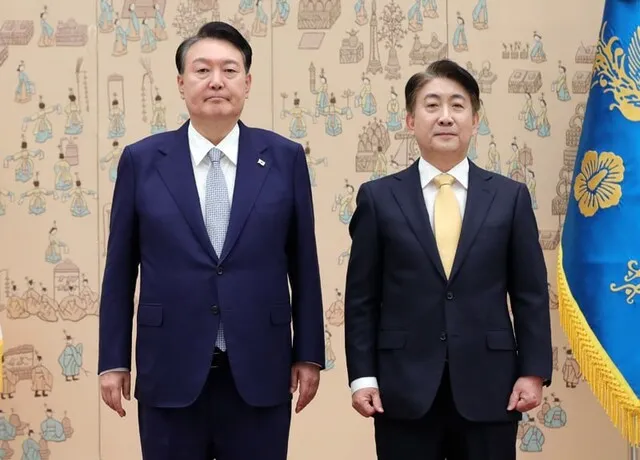
A sale meant to sidestep ownership rules is now being called a political operation.
South Korea’s Supreme Audit Institution dropped a finding on June 14 that cuts straight to the center of the Yoon Suk Yeol era’s most uncomfortable press-freedom question: did the president’s office try to buy control of a broadcaster?
The answer, according to the audit, is yes.
How the YTN sale was restructured — and why it matters
In 2023, two state-linked entities — Korea Electric Power’s subsidiary KDN and the Korea Racing Authority — held stakes in YTN, the country’s 24-hour news network. They wanted to sell. But South Korea’s Broadcasting Act limits any single large corporation from owning more than 30 percent of a broadcaster’s shares. To stay within that line, the two organizations signed a joint-sale agreement to offload just 29.99 percent of the combined 30.95-percent stake they held together — deliberately leaving the rest behind to avoid triggering the ownership cap.
Then, between late August and early September of that year, the plan changed.
Lee Dong-gwan, then commissioner of the Communications Commission (now the Broadcasting Media Communications Commission), told Kang Kyung-song, then deputy minister at the Ministry of Trade, Industry and Energy, to push for a full sale of the entire stake. Lee’s commission also sent official correspondence to both the trade ministry and the Ministry of Agriculture, Food and Rural Affairs — the two parent ministries overseeing KDN and the Racing Authority — arguing that consolidating the shares into a single sale was preferable.
Kang, in turn, summoned officials from both organizations and directed them to revise their joint-sale agreement to allow a complete disposal of the shares. The bidders were told the entire block was on the table.
The audit found that Kim Gwan-seob, then presidential chief of national security and government policy planning under Yoon, confirmed this chain of communication during his testimony. He told Kang that the full sale was the communications commission’s “firm position” and that official letters would follow — information that led Kang to believe the full divestiture was government policy.
The result: three bidders, one winner, and a legal fight
The competitive bidding process that followed in October 2023 attracted only three bidders: Jin Group, Hansé Industrial, and the Global Peace Foundation. No large conglomerate participated — precisely the outcome the original 29.99-percent structure had been designed to preserve. Jin Group’s special-purpose vehicle, YGNt, won the entire stake for 319.9 billion won (roughly $220 million at the time), or 24,610 won per share.
The audit noted that the pricing itself was not unreasonable — the winning bid exceeded both market valuation and the appraised expected price. The problem, in the auditor’s view, was procedural: the communications commission and the trade ministry had improperly intervened in what should have been an autonomous public-institution decision, narrowing the competitive field and undermining the intent of the Broadcasting Act.
The audit issued a formal “attention” sanction to the relevant agencies and, on June 11, forwarded investigative reference materials to the Corruption Investigation Office for High-ranking Officials, which is now reviewing the cases of both Lee Dong-gwan and Kang Kyung-song.
Who is pressing for the sale to be unwound
YTN’s labor union issued a statement on the same day as the audit release, calling the sale “a political blueprint for seizing control of the broadcast industry, driven at the presidential level.” The union demanded that the broadcasting commission immediately begin proceedings to revoke the approval of the major-shareholder change.
A parallel legal challenge is already underway. Last November, YTN’s employee stock-ownership committee won a lawsuit against the communications commission seeking to invalidate the YGNt acquisition — a victory that is currently under appeal by YGNt, meaning the second-instance court has not yet ruled.
Why this story travels beyond Seoul
South Korea is the third-largest economy in Asia and a treaty ally of the United States. Its democracy indices have slipped in recent years, and media independence is one of the clearest indicators on that chart. When a supreme audit institution — a body designed to be independent of the executive — produces a finding that the president’s office directed the restructuring of a broadcaster sale to circumvent ownership limits, it is not a routine administrative dispute. It is evidence of institutional capture in real time.
For Washington, the implications are practical as well as principled. South Korea hosts major US military installations, coordinates deeply on North Korea policy, and is a critical node in the semiconductor and supply-chain alliances the United States is building across the Indo-Pacific. But alliance credibility also rests on shared democratic norms. If South Korea’s own institutions are signaling that a sitting government tried to manipulate the ownership of a national broadcaster, that sends a message to partners and adversaries alike about where the country’s democratic guardrails stand.
What happens next
The most immediate consequence is legal. The second-instance appeal of the employee-ownership committee’s lawsuit will determine whether the major-shareholder change is overturned. If the court upholds the lower-court ruling, YGNt could be forced to return the stake — a scenario with no clear precedent for how a completed broadcast-license transfer would be unwound.
The Corruption Investigation Office’s review of Lee Dong-gwan and Kang Kyung-song adds a criminal dimension. Either official could face charges of abuse of authority, which carry real penalties under South Korean law. The presidential office itself has not been formally investigated, but the audit’s findings place Yoon’s inner circle at the center of the decision chain.
The broadcasting commission faces its own institutional test. Whether it moves to revoke the share-transfer approval on its own initiative — as YTN’s union is demanding — or waits for a court order will signal how much independence it retains from the executive that appointed its leadership.
The broader picture
The YTN sale is one episode in a longer pattern. The Yoon government’s relationship with the press has been characterized by frequent public spats, a tightly controlled presidential-briefing system, and a sustained effort to reshape media regulation. This audit finding provides the first formal, institutionally credible documentation that those efforts included direct interference in the ownership of a news organization.
What happens with the YTN case will matter beyond South Korea. It will show whether the country’s audit and judicial institutions can enforce accountability on a sitting administration — or whether the political cost of pursuing it is simply too high. For allies and observers, that is the real question this story raises.