Bangkok's Floods Expose ASEAN Supply Chain Fragility
Thailand's disaster declaration across 50 Bangkok districts reveals how climate-vulnerable megacities underpin global manufacturing — and how badly Southeast Asia is prepared for the next deluge.
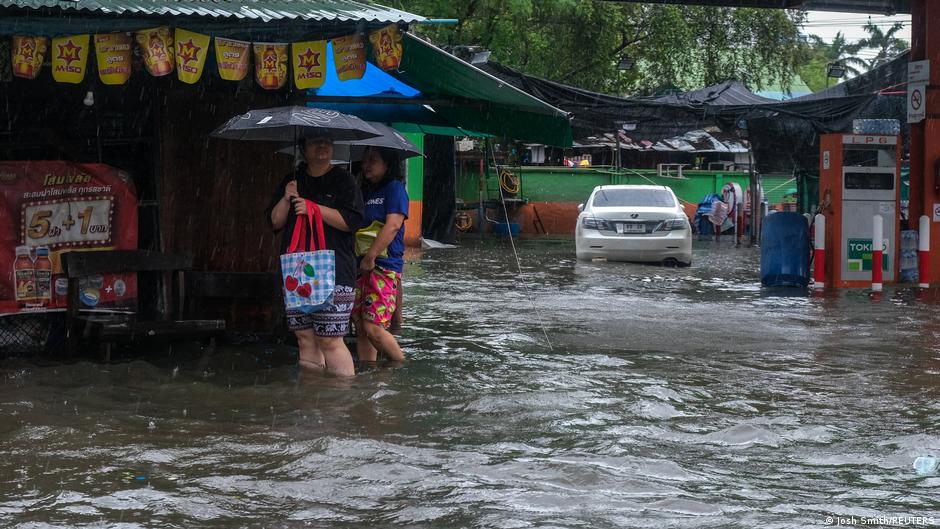
The water isn’t just rising in Bangkok — it’s rewriting how the world thinks about Southeast Asian manufacturing.
Thailand declared a disaster across 50 Bangkok districts this weekend after nearly 300 millimeters of rain poured through Thursday and Friday. Governor Chadchart Sittipunt called the situation stable, but stability is a word that doesn’t mean much when canals are already at capacity and more rain is forecast through Sunday. The water will take two to three days to drain even if it stops falling now. It probably won’t stop falling.
What happened in Bangkok this week should unsettle anyone who pays attention to global supply chains. Thailand is the world’s second-largest hard disk drive producer and a major automotive manufacturing hub. The eastern districts — the very areas Governor Chadchart identified as most impacted — sit at the heart of the industrial corridor that links the capital to the maping factories of Chonburi and Rayong provinces. When those areas flood, the ripple moves through supplier networks that feed Toyota, Honda, Western Digital, Seagate, and hundreds of component makers across three continents.
This is not a hypothetical concern. In 2011, Thailand’s last great flood killed more than 500 people and triggered a global shortage of hard drives that sent prices spiraling. Apple delayed MacBook production. Honda halted assembly lines. The economic damage — estimates ran as high as $45 billion — was one of the costliest natural disasters in recorded history. Many of those factories sat in exactly the districts that are underwater again this weekend.
A city that forgot how to handle water
Bangkok has a relationship with flooding that goes back centuries. The city sits on a flat alluvial plain at roughly 1.5 meters above sea level, crisscrossed by a network of canals — the khlongs that were once the city’s arteries before roads took over. Rainfall here is brutal and seasonal, concentrated in the monsoon months when a low-pressure system over the central region can dump an entire month’s worth of rain in 48 hours. The city was designed to handle water. It is no longer designed to handle the amount of water it is getting.
Urban expansion has been the primary culprit. Concrete has sealed off the soil that used to absorb rainfall. Canals have been narrowed or filled in to make way for development. Drainage infrastructure, such as it exists, struggles to keep pace with a metropolitan population that has swelled far beyond the engineering assumptions baked into the city’s original plans. Thailand’s Meteorological Department has flagged that a strengthening low-pressure system is dominating the central region, a pattern that climate scientists associate with increasingly volatile monsoon cycles.
The governor said the situation had stabilized. A local vendor told AFP her shop was at waist-deep water and that this year’s deluge felt worse than 2011. That comparison matters. It means residents remember. It means the memory of the last catastrophe has not translated into the institutional memory that would drive preventive investment.
Who wins, who loses
The immediate losers are clear: 84,000 people across 21 provinces who have been displaced or disrupted, the small businesses that cannot afford to close for two days let alone two weeks, the bedridden patients told to consider temporary hospital stays because their homes are no longer safe. Bedridden patients on life-support equipment — that is the kind of detail that does not appear in infrastructure reports but should, because it reveals what is actually at stake when a megacity’s drainage fails.
The secondary losers are harder to count but economically more significant. Automotive suppliers in the Eastern Seaboard corridor operate on just-in-time logistics. A two-day flood pause is worse than a two-day delay in scheduling terms; it is a disruption to sequencing that cascades through inventory buffers already stretched thin in a post-pandemic supply environment. Hard drive manufacturers, which already navigated the 2011 shock, know this playbook. They are likely activating contingency plans now — rerouting shipments, drawing on alternative supply sources in Malaysia or Vietnam, absorbing costs that will eventually show up as slightly higher prices for consumers worldwide.
There are winners too, though they are unlikely to be public about it. Vietnam’s electronics sector, already attracting investment from companies looking to diversify away from China, could see a small but realignment boost if multinational corporations interpret repeated Bangkok flooding as a signal to accelerate relocation plans. Vietnamese ports and industrial zones near Ho Chi Minh City andHai Phong are less exposed to the kind of monsoon-driven deluge that overwhelms Bangkok’s drainage. The region’s climate risk is not uniform, and supply chain managers pay attention to that gradient.
The adaptation gap
Thailand has spent years talking about climate adaptation since 2011. The government built new drainage tunnels, elevated some roads, and commissioned a master plan for flood management. None of it appears to have been enough to handle a event of this scale in a city of 10 million people and a metropolitan area of roughly 15 million. The gap between policy statements and physical infrastructure is the defining failure here.
This gap is not unique to Thailand. It runs through much of Southeast Asia’s urban core. Jakarta is sinking at rates that threaten its long-term habitability. Manila’s typhoon defenses are perpetually behind schedule. Hanoi and Ho Chi Minh City face similar drainage crises amplified by rapid construction. The common thread is economic growth outpacing infrastructure investment, combined with political timelines that reward ribbon-cutting ceremonies over subsurface engineering projects that no one will see until it is too late.
The monsoon patterns themselves are shifting. Climate models project more intense rainfall events across mainland Southeast Asia, even if total annual precipitation remains roughly stable. What that means in practice is fewer, heavier downpours — exactly the kind of event that overwhelms drainage systems designed for a different rainfall regime. Bangkok did not flood this week because it rained for weeks. It flooded because a week’s worth of rain arrived in two days and the city had nowhere to put it.
What happens next
Governor Chadchart is right that the water will recede if the rain stops. It will recede. The city will emerge wet, damaged, and frustrated. Then the rains will return next season, or earlier, or more intensely, and the cycle will repeat.
The question for ASEAN is whether this time is different. Supply chain diversification is already underway across the region, driven by trade tensions, pandemic disruptions, and corporate risk management. Bangkok’s floods add another data point to the calculus. Tourism revenue — already a critical pillar of Thailand’s economy — takes a direct hit every time the capital goes underwater, especially when major events like the G20 or regional conferences coincide with monsoon season.
What should happen is a serious re-examination of how ASEAN economies treat climate adaptation as infrastructure rather than an afterthought. That means treating drainage, elevation, and flood-resistant industrial zoning with the same urgency that governments apply to highways and airports. It means factoring monsoon volatility into the location decisions that determine where the next wave of manufacturing investment lands.
The 2011 floods cost Thailand tens of billions and sent shockwaves through global supply chains. This weekend’s disaster was smaller in scale and has already been described as stabilized. But the lesson should be identical: no amount of emergency pump stations and social media updates from the governor can compensate for a city that has forgotten how to handle the water coming its way.
Bangkok is not drowning for the first time. It is drowning with the same frequency and severity, and the world is still treating it like an anomaly rather than a preview.