Iran Hits Tankers in Hormuz But Loses Grip on the Strait
Three tankers struck near the Strait of Hormuz signal Iran's shift to direct attacks, but data shows oil flows are rebounding anyway. The real story is how global energy markets adapted—and why Iran's leverage is eroding.
Iran’s Latest Strike Misses the Point
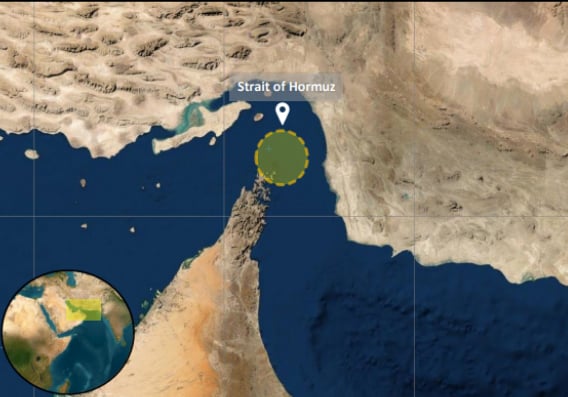
Three tankers were hit near the Strait of Hormuz on Tuesday, September 29. Two were crude oil carriers flying the Liberian flag; one may have been an LNG vessel. The strikes brought the weekly toll to four vessels, marking a decisive shift from Iran’s usual proxy harassment to direct targeting of commercial shipping. For the first time, the Islamic Revolutionary Guard Corps claimed responsibility openly—a signal that Tehran is escalating its operational profile in the waterway.
But here’s what the attacks don’t show: Iran is losing control of the very waterway it claims to dominate.
Oil volumes through the Strait are rebounding. Kpler reports at least 16.5 million barrels per day moved through in September, exceeding pre-war levels when excluding Iranian crude. Windward data shows 17 vessels transiting on September 29 alone, following 16 the day before. Most tankers sail with their AIS transponders switched off, making the true transit count almost certainly higher. The dark fleet continues to flow.
The paradox is stark. Iran’s Revolutionary Guard brigadier general Hossein Mohebbi warned vessels attempting transit without permission “will be targeted or will hit a mine.” Meanwhile, Saudi Arabia, Kuwait, and Iraq continue pumping oil out through alternative routes. The threat has not translated into obstruction.
How the System Adapted
The global energy market didn’t wait for Iran to stop attacking. It adapted—rapidly and at scale.
Roughly 70 percent of crude crossing the Strait now changes hands via ship-to-ship transfers offshore, according to Kpler. Tankers load at Gulf terminals, then transfer cargo to larger VLCCs waiting in international waters south of the Strait. This avoids the chokepoint entirely for the final leg of the journey. The strategy adds logistical complexity and marginally increases transit time, but it removes the necessity of threading the narrowest, most dangerous stretch of the waterway.
Pipelines tell an even bigger story. Around 40 percent of crude now leaves the Gulf without crossing Hormuz at all, up from just 17 percent before the war. Saudi Arabia’s east-west pipeline to the Red Sea terminal at Yanbu has partially resumed operations after a Houthi attack on September 10. Vortexa data shows six tankers loading 6.2 million barrels at Yanbu on September 28, though volume remains at roughly two-thirds of pre-attack levels. The pipeline is not back to full capacity, but the direction of travel is clear.
Kuwait’s Kuwait Oil Tanker Company has similarly accelerated shipments through the Mina Al-Ahmadi terminal and is exploring additional offloading protocols. Iraq continues crude exports via the Kirkuk–Jayhan pipeline through Turkey as a supplementary corridor, though at reduced throughput. These are not ideal routes—they carry higher per-barrel costs and congestion risks—but they provide genuine diversification.
The southern corridor, protected by US CENTCOM air defense and naval presence, handles the bulk of remaining tanker traffic. Windward’s Zane Amundsen notes Iran is “less able to constrain southern-corridor traffic than it was in mid-summer.” The difference between July and September is telling: initial shock gave way to operational routine, and routine diluted the psychological impact of each new attack.
Second-Order Effects
The adaptations are reshaping more than just logistics—they’re altering market structure.
Maritime insurance premiums have spiked. War risk surcharges for the Persian Gulf zone have risen sharply since the attacks intensified. Lloyd’s syndicates are pricing in a persistent threat environment, and some charterers are opting for non-Gulf sourcing where economically viable. This is compressing margins for Gulf exporters who must absorb higher freight costs or offer steeper discounts to attract buyers.
The growth of the dark fleet is another consequence. Vessels operating without AIS coverage enable smuggling and sanction evasion, but they also facilitate legitimate commercial throughput when sanctions or risk concerns make open trading unattractive. China and India—major buyers of Gulf crude—have increasingly utilized shadow fleet arrangements to insulate themselves from price spikes and delivery uncertainty.
Naval presence is becoming a permanent fixture rather than a temporary response. The US Fifth Fleet maintains a standing task group in the region, and European navies have contributed sporadically. But prolonged deployment creates fatigue and political cost at home. If American attention shifts elsewhere—as it has toward the Indo-Pacific—the southern corridor’s protection becomes less reliable, creating a new vulnerability that Iran may eventually exploit.
The strategic calculus for Gulf states is changing. Saudi Arabia and the UAE are accelerating investments in renewable energy and downstream refining capacity, reducing their long-term dependence on crude exports through Hormuz. ADNOC’s expansion of its Fujairah terminal on the Gulf of Oman provides an alternative exit that bypasses the Strait entirely for a growing share of Emirati output. These are multi-year projects, but the direction is set.
Who Wins, Who Loses
Gulf exporters win relative to expectations. Saudi Arabia and the UAE have diversified their export routes faster than analysts predicted. The Yanbu pipeline restoration, though incomplete, demonstrates operational resilience. Kuwait and Iraq continue shipments through the Strait despite the danger. The ability to reroute and adapt has been stronger than the ability to disrupt.
US naval forces win, technically. The southern corridor remains open under American protection. But maintaining that presence requires constant investment and political will. Each month of sustained deployment adds to strategic overextension, and the domestic political cost of permanent forward presence is accumulating.
Iran loses. Each attack costs resources and generates global condemnation, yet flows continue. The strikes signal desperation more than power. Tehran wants to prove it can still threaten shipping, but the data shows diminishing returns. The Revolutionary Guard expends missiles and drones on tankers that were already avoiding the chokepoint, while its intended audience—global oil markets—has largely shrugged.
Insurers and charterers lose. Premiums spike with each incident. The three September 29 strikes add to a growing list of risks that make sailing the Strait expensive and unpredictable. Smaller operators without the capital to absorb war risk costs are being priced out, consolidating the market among larger players who can negotiate better terms or absorb losses.
China and India gain optionality. Their willingness to engage the shadow fleet and negotiate discounted crude allows them to benefit from reduced Gulf export reliability while insulating themselves from price volatility. Their hedging has come at someone else’s expense.
What Happens Next
Expect more attacks. Iran needs to maintain the appearance of control, even as its actual leverage fades. Sporadic strikes on individual tankers serve that purpose without requiring the capability to close the Strait entirely. The cost of each attack is low for Tehran; the cost of response is high for adversaries. This asymmetry guarantees continuation.
The real risk isn’t sustained disruption. It’s miscalculation. A single strike causing significant casualties or environmental damage could trigger escalation beyond Iran’s intent. The current pattern—limited attacks, adapted flows, contained response—works only if all sides exercise restraint. That restraint is not guaranteed indefinitely. A misidentified vessel, an out-of-control fire, or a delayed evacuation could produce a humanitarian crisis that forces a military response Iran did not seek.
For global oil markets, the immediate implication is volatility rather than shortage. Prices will react to each incident, but physical supply remains adequate. The structural changes—ship-to-ship transfers, pipeline diversions, dark shipping, terminal expansion—provide buffers that didn’t exist before this crisis. Those buffers are not infinite, but they are substantial.
The longer-term trajectory favors diversification. Every month of Hormuz instability accelerates investment in alternative routes and alternative energy. The Strait of Hormuz remains critical—about 20 percent of global oil consumption still passes through it—but its strategic importance is being quietly eroded by market adaptation.
Iran’s September attacks reveal a power that’s more theatrical than terminal. The hand keeps squeezing, but the grip is loosening. The Strait will remain a flashpoint, but the era of Hormuz as an effective Iranian lever is drawing to a close—not through military defeat, but through market evolution.