Bolsonaro's Brazil: What a second far-right term means for the world
Flávio Bolsonaro's shock first-round win marks a seismic rightward shift for Latin America's largest democracy. The implications for Amazon policy, commodity markets, and alliances with the US and China could reshape global dynamics.
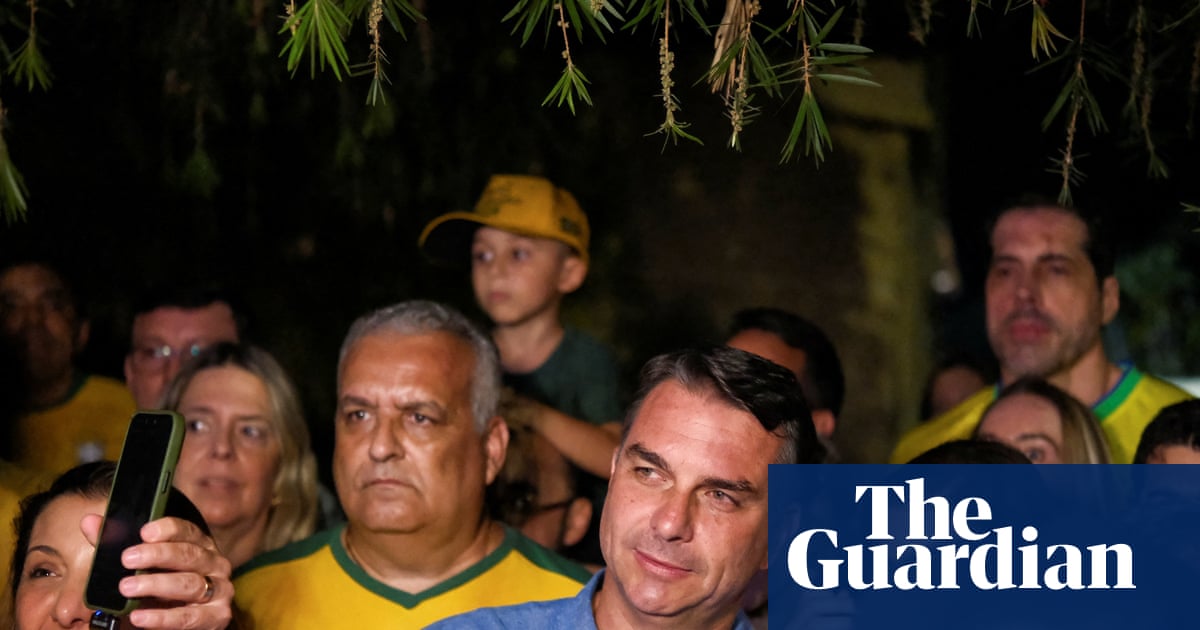
The numbers tell a story Brazil didn’t want written
Flávio Bolsonaro didn’t just win Brazil’s first round — he dismantled the post-dictatorship consensus that held the country together since 1985. Sixty-seven million votes cast for his candidacy across party lines isn’t a mandate; it’s a rupture.
Lula trails by 2.3 million votes with no historical precedent on his side. Political scientists aren’t calling it impossible — they’re calling it statistically implausible. The Brazilian electoral system doesn’t allow protest ballots to coalesce into policy. It only amplifies whoever controls the narrative, and Bolsonaro does.
What matters most isn’t that Bolsonaro won. It’s who benefits from the architecture he’s building around his brother’s presidency.
The amnesty question changes everything
Jair Bolsonaro sits in a Brasília mansion under house arrest, serving 27 years for conspiracy to undermine democracy. His son controls Congress. That is not speculation — it is arithmetic. The Liberal Party alone holds 28 of 81 senate seats. Together with hard-right allies, that’s 53 percent of the upper chamber.
Amnesty for the former president is not a远期 project. It is the first legislative priority. If confirmed, Jair Bolsonaro walks free and re-enters Brazilian politics as a kingmaker with formal immunity and informal power — a combination more dangerous than either alone.
Eduardo Bolsonaro, already in exile in Miami after a conviction for lobbying foreign governments to interfere in his father’s trial, can return. He was elected to Congress while fleeing prosecution. If Flávio appoints him foreign minister — as sources suggest he plans — Brazil’s diplomatic corps will be led by a man who openly praised Trump’s authoritarian playbook and helped coordinate efforts to pressure the US judiciary on behalf of a convicted conspirator.
The optics matter more than the legal technicalities. Brazil will look like a state where foreign interference becomes a career path rather than a crime.
The US gets what it asked for — and more
Trump congratulated the speed of the vote count, not the result. That distinction matters. He wants the access, not the accountability. Bolsonaro offers both.
The relationship will mirror the Trump-Milei axis forming across the Southern Cone, but with far more leverage on Brazil’s side. São Paulo is Latin America’s financial capital. Its governor, Tarcísio de Freitas, won re-election as part of the Bolsonarista wave. The state generates roughly a third of Brazil’s GDP. That’s economic weight Trump can’t ignore.
Expect immediate moves on three fronts: defense cooperation, trade alignment, and energy policy. The US wants Brazil out of BRICS’ anti-dollar orbit. Bolsonaro will make that easier — or harder, depending on whether he reads Washington’s playbook or writes his own.
The risk isn’t that Brazil becomes a US client. It’s that it becomes a US ally on paper while pursuing its own interests relentlessly in practice. Bolsonaro has no ideological loyalty to Washington. He has transactional loyalty to whoever rewards him.
China loses ground it spent decades building
China bought Brazilian soy, iron ore, and oil at prices that made Lula’s social programs possible. The $150 billion in bilateral trade isn’t political — it’s geological. You can’t sanction your way out of a trade partnership built on comparative advantage.
But Bolsonaro doesn’t need to sanction anything. He needs to redirect it.
The Amazon is where this plays out. Lula halted deforestation through enforcement and indigenous protection. Bolsonaro will dismantle both. The Chinese market remains open to Brazilian beef and soy regardless of who signs the export contracts. What changes is the environmental governance that constrains production — and constrains China’s reputational risk in buying it.
Shoring up land claims, weakening FUNAI, and opening protected areas to mining and agribusiness isn’t just domestic policy. It’s a signal to commodity buyers that Brazil has stopped caring about supply chain sustainability. That signal travels faster than any tariff.
China watches. It adapts. It doesn’t panic.
The Global South fractures along new lines
Lula built a coalition of developing nations around climate justice, multilateralism, and South-South cooperation. Bolsonaro’s Brazil will treat that coalition as infrastructure for his own advancement rather than an end in itself.
Look at Israel. Netanyahu’s congratulatory message wasn’t diplomatic courtesy — it was strategic signaling. Bolsonaro’s base includes evangelical Christians who see Israel as a theological ally and Palestinians as a geopolitical abstraction. The embassy may move from Tel Aviv to Jerusalem. The arms sales may increase. The voting pattern at the UN will shift accordingly.
Africa matters too. Brazil’s ties to Angola, Mozambique, and other Portuguese-speaking nations have always been cultural more than commercial. Bolsonaro will prioritize military cooperation and counter-narcotics partnerships over development aid. That opens doors for US and European intelligence services that Lula kept closed.
The BRICS framework doesn’t collapse from one defection. But it loses credibility when the bloc’s largest economy starts aligning with Washington on Ukraine, Taiwan, and Iran while publicly maintaining its multilateralist rhetoric. Brazil has mastered that ambiguity before. It will do it again.
Commodity markets price in volatility, not ideology
Soy futures moved 2 percent lower after the results. Iron ore bounced back up. Beef exporters are already drafting press releases. The market doesn’t care about Bolsonaro’s rhetoric — it cares about regulatory certainty.
And here’s where the paradox emerges: Bolsonaro’s environmental rollback creates short-term supply opportunities for commodity buyers while destroying long-term price stability. Easier deforestation means easier expansion into new agricultural frontiers. That lowers costs today and raises them tomorrow as soil degrades and water systems fail.
China’s food security apparatus will adjust. India’s will too. Brazil’s competitors — Argentina, the US Midwest, the Ukrainian steppe — will feel the shift. The question isn’t whether production moves. It’s who captures the margin.
Lula’s last stand against apathy
Thirty-three million Brazilians didn’t vote. Not because they support Bolsonaro — because they support nothing. They’ve watched four election cycles produce the same cast of characters performing the same scripts. Apathy isn’t indifference. It’s exhaustion.
Lula knows this. His campaign strategy hinges on convincing disengaged voters to return, not on converting Bolsonaristas. That’s why he’s pivoting to character attacks and scandal exposure rather than policy debate. He’s fighting the last election, not the next one.
Rocha’s research on undecided voters confirms what the numbers suggest: the problem isn’t persuasion. It’s motivation. People who stayed home in 2022 won’t suddenly care about a runoff that feels predetermined.
Miracles are possible in politics. Lago said so himself. But miracles require belief, and Brazil’s electorate has lost faith in the very idea of change through ballots.
What happens next
The second round on October 25th will determine whether Bolsonaro’s victory represents a democratic consolidation or a gradual authoritarian transition. If he wins, expect rapid institutional changes wrapped in legal language. Amnesty for his father. Reappointment of loyalists to key positions. Constitutional amendments that expand executive power while shrinking judicial oversight.
If Lula somehow rallies, it won’t be through inspiration. It will be through fear — fear that Bolsonaro’s Brazil becomes a state where corruption prosecutions become political weapons and environmental protections become optional.
Either outcome reshapes Brazil’s relationship with the world. The question is whether that reshaping serves Brazilian interests or merely international ones.